

SC Orthodontics · Fixed braces
Metal braces in Valencia & Santa Clarita
Metal braces use fixed brackets and wires to straighten teeth and improve how they fit together. Explore a plan for your smile with Dr. Haykani in Valencia, serving Santa Clarita.
Before you begin
Metal braces: at a glance
Understand what braces can help with, what visits involve and how to care for your smile from your first appointment through retainers.
From your first visit
How metal braces work.
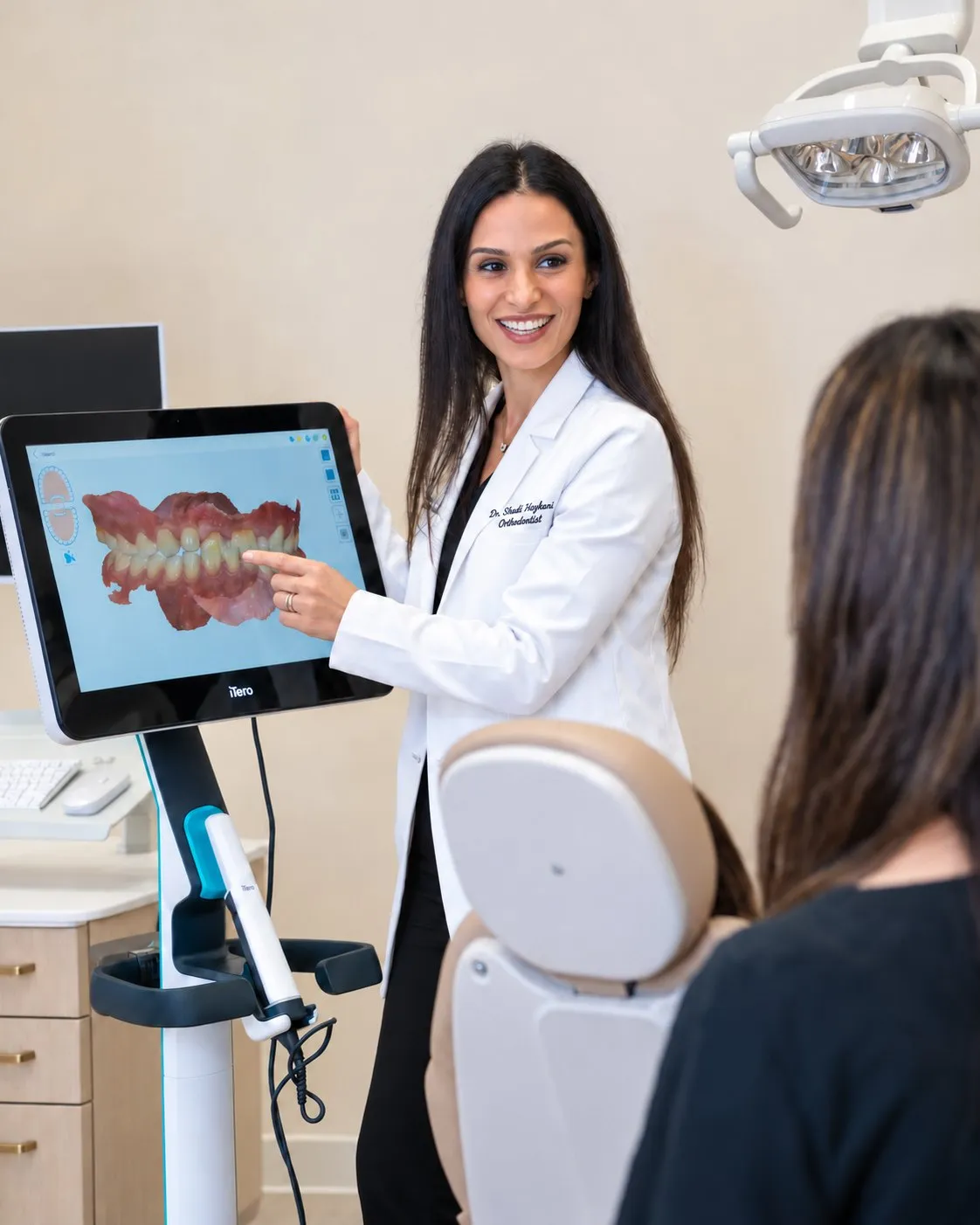
Metal braces use brackets attached to the teeth and an archwire that guides their movement. Treatment considers both alignment and the way your upper and lower teeth meet. Because the brackets stay in place, you do not need to remember to put trays back in—but daily cleaning and protecting the appliance still matter.
At your free consultation, Dr. Haykani assesses your teeth and bite, discusses your goals and explains suitable options. Necessary X-rays and digital scans are included.
Brackets, wires and different kinds of bands
The wire fits into the bracket slots. Small elastic ties or thin metal ligatures can hold it there; self-ligating brackets use a built-in mechanism instead. Removable rubber bands, when prescribed, have a separate job in bite correction. Follow the attachment pattern and wear instructions for your own plan, not someone else’s.
Assess and plan
Review your teeth, gums and bite, then discuss the recommended approach, alternatives, likely timing and written fee. Mention dental injuries, existing restorations and any diagnosed material allergy before choosing an appliance.
Fit and guide
Brackets are bonded to your teeth and connected with a wire. We show you how to clean difficult areas and protect the appliance at meals, and explain any elastics or extra steps your plan needs.
Review and adjust
At review visits, we check movement, the bite, appliance condition and oral health. The wire or other parts may change as the plan progresses. Ask what changed today and what to keep doing until your next visit.
Understand the details: wire changes and adjustments · prescribed rubber bands · your first consultation.
A plan for your bite
Who are metal braces best for?
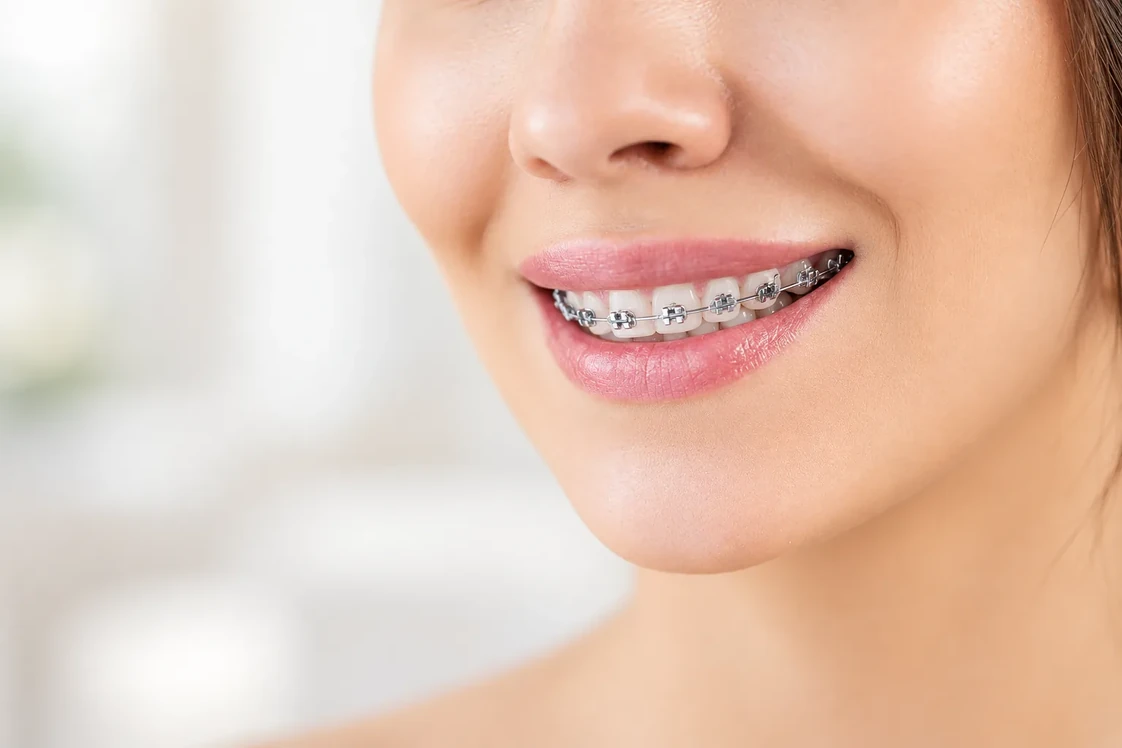
Metal braces are a strong fit for teens and adults who want fixed treatment without managing removable trays. They can address crowding, gaps, rotated teeth and many bite concerns, including overbites, underbites and crossbites. The best choice depends on tooth positions, jaw growth and gum health—not age or appearance alone. Daily cleaning and any prescribed elastic wear still matter.
Children, teens and adults
Timing for younger patients depends on dental development and growth; an assessment does not automatically mean starting full braces. Adults can also have braces. Gum health, existing crowns or implants and previous treatment all affect planning, and active dental problems may need care first.
Metal, ceramic or clear aligners?
Metal braces suit patients who value durable fixed brackets and do not mind a visible appliance. Ceramic braces are worth comparing when less noticeable brackets are a priority. Invisalign and Spark aligners suit patients who want removable trays and can follow their prescribed wear schedule. All need daily care and review visits. Compare suitable options by your bite, routine and full quoted fee.
What braces alone may not change
Braces move teeth; they cannot resolve every difference in jaw position. Some cases need additional appliances or a coordinated surgical assessment. That is not a conclusion to draw from a mirror or a bite label. Our braces versus jaw surgery guide explains the distinction.
Compare braces and aligners · Questions about a nickel allergy
The everyday routine
Eating and cleaning
with braces.
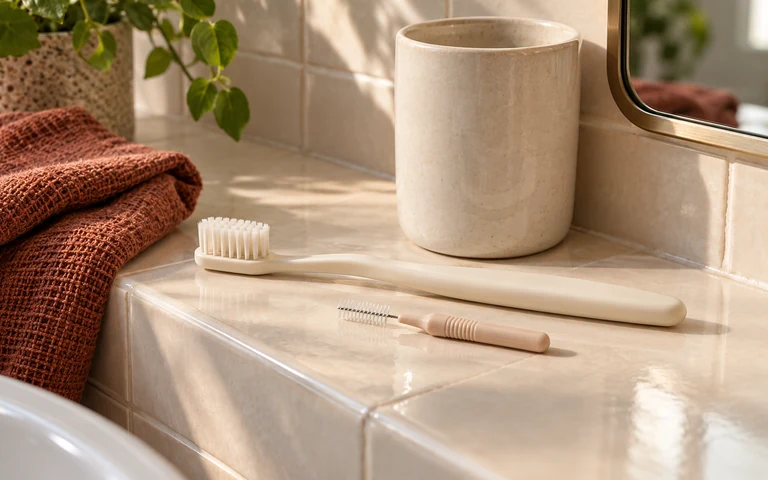
A few practical habits help you look after your teeth and brackets while treatment progresses. We show you how to manage the routine and what to do when something needs attention.
Clean around the brackets
Brush with fluoride toothpaste around the gumline and each bracket, and clean between teeth and beneath the wire every day. Ask for a demonstration if you cannot reach an area. Plaque around brackets can contribute to cavities and white marks; orthodontic reviews do not replace regular dental checkups and cleanings.
Make meals brace-friendly
Avoid hard or sticky foods that can damage braces. Cut suitable firm foods into manageable pieces rather than biting directly into them, and choose softer foods when your teeth feel tender. Do not test a loose bracket with hard food or try to pull it off.
Keep appointments and follow instructions
Attend planned visits and wear elastics exactly as directed if they are part of your treatment; adding extra bands is not a safe shortcut. Report a loose bracket, poking wire or trouble cleaning promptly so we can advise you rather than letting the problem continue until the next adjustment.
Brushing with braces Foods to eat with braces · White spots and enamel care
Looking ahead
Treatment time
& retainers.
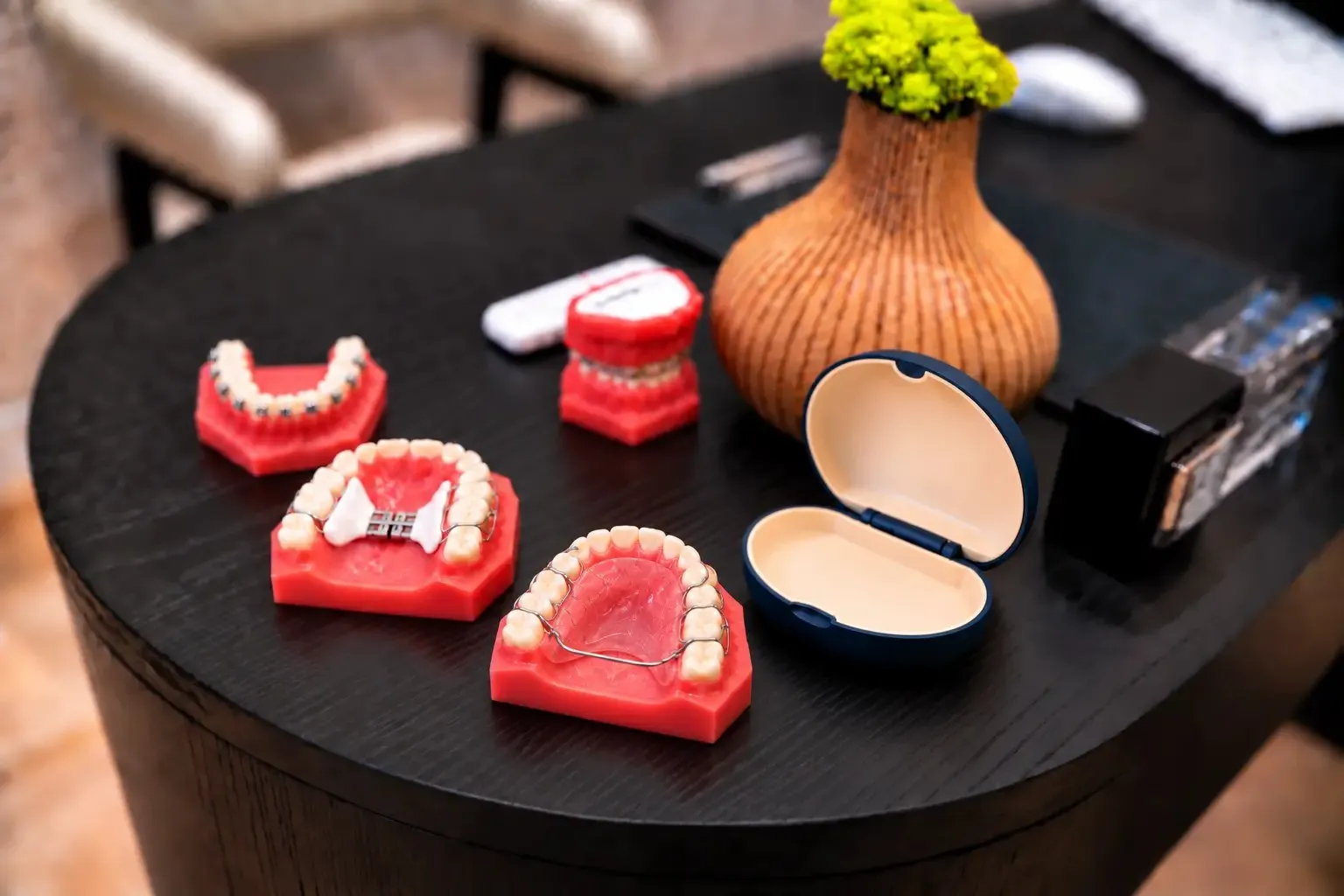
Finishing treatment includes assessing the agreed alignment and bite goals, then professionally removing brackets and adhesive. Straight-looking front teeth are not the only check. Your retainer plan begins as active treatment ends so you understand how to maintain the result.
Your treatment timeline
Treatment length varies with the movements needed, your response and how consistently you follow the care plan. Breakages, missed visits or interrupted elastic wear can affect progress. Dr. Haykani gives an individual estimate and explains changes rather than promising a finish date based only on the type of brackets.
A retainer plan for you
Teeth can shift after braces and with age. Follow your prescribed retainer schedule over the long term, keep the appliance clean and contact us if it is lost, damaged or no longer fits. Your initial retainers are included in your treatment plan; later replacements are quoted separately when needed.
Before you decide
Metal braces cost
& financing.
Our published metal-braces fees before insurance are $2,500–$3,900 for a short case, $4,500 for a standard case and $5,100–$5,600 for a complex case. Your free consultation confirms the exact written fee and what it includes. These ranges are for metal braces; other bracket systems are quoted separately. Ask about any dental, extraction or surgical care outside the orthodontic plan.
0% monthly payment plans
SC Orthodontics offers 0% financing. The monthly payment depends on the treatment fee, down payment and plan length. Review the current examples, then compare the total cost and payment schedule for your own plan.
Insurance is checked separately
Your policy determines whether orthodontic benefits apply, how much remains and any limits. Review how insurance verification works and bring your card. The insurance estimate sits alongside the fee; a lifetime maximum is not a guaranteed payment.
A few more details
Questions about metal braces.
Suitability, costs, daily care and what to expect throughout treatment.
Who are metal braces best for?
Metal braces are especially useful for patients who want an appliance that stays on their teeth rather than trays they must remove and replace. They can suit teens and adults with a wide range of alignment and bite needs. The tradeoff is visible brackets, food precautions and extra cleaning around the wires. Dr. Haykani checks which options fit your teeth and daily routine.
Can adults get metal braces if they have crowns or implants?
Yes, adults can have metal braces, including some patients with crowns or previous dental work. Healthy teeth and gums matter more than age alone. A dental implant does not move like a natural tooth, so its position must be considered in the plan. Tell us about crowns, implants, gum treatment and any planned dental work before starting.
When should my child be checked for braces?
The American Association of Orthodontists recommends an orthodontic check by age 7, or earlier if a concern appears. That does not mean every child needs braces at 7. Dr. Haykani assesses tooth development and jaw growth, then explains whether treatment now, observation or later treatment makes sense. Full braces and early treatment address different needs.
Can metal braces correct an overbite, underbite or crossbite?
Metal braces can help with many of these bite problems, but the cause matters. A concern involving tooth positions may need a different plan from a large difference in jaw size or position. Some patients need elastics, growth-related appliances or coordinated jaw-surgery care as well as braces. An examination and records show what braces can realistically change.
Are metal or ceramic braces better for me?
Metal braces are a strong choice when durability matters and you are comfortable with visible brackets. Ceramic braces are worth considering when a less noticeable fixed appliance is important. Both use brackets and wires and require careful cleaning. Neither is best for every bite; compare the options Dr. Haykani recommends and their written fees. Ceramic fees are quoted separately from the published metal-braces ranges.
Should I choose metal braces or Invisalign?
Metal braces may fit better if you do not want to manage removable trays throughout the day. Invisalign may fit better if removability and a discreet appearance are priorities and you can keep to the prescribed wear schedule. Both still need cleaning, appointments and retainers. The required tooth movements, your bite and your routine determine which options are suitable—not a universal promise that one is faster.
How are traditional metal braces different from Damon braces?
Traditional braces commonly use small ties to hold the wire in the brackets. Damon is a self-ligating system with a built-in mechanism for holding the wire. This difference does not by itself guarantee faster treatment, no extractions or a better result. Both are fixed appliances that need cleaning and review visits; compare the recommended plan and the separately quoted fee.
What are metal braces made of, and what if I have a nickel allergy?
Metal brackets are commonly made from stainless steel, and orthodontic wires may use different metal alloys. Tell us about a diagnosed nickel allergy or previous reaction to metal before treatment. Dr. Haykani can check the materials in the proposed brackets, wires and other parts and discuss suitable alternatives. Do not assume tooth-colored brackets mean every part of an appliance is metal-free.
How long does metal-braces treatment take?
Our published case examples use 6–10 months for short treatment, 12–16 months for standard treatment and 18–24 months or longer for complex treatment. These are planning categories, not a promised finish date. The bite correction needed, your response, appliance breakages, missed visits and elastic wear can change the timeline. Dr. Haykani gives you an individual estimate after the examination.
How often will I need appointments?
You will have regular in-person visits to check progress and adjust the braces. The interval depends on your treatment stage. We explain your visit schedule when planning care and let you know if it changes.
Do metal braces hurt?
Tenderness can happen for a few days after braces are placed or adjusted. Soft foods may help while you settle in. Contact us if pain is severe, gets worse or does not improve, or if a wire or bracket is irritating your mouth.
What can I eat with metal braces?
Choose foods that do not put hard or sticky pressure on the brackets and wires. Avoid chewing ice, hard candy and sticky sweets; cut firm foods into small pieces rather than biting into them whole. Softer meals can help when your teeth are tender after an adjustment. Ask us about a food you are unsure of rather than testing it on your braces.
How do I clean metal braces, and do I still need my dentist?
Brush with fluoride toothpaste around every bracket and along the gumline, and clean between teeth and under the wire daily. We can show you how to use floss threaders or interdental brushes in difficult areas. Keep your regular dental checkups and professional cleanings: orthodontic visits check treatment progress but do not replace care for cavities and gum health.
Can braces damage teeth or gums?
Orthodontic treatment has risks that should be discussed before you start. Plaque left around brackets can cause white marks, decay or inflamed gums; some patients also have risks such as gum recession or root shortening. Good cleaning, regular dental care and monitored tooth movement help manage these concerns. Tell Dr. Haykani about past injuries or gum problems so your individual risks can be considered.
What if a bracket comes loose or a wire pokes?
Call or text (661) 425-0559 and describe what happened so we can advise you. Orthodontic wax can temporarily cushion a rubbing bracket or wire; avoid pulling at the appliance or forcing it back into place. Trouble breathing or swallowing, uncontrolled bleeding or a major facial injury needs emergency care rather than waiting for a braces appointment.
Can I play sports with braces?
Ask us about a mouthguard designed to fit over braces for sports with a risk of contact or injury. Tell us which activities you play so we can discuss protection that works with your treatment.
Can I play a musical instrument with braces?
Yes. Tell us if you play a wind or brass instrument so we can discuss comfort around the mouthpiece and brackets. Give yourself time to adjust, and let us know if a bracket keeps rubbing or a sore area is not settling. Braces do not automatically mean giving up music.
Do metal braces mean I need teeth removed?
No. Extraction is not a requirement simply because you choose metal brackets. The decision depends on the space needed, tooth positions, bite and dental health. If removal is proposed, ask why, which alternatives are suitable and how the spaces would be managed before arranging treatment.
Can I have braces on just my top or bottom teeth?
Sometimes a limited plan is appropriate, but both arches must be assessed together. Moving only the teeth that look crooked can change how the upper and lower teeth meet. Dr. Haykani checks whether treating one arch can meet your goals without creating a bite problem, and explains any compromise before you decide.
Can I choose colored bands for metal braces?
If your appliance uses elastic ties around individual brackets, ask about the available colors when those ties are replaced. They are different from removable elastics prescribed for bite correction. Not every bracket system uses the same ties, and changing their color does not whiten your teeth.
Will I need to wear rubber bands with metal braces?
Some treatment plans use removable elastics to help the upper and lower teeth fit together. These are different from the small ties around individual brackets. If elastics are prescribed, follow your own attachment pattern and wear instructions; do not add extra bands to try to speed things up. Tell us about a latex allergy before using elastics.
How much do metal braces cost without insurance?
SC Orthodontics publishes metal-braces fees of $2,500–$3,900 for a short case, $4,500 for a standard case and $5,100–$5,600 for a complex case, before insurance. Your exact fee is confirmed in writing at your free consultation. The treatment fee includes orthodontic visits and adjustments, emergency visits, necessary X-rays and scans, and initial retainers. Other bracket systems are quoted separately.
Can dental insurance help pay for metal braces?
Yes, if your policy includes orthodontic coverage and you are eligible. The applicable plan rate, remaining lifetime benefit, age limits and other policy terms affect the estimate. Send your insurance details before the consultation so we can check them and show the estimate alongside your written fee. A lifetime maximum is a limit, not a guaranteed payment.
How insurance verification works Understanding your insurance estimate
Are monthly payment plans available for metal braces?
Yes. SC Orthodontics offers 0% payment plans. The monthly amount depends on your treatment fee, down payment and plan length. Our published example is a $4,500 standard metal-braces case with $500 down and the remaining $4,000 spread over 32 months at $125 per month. This is an example, not a quote for every patient; we review your own terms before you decide.
Will I need retainers after metal braces?
Yes. Teeth can shift after braces and as you get older, so retention is a long-term part of treatment. Follow the wear schedule Dr. Haykani gives you and contact us if a retainer is lost, broken or no longer fits. Your initial retainers are included in the treatment fee; later replacements are quoted separately when needed.
What happens at the free metal-braces consultation?
Dr. Haykani examines your teeth and bite, discusses your goals and reviews suitable treatment options. Necessary X-rays and digital scans are included, and you receive a written plan with estimated timing, the exact fee and an insurance estimate when applicable. Bring your questions, dental history and insurance details, and mention previous treatment, injuries or material allergies.
Your next step
Your free braces
consultation.
Come in with your questions. Dr. Haykani will help you understand your options, expected timing and fee at a free consultation.
Visit SC Orthodontics in Valencia, serving patients across Santa Clarita.
- Visit
- 25385 Wayne Mills Pl
Valencia, CA 91355
Hours & directions - Call
- (661) 425-0559
- Hours
- Sunday–Friday, 8 AM–7 PM; Saturday closed
Metal braces near you
Directions and timing from your part of the valley.
Also consider