

SC Orthodontics · Assessment, timing & coordination
Airway & growth assessment in Valencia & Santa Clarita
An orthodontic look at jaw growth, bite and breathing history—with medical referral when sleep concerns need a closer look.
Related concerns, different questions
Airway & growth:
what we assess.
An airway and growth assessment is an orthodontic examination of jaw development and the bite, with a review of breathing and sleep history. It helps separate orthodontic treatment needs from symptoms that need medical evaluation.
01History, examination, context
Assessing your child’s
bite and jaw growth.
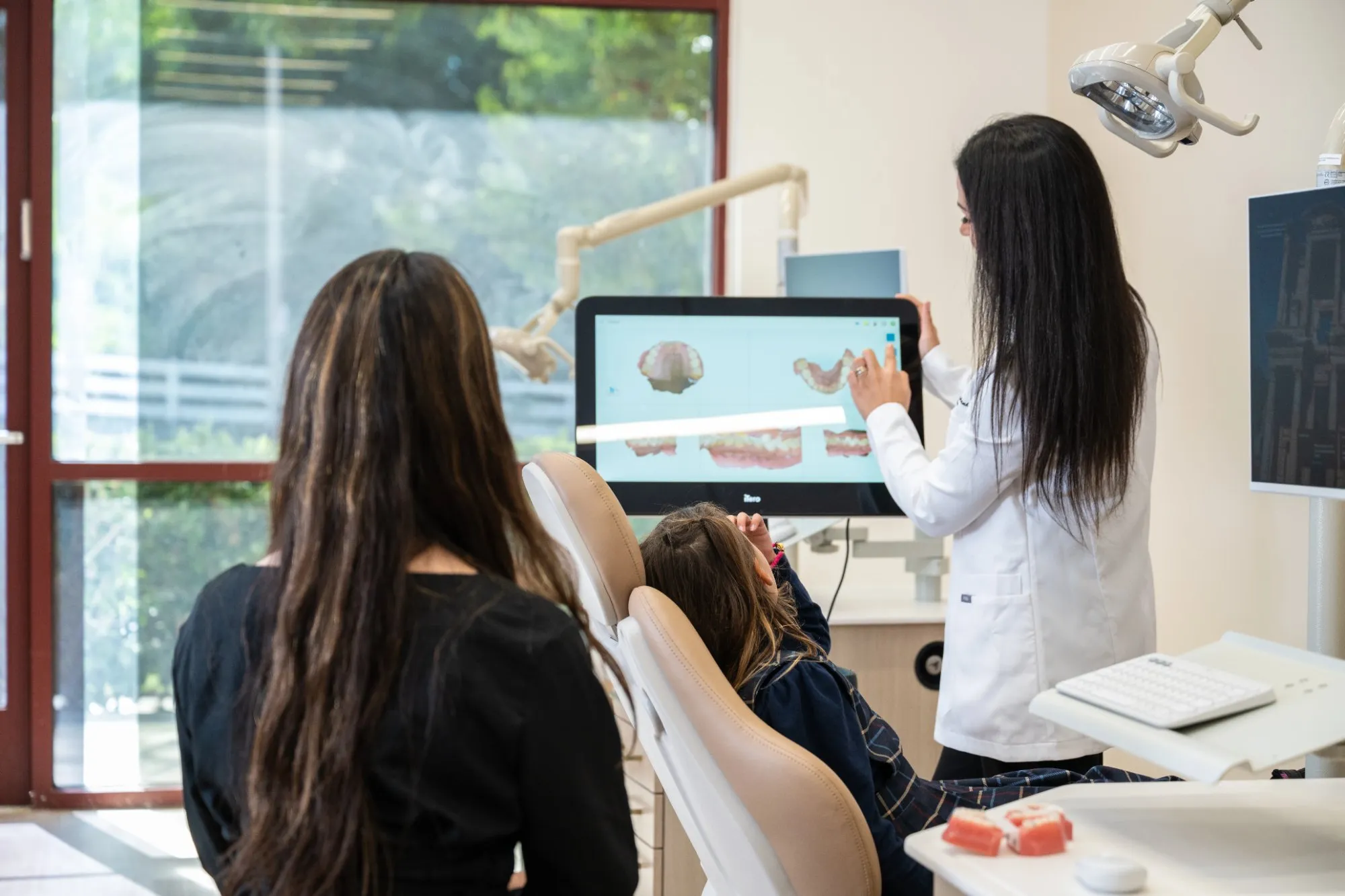
Dr. Haykani reviews your child’s dental and medical history, examines tooth development and jaw relationships, and looks at how the teeth meet. Records support a recommendation about the bite and timing.
Symptoms and history to discuss
Bring up ongoing mouth breathing, regular snoring, pauses in breathing during sleep or other concerns. Share them with your child’s medical clinician too; an orthodontic visit is not a substitute for sleep assessment.
Will my child need imaging?
Records are selected for the clinical question. A digital tooth scan and an X-ray provide different information, and not every child needs the same records. Ask what an image is intended to answer and whether recent records from your dentist can help.
02The recommendation
Monitoring, treatment
or medical referral.
An assessment is a decision point, not a commitment to start treatment. We explain the orthodontic findings and why a particular next step makes sense.
- 01
Monitor teeth and jaw development
When treatment is not needed now, understand what to monitor and when to review growth.
- 02
Treat a specific orthodontic problem
If orthodontic care is indicated, discuss the goal, options, timing and home routine.
- 03
Coordinate medical assessment
When sleep or breathing symptoms need investigation, involve the appropriate medical clinician.
Where does expansion fit?
An expander may be considered for an appropriate narrow-upper-jaw or bite problem. It is not a universal treatment for snoring or sleep apnea. Any role in sleep-related care needs appropriate medical assessment and coordinated planning.
03A useful first conversation
Preparing for an
airway & growth visit.

Who is this assessment best for?
This visit is best for families deciding whether a developing bite needs treatment now or monitoring. A crossbite or crowding needs a bite assessment; it does not, by itself, mean a child has sleep apnea. Bring breathing concerns too, while discussing regular snoring or mouth breathing with your child’s medical clinician.
Questions about treatment and alternatives
Ask what the recommendation is intended to change, what alternatives exist and which parts of the concern require another clinician. A clear explanation is part of a useful assessment.
What should we bring?
Bring your concerns, relevant dental or medical records, a medication list and details of any previous ENT or sleep evaluation. Notes about when symptoms happen can help the discussion, but home observations are not a sleep-apnea diagnosis.
Connect the information
Orthodontic & medical care.
Keep the plan connected.
An airway and growth assessment in Valencia can help Santa Clarita families separate an orthodontic finding from a medical question. Here is how to make the next conversation more useful.
- 01
Describe bite and sleep concerns.
Tell us what you have noticed, how often it happens and whether it is changing. Include concerns about the bite or tooth eruption, alongside any sleep or breathing symptoms; do not try to diagnose the cause from facial appearance.
- 02
Clarify the orthodontic goal.
If orthodontic care is proposed, ask which tooth or jaw relationship it would address, why that timing makes sense and how the result will be reviewed. A wider arch or straighter teeth is not, by itself, proof that a sleep disorder has resolved.
- 03
Coordinate medical follow-up.
Share relevant recommendations from your pediatrician, ENT or sleep clinician. If a medical evaluation is advised, ask who is coordinating it and which findings should return to the orthodontist. Dental and medical decisions may need different follow-up.
What if the teeth look straight, but sleep is still a concern?
Straight-looking teeth do not rule out a breathing or sleep condition. Discuss persistent snoring, witnessed breathing pauses or other sleep concerns with your child’s medical clinician. You do not need to wait for braces or an expander decision before having that conversation.
Before you decide
Consultation, treatment
and financing.
If orthodontic treatment is recommended, ask what the proposed phase includes and whether later treatment would be separate. Our fee guide, payment options and insurance information explain the financial starting points. Medical consultations or sleep testing are separate services; confirm their costs and coverage with those providers.
A little more detail
Airway & growth
assessment FAQs.
What this visit can clarify—and when a different assessment is needed.
What does airway orthodontics mean?
Airway orthodontics is often used to describe orthodontic assessment that also considers breathing and sleep history. At SC Orthodontics, the service is an airway and growth assessment: Dr. Haykani evaluates jaw development and the bite, explains any orthodontic need and recommends medical evaluation when symptoms warrant it. It does not replace sleep-apnea diagnosis or medical treatment.
When should my child first see an orthodontist?
The American Association of Orthodontists recommends a first check by age seven. That is a recommendation for an evaluation, not automatic treatment. If you or your dentist notice a concern earlier, ask about an assessment rather than waiting for a particular birthday.
Will my child definitely need an expander or braces?
No. A recommendation may be observation, treatment for a specific orthodontic problem or further assessment by another clinician. Crowding, a narrow-looking arch or a breathing habit alone does not decide which appliance—if any—is appropriate.
Does mouth breathing always mean a jaw-growth problem?
No. Mouth breathing can have different causes and should not be diagnosed from appearance alone. Tell us what you have noticed and discuss ongoing breathing or sleep concerns with your child’s medical clinician. Orthodontic findings are one part of that wider assessment.
Should we wait for orthodontic treatment before asking about snoring?
No. Discuss habitual snoring, gasping or witnessed pauses in breathing with your child’s pediatrician or another appropriate medical clinician; do not wait for an appliance decision. A medical assessment looks for the cause and determines whether sleep testing or an ENT evaluation is needed. The orthodontic visit addresses a different part of the picture.
Can this assessment diagnose or rule out sleep apnea?
No. An orthodontic examination, dental scan or jaw image cannot by itself diagnose or rule out sleep apnea. A medical clinician evaluates the symptoms and decides what testing is appropriate, which may include a sleep study.
Can braces or expanders cure snoring or sleep apnea?
Braces, aligners and expansion should not be promised to cure snoring or sleep apnea. An expander may address a diagnosed narrow upper jaw; any proposed sleep-related role needs a physician-led assessment and coordinated care. Research on pediatric expansion for sleep apnea is limited and mixed. Do not stop prescribed sleep treatment because teeth or jaw width have changed.
Can adults discuss airway and bite concerns?
Yes, adults can discuss their bite and jaw concerns with Dr. Haykani. Adult treatment is not based on the same remaining growth as childhood care. Sleep or breathing symptoms still need appropriate medical evaluation rather than an assumption that orthodontics will resolve them.
What if my child is nervous about the visit?
Tell us beforehand about anxiety, sensory needs or a previous difficult experience. The visit begins with discussion and an examination; any recommended records or next steps can be explained before proceeding. Bring the questions that would help your child feel prepared.
Does a referral mean my child has sleep apnea?
No. A referral means a concern deserves medical evaluation, not that the orthodontist has made a sleep-apnea diagnosis. The medical clinician reviews the symptoms and decides whether testing is needed. Bring any results or recommendations back so the relevant parts can be considered in orthodontic planning.
Should we bring recent dental X-rays or have new ones taken first?
Let us know what records already exist and where they were taken. The orthodontist can review whether they answer the current clinical questions before recommending additional imaging. Do not arrange an extra set solely for this visit without checking with the office.
What happens if monitoring is recommended instead of treatment?
Ask when to return and which changes should prompt an earlier call. The review interval depends on tooth eruption, bite development and the reason for observation, so there is no single schedule for every child. A breathing or sleep concern needs its own medical follow-up rather than waiting for the next orthodontic growth review.
What does an airway and growth assessment cost?
SC Orthodontics offers a free consultation. Confirm what that visit includes and whether any recommended records have a separate fee. If treatment is advised, ask for the proposed phase and any later treatment to be itemized. Medical appointments and sleep testing are separate services; check costs and insurance benefits with each provider.
Your next step
Book an airway
and growth assessment.
Meet Dr. Haykani at SC Orthodontics in Valencia, serving Santa Clarita, to discuss growth, the bite and appropriate next steps.
- Visit
- 25385 Wayne Mills Pl
Valencia, CA 91355 - Call / text
- (661) 425-0559
Airway & growth near you
Directions and timing from your part of the valley.
Also consider