
Notes from the Practice / Children
When should my child first see an orthodontist?
By age seven is the usual screening recommendation. It is a chance to check development, not a deadline to start braces.
SC OrthodonticsSeptember 8, 2026Updated October 19, 20263 min read
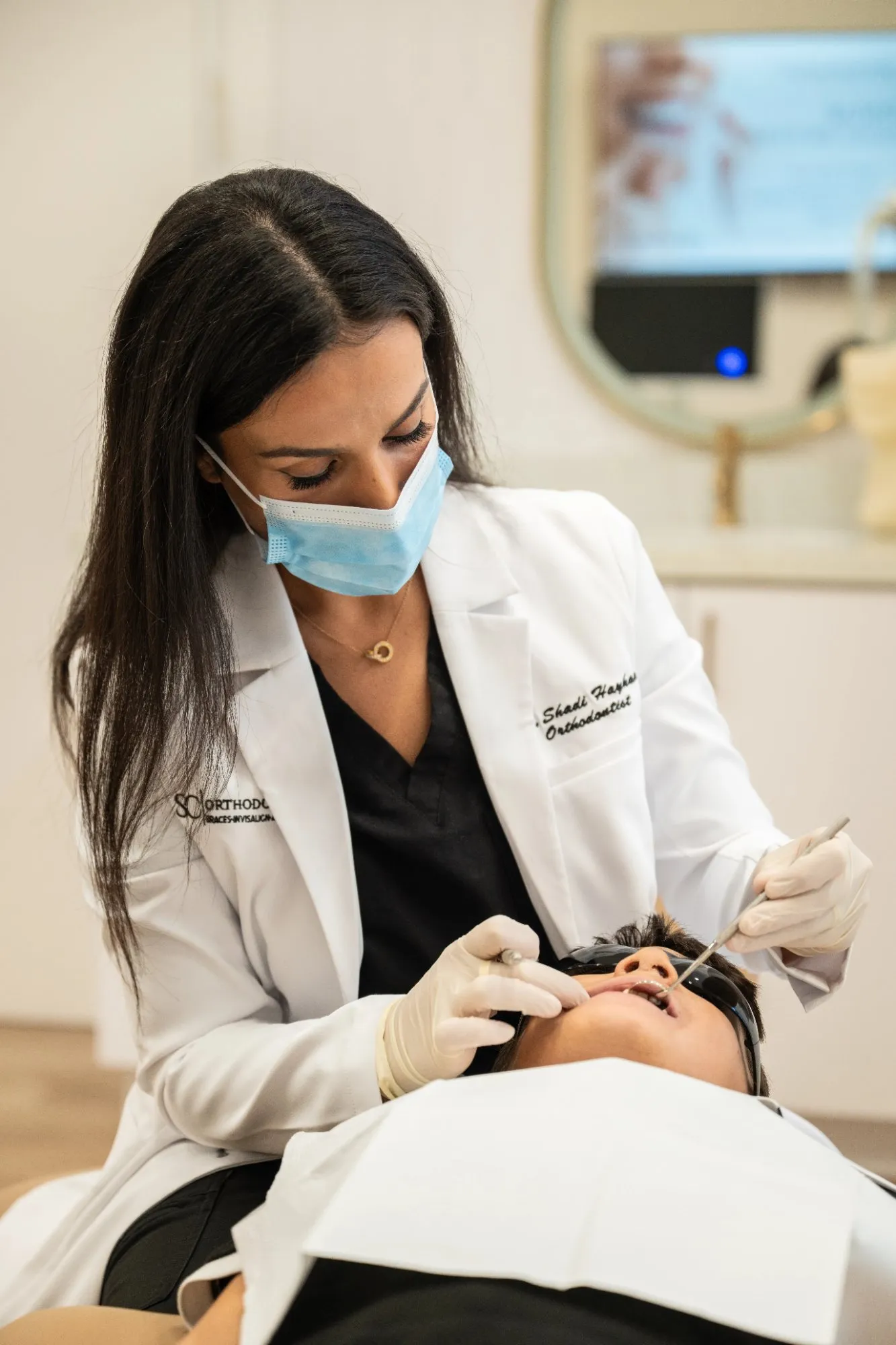
The American Association of Orthodontists recommends a first orthodontic check no later than age seven. If you notice a concern earlier, you can ask sooner. If your child is already older, arrange a visit now; missing the screening age does not tell you what treatment is needed.
The AAO’s first-visit guidance explains that children have a mixture of baby and permanent teeth at this age, allowing the orthodontist to assess the developing bite.
- Concern earlier
- Ask sooner
- By age seven
- First orthodontic check
- Already older
- Arrange a visit now
What does the check cover?
The orthodontist looks at how teeth are coming in, available space, how upper and lower teeth meet, and jaw development. Habits and symptoms help complete the picture. The examination and appropriate records show more than the appearance of the front teeth alone.
If you have noticed an adult front tooth appearing behind a baby tooth, our shark-teeth guide covers cleaning and when to ask the dentist to check it.
If a baby tooth has been lost early, our space-maintainer guide explains the questions to ask about preserving room for its replacement.
If a dentist has identified an adult canine that is not coming into place, our impacted-canine guide explains the assessment and treatment questions to discuss.
When should you ask before age seven?
Bring up difficulty biting or chewing, a jaw that shifts when the teeth meet, teeth that do not meet as expected, or concerns about how teeth are erupting. A persistent thumb-sucking habit or a visible bite change is also worth discussing with your child’s dentist.
For persistent snoring or mouth breathing, involve your child’s pediatrician as well. Orthodontic screening does not diagnose a breathing disorder. Our mouth-breathing guide explains the separate roles.
What might happen after the visit?
There are three broad possibilities: no treatment is needed, development should be reviewed periodically, or a specific problem would benefit from early treatment. The AAO describes these possible outcomes rather than treating age seven as a universal starting point.
- Reassurance
- No treatment is needed
- Observation
- Review development periodically
- Selected early care
- Address a specific problem
At SC Orthodontics, children who are not ready for care can return for complimentary observation visits. Ask what is being monitored and when the next check should be.
Does early treatment replace later braces?
Not necessarily. An early phase addresses a particular developmental problem; another phase may still be needed after more permanent teeth arrive. Timing and expected benefits depend on the diagnosis. The AAPD’s developing-dentition guidance emphasizes planning treatment around the child’s findings and stage of development.
Ask what the proposed early treatment is meant to achieve, what observation would involve, and what later care may still be needed. Avoid assuming that starting earlier always means less treatment overall.
For a proposed headgear appliance, read our guide to headgear purpose, prescribed wear and safety.
Prepare for a first check in Valencia
Bring recent dental records if available and describe what you have noticed. The free consultation at SC Orthodontics includes an evaluation and necessary records, with the findings explained before any decision. Our children’s orthodontic care guide describes what families can expect here.
More notes