
Choosing a children’s orthodontist in Valencia
An early visit should help you understand your child’s development, whether treatment is needed now or the next step is simply another check.
SC OrthodonticsJuly 15, 2026Updated November 25, 20262 min read
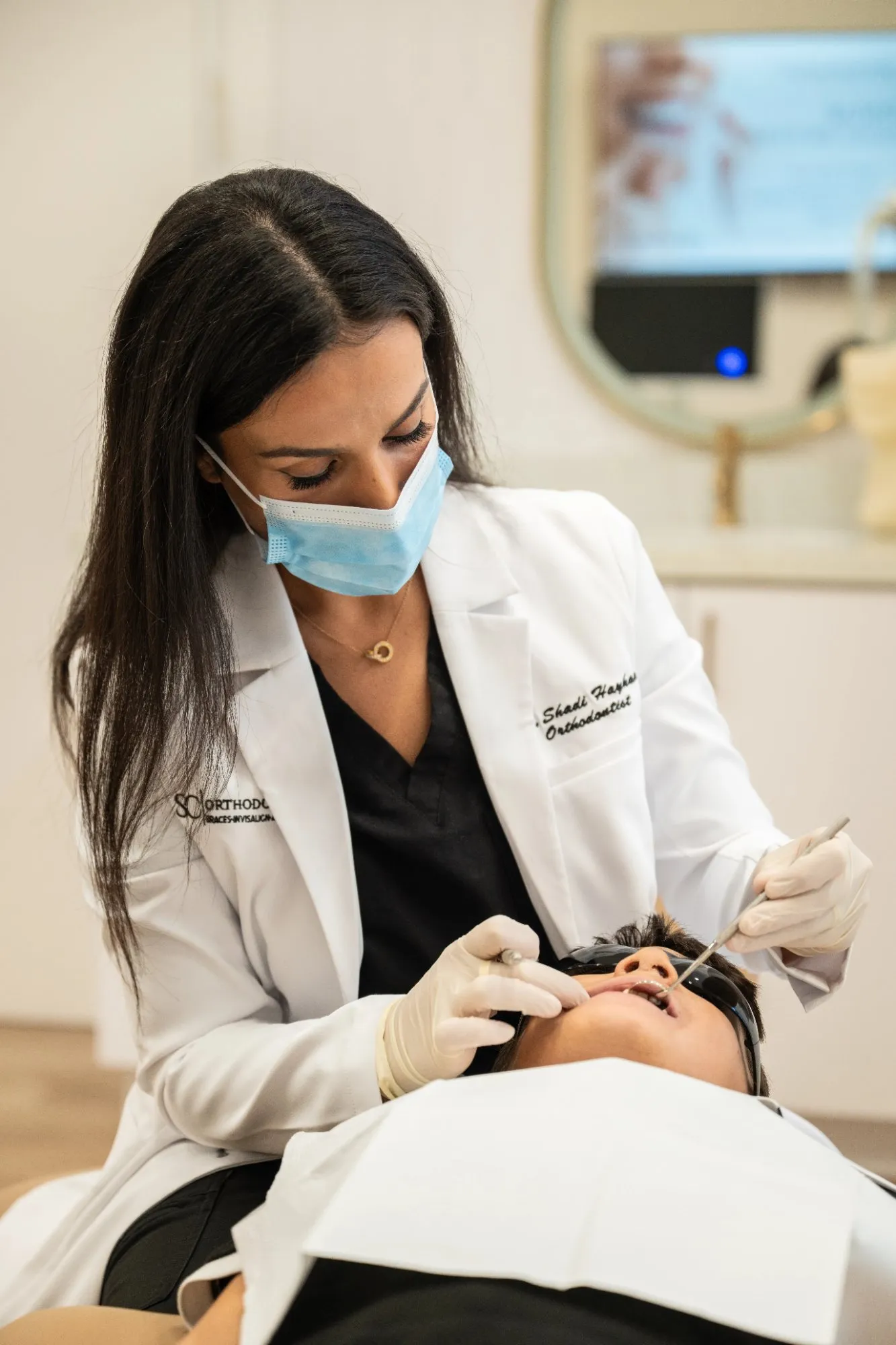
After a visit with a kids orthodontist, you should know what was found and what happens next. The next step may be a treatment discussion. It may also be a plan to keep watching as adult teeth come in. Whether you search for a kids orthodontist or a pediatric orthodontist, you are looking for an orthodontist who treats children. At SC Orthodontics in Valencia, we see children from across Santa Clarita, and Dr. Shadi Haykani, a board-certified orthodontist, examines each child herself. If your child is anxious, tell us beforehand so we can explain each step and adapt the visit. A parent may stay in the room, and a visit to meet the team can come first.
- An orthodontic check is recommended by age seven, and the possible next steps are reassurance, observation, or treatment when a specific problem benefits from it.
- If treatment is not needed yet, ask what the orthodontist will watch and when to return.
- Some developing bite or jaw-width problems may benefit from early care, but an early phase does not guarantee that later treatment will be shorter or unnecessary.
A first check by age seven
The American Association of Orthodontists recommends an orthodontic check by age seven. This is an assessment, not an automatic start date for braces. Its guide to an early orthodontic visit explains the possible next steps: reassurance, observation, or treatment when a specific problem benefits from it.
For questions about younger children or a first visit after seven, read when your child should first see an orthodontist.
What growth monitoring should explain
If treatment is not needed yet, ask what the orthodontist will watch and when to return. At SC Orthodontics, observation visits for children are complimentary until the timing is right. Dr. Haykani, our orthodontist in Valencia, follows growth and tooth development and explains any change in the recommendation.
A useful monitoring plan gives you a next step without making every loose tooth or change in the smile feel like a problem.
When early treatment is considered
Some developing bite or jaw-width problems may benefit from early care. Ask which finding needs attention, what the proposed appliance is meant to achieve, and whether another phase may be needed later. An early phase does not guarantee that later treatment will be shorter or unnecessary.
If you are also concerned about persistent snoring or mouth breathing, tell your child’s pediatrician. An orthodontic evaluation can assess the developing bite but does not replace a medical breathing assessment. Our mouth-breathing guide explains that distinction.
Preparing for a pediatric orthodontist visit
Bring your questions and any recent dental records. Tell the team if your child is anxious or has had a difficult dental experience so the visit can be explained in a way they understand. Our note for anyone nervous about braces covers sensory needs and ways to prepare.
Sunday and evening appointments offer more choices around school. Book a free consultation to discuss what your child needs now and what can wait.
On hours
“Sunday appointments. My kids never miss school and I never miss work.”
5.0 on Google · Read all reviews
More notes