

Open weekdays, Sundays & evenings
(661) 425-0559 Request appointment
SC Orthodontics Book online
Smile Gallery First Visit
Call or text, same-day reply(661) 425-0559
Book free consultation
An illustrative portrait of a parent and child sharing a relaxed moment.

SC Orthodontics · Growth & jaw development

Palatal expanders in Valencia & Santa Clarita

When a narrow upper jaw needs more room, timing matters. Understand the options for your child with Dr. Haykani.

A decision built around development

Who are palatal
expanders best for?

Palatal expanders are best for patients whose bite problem includes a narrow upper jaw—not crowding alone. In growing children, expansion can help a width-related crossbite or make room for developing teeth. Older teens and adults need a different assessment because jaw maturity changes the options.

  1. 01 · Explore

    Start with the reason

    Jaw width, the bite and tooth development guide the decision.

  2. 02 · Explore

    Understand the stages

    Active widening is followed by time to hold the change.

  3. 03 · Explore

    Know the home routine

    Prescribed activation, careful cleaning and regular checks.

01Look at growth and bite

Expander assessments
in Valencia.

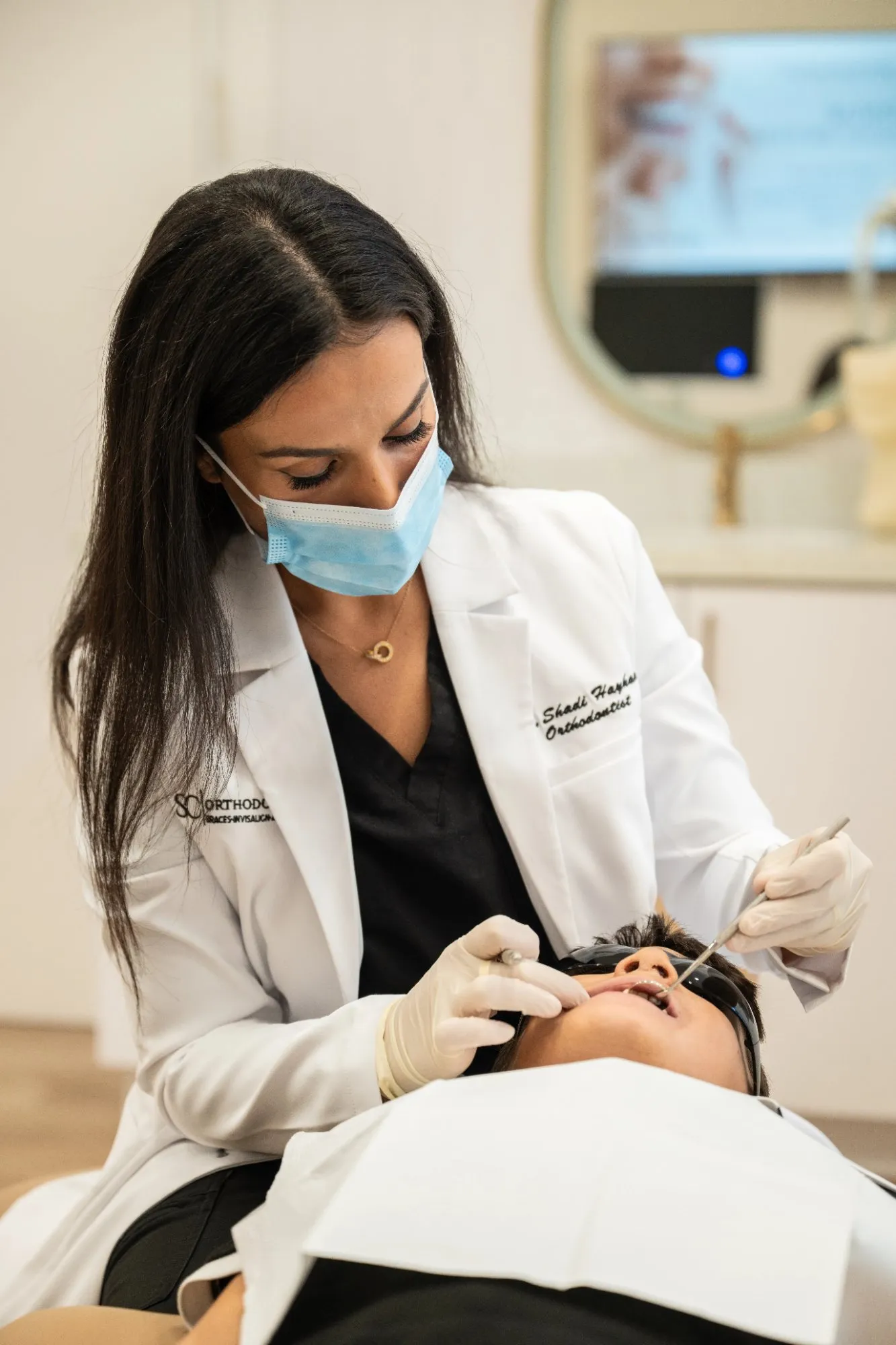
Dr. Haykani examining a young patient at SC Orthodontics.

Dr. Haykani checks how the upper and lower teeth meet, upper-jaw width and tooth development. An examination and appropriate records help distinguish a jaw-width problem from tooth-position changes and show whether expansion, observation or another approach makes sense.

Timing is more than an age

An orthodontic check-up by age seven can identify developing bite concerns. It does not mean every child needs an expander then. Tooth development, the bite and skeletal maturity—not a fixed birthday—guide whether to treat now or monitor growth.

Does an early visit mean early treatment?

No. An assessment may lead to treatment, observation or a different recommendation. If watching growth is appropriate, we explain what to monitor and when to review it. An early visit is an opportunity to understand the options.

02Understand the appliance

Widening,
then holding.

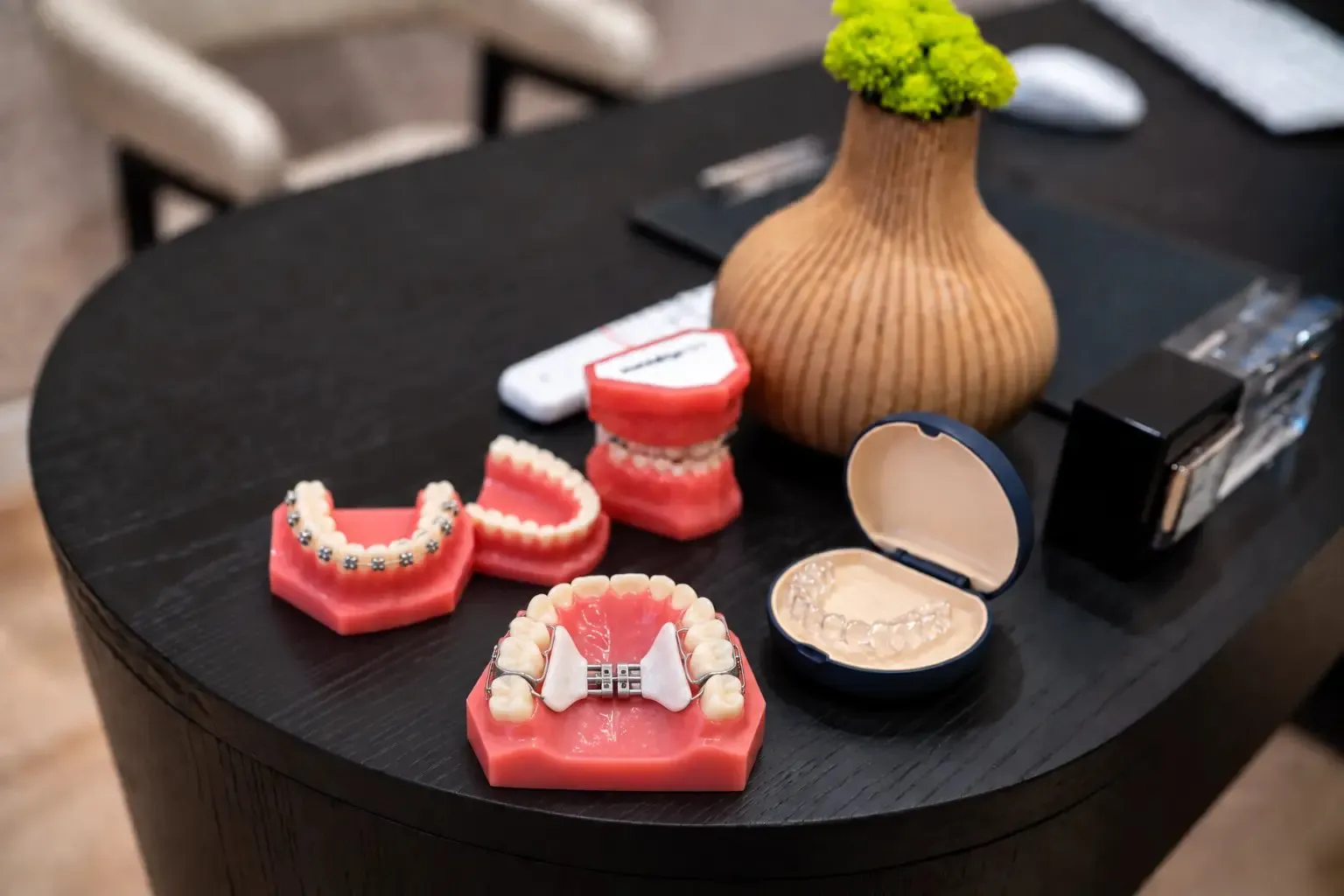
A model showing an upper-jaw expander on the office consultation table.

The conventional fixed expander described here sits across the roof of the mouth and attaches to the upper teeth. It applies controlled pressure to widen a narrow upper arch and stays in place between visits. Your child does not remove it at home.

Small changes, prescribed carefully

If the appliance uses a turning key, we demonstrate the technique and give an individual schedule. The number of turns is a clinical instruction, not something to copy from another family’s plan.

How is an expander different from braces?

Expansion addresses width. Braces or aligners move individual teeth and help finish the bite. The treatments can have different jobs within a longer plan; expansion does not automatically replace later orthodontic care.

  1. 01

    Fit and explain

    Fit the prescribed appliance and demonstrate its care and any home activation.

  2. 02

    Widen and review

    Follow the individual instructions while we check the response and appliance.

  3. 03

    Hold and reassess

    Stop active widening when directed. The appliance may stay in place while new bone forms and the change stabilizes; holding is treatment, not extra turning.

03A parent’s part in the plan

A clear routine
between visits.

You should know what to do at home—and when to ask for help. Bring questions to the fitting visit and contact us if an instruction is unclear.

  1. 01

    Follow the schedule

    Use only the prescribed activation instructions, record completed turns if asked, and bring your record to progress visits.

  2. 02

    Clean around the appliance

    Brush with fluoride toothpaste, clean carefully around the bands and appliance, and keep regular dental checkups.

  3. 03

    Protect it at meals

    Avoid hard, sticky or chewy foods that could damage the appliance. Softer foods may help during adaptation. Our braces-friendly food guide offers meal ideas; follow the specific instructions for your expander.

Missed a turn or unsure what happened?

Contact us for advice rather than adding extra turns or guessing whether a turn was completed. If the appliance is loose, broken or causing a concerning problem, stop activation until you have spoken with the office.

04Keep the whole plan in view

A wider plan for
a growing smile.

A family meeting Dr. Haykani in the SC Orthodontics waiting area.

What comes after expansion?

We review the bite and developing teeth, then explain whether observation, braces or aligners come next. The first phase has a specific goal; it is not a promise that no more treatment will be needed.

For Santa Clarita families

Our Valencia office is a place to ask what is needed now, what can wait and what care at home will involve.

Explore airway & growth assessment

Different tools. Different goals.

An expander or braces?
Start with the problem.

For families comparing expander treatment in Valencia and Santa Clarita, the most useful comparison is not which appliance is better. It is what each one is meant to change.

The width question

Best for a jaw-width problem.

When the upper jaw is too narrow for the lower jaw, widening may improve that width relationship. Crowding alone does not tell us whether the jaw needs expansion or the teeth need a different type of movement.

Ask at your visitIs the problem in jaw width, tooth position, or both?

The alignment question

Best for tooth-position changes.

Braces or aligners may be the better fit when the main need is tooth alignment rather than upper-jaw widening. They can also work alongside or after expansion to finish the bite. The choice depends on the movements needed, not which appliance sounds more advanced.

Ask at your visitWhat would each phase achieve—and what could still be needed later?

What should be clear before the appliance is fitted?

Ask which finding supports expansion, what observation or another approach would involve, and how progress will be checked. For a key-activated appliance, confirm who will do the turns, how to record them and when to stop. Keep those instructions with the office contact details; an online schedule is not a substitute for your child’s plan.

Before you decide

Understand the plan
and the fee.

Ask whether the estimate covers this expansion phase only, its review visits and the holding period, or also includes any later braces or aligners. Review our fee guide, payment options and insurance information before deciding. Coverage and later-phase fees need individual confirmation.

A little more detail

Questions about
palatal expanders.

Age, appliance choices, everyday care and what to ask before treatment.

How do you tell whether crowding needs an expander?

Crowding can come from tooth size, tooth position, jaw width or a combination. Dr. Haykani examines the bite and appropriate records to see whether the upper jaw is too narrow for the lower jaw. An expander is considered for a width problem; a crowded smile or photograph alone is not enough to choose one.

What is the best age for a palatal expander?

There is no single best age for everyone. The AAO recommends an orthodontic check-up by age seven, when developing teeth and jaw relationships can be assessed. The decision to expand depends on growth, the bite and tooth development. Some children need treatment; others are better served by observation.

Can we wait if my child is not ready for treatment?

Sometimes. Ask what finding needs attention now, what could change with growth and when the bite should be reviewed. If monitoring is appropriate, an early assessment gives you a plan for watching development rather than a reason to fit an appliance immediately.

What is the difference between a fixed and removable expander?

A fixed expander stays attached to the teeth; a removable design depends on prescribed wear and handling. Their mechanics and uses are not interchangeable. Ask which appliance is recommended, what it is intended to change and how it will be cared for. The fixed appliance described on this page is not removed at home.

Can older teenagers and adults have palatal expansion?

Some can, but a mature jaw needs a different assessment from a growing child’s. The amount of widening required, jaw structure and the health of the teeth, gums and supporting bone all matter. Options may include tooth movement, miniscrew-assisted expansion or surgical assessment; no single approach is suitable for every adult.

What is MARPE, and how is it different from a conventional expander?

MARPE means miniscrew-assisted rapid palatal expansion. Small temporary screws help anchor the appliance to palatal bone rather than relying only on the teeth. It is one approach considered for selected older teens and adults with a narrow upper jaw. Ask which approach fits your anatomy and which treatments the practice provides before choosing a device.

Does adult expansion always require surgery?

No. Studies have achieved skeletal widening with MARPE in selected adults, but it can fail or be unsuitable. Surgically assisted rapid palatal expansion, or SARPE, combines an expander with an operation. Ask why a nonsurgical or surgical approach is being considered and what the alternative plan would be if widening does not proceed as intended.

Can braces or clear aligners do the same job as an expander?

Braces and aligners move teeth; widening the underlying upper jaw is a different treatment goal. They may be enough when the main problem is tooth position, or they may be used alongside or after expansion. Ask whether the proposed change is dental, skeletal or both before comparing appliances.

Will an expander mean my child will not need teeth removed?

Not necessarily. Creating width can help some space problems, but an extraction decision also depends on the teeth, their positions and the complete bite. Ask what expansion can realistically achieve and whether extractions could still be needed. Avoid treating a no-extraction promise as the reason to choose an appliance.

How long does an expander stay in place?

Active widening is only part of treatment. The appliance generally stays afterward to stabilize the change. Your estimate should distinguish the active phase, the holding phase and any later braces or aligners. Timing depends on the appliance, treatment goal and response—not a standard schedule for every patient.

How often will we need progress appointments?

The interval depends on the appliance and treatment stage. Ask for the expected visit schedule before treatment, including how progress will be checked after activation stops. Keep those appointments even if the appliance feels comfortable, and contact the office between visits if something changes.

How many turns should we do, and can we speed up treatment?

Use only the instructions given for your own appliance. Not every expander uses a key, and extra turns are not a safe way to shorten treatment. Before leaving the fitting visit, make sure you know the technique, schedule and stopping point. If a turn is missed or uncertain, ask the office rather than guessing or catching up.

Does a palatal expander hurt?

Pressure or tenderness can occur after fitting or adjustment. Sharp, severe or persistent pain is not something to push through. Contact the office about pain that concerns you, sores or difficulty using the appliance, and ask which comfort measures are appropriate for the patient.

Will an expander affect speech?

Speech may sound different while the tongue adapts, and extra saliva can occur. There is no exact adjustment period for everyone. Let us know if speaking remains difficult or the appliance causes persistent rubbing; do not assume ongoing trouble is simply part of getting used to it.

What can my child eat with an expander?

Softer foods can be easier at first. Avoid hard, sticky or chewy foods that may bend or loosen the appliance, and cut suitable foods into smaller pieces rather than biting hard into them. Follow the food guidance for the fitted appliance and ask for meal ideas if eating is difficult.

How do we clean around an expander?

Use a soft toothbrush and fluoride toothpaste, brushing gently for two minutes twice daily. Give the bands, gumline and areas around the appliance careful attention. Ask us to demonstrate how to reach trapped food and which extra cleaning tools fit the appliance; do not force a tool underneath it.

Why has a gap appeared between the front teeth?

A temporary gap can appear during expansion. Its size does not tell you whether enough widening has happened or whether treatment is complete. Keep the prescribed checks and ask how the space will be managed as the plan continues; do not change the turning schedule based on the gap.

What if the expander becomes loose or breaks?

Stop activation and contact the office promptly rather than waiting for the next routine visit. Do not pull, repair or force the appliance back into place. If it comes out completely, keep it safely and bring it to the appointment. Tell us what changed and whether there is pain.

Which symptoms need urgent or emergency care?

Trouble breathing or swallowing, uncontrolled bleeding or a serious facial injury needs emergency care; do not wait for an orthodontic reply. Severe pain with facial swelling, fever or signs of infection needs urgent professional assessment. For a loose appliance without those symptoms, contact the orthodontic office promptly for instructions.

What risks should we discuss before expansion?

Ask about discomfort, irritation, unwanted tooth movement and changes to the tissues supporting the teeth, as well as the chance that the planned widening will not occur. The risks depend on the appliance and anatomy. For adult or miniscrew-assisted treatment, ask how bone and gum health will be assessed and when the plan would be changed.

Will expansion change the face or nose?

The treatment plan should focus on a diagnosed bite or jaw-width problem, not a promised facial transformation. Ask which changes are intended in the teeth and jaw and whether any appearance change is expected. Before-and-after photographs from another patient cannot predict your result.

Will an expander fix snoring or sleep apnea?

An expander is not a stand-alone diagnosis or guaranteed treatment for a sleep problem. Regular snoring or pauses in breathing should be discussed with a medical clinician. Expansion may have a role in selected patients after appropriate orthodontic and medical assessment, but it does not replace sleep evaluation or prescribed medical care.

Does stopping the turns mean the expander can come out?

No. Widening and stabilizing the result are separate stages. The appliance may remain after active turns stop. Keep cleaning it and attending checks until your orthodontist decides it is ready to be removed; do not remove a fixed expander at home.

Do regular dental checkups continue during expansion?

Yes. Appliance checks do not replace your usual dental examinations and cleanings. Keep both types of appointment and tell the team about new dental or gum problems. Good cleaning and routine dental care remain important throughout orthodontic treatment.

Will my child still need braces or aligners afterward?

They may. Expansion addresses a width problem, while later treatment can align individual teeth and finish the bite. Ask what the first phase aims to achieve and which decisions will be reviewed as permanent teeth come in. Early expansion is not a promise that later treatment will be unnecessary.

How is the result maintained after treatment?

The holding phase is part of stabilizing expansion. After any later braces or aligners, a separate retainer plan helps maintain tooth positions. Follow the instructions for each stage and contact the office if an appliance or retainer no longer fits. Do not assume the same device serves every purpose.

How much does palatal expander treatment cost?

The fee depends on the treatment plan, not just the appliance. Ask for a written estimate showing whether it covers records, fitting, progress checks, the holding phase and removal, and whether later braces or aligners are separate. Review our fee guide and discuss the exact recommendation at your consultation.

Does insurance cover an expander, and are payment options available?

Coverage depends on your plan and the recommended treatment; it is not automatic. Ask the team to review benefits and payment options, including how any later treatment phase affects the estimate. If a surgical approach is proposed, clarify which charges and benefits belong to the orthodontist, surgeon and facility.

How do I arrange an expander consultation in Valencia?

Book a free consultation online or call or text SC Orthodontics at (661) 425-0559. The office is at 25385 Wayne Mills Pl in Valencia, serving Santa Clarita. Bring your concerns and any previous orthodontic records you have; the visit is for understanding the problem and options, not choosing a device in advance.

Your next step

Bring your questions.
Understand the timing.

Meet Dr. Haykani at SC Orthodontics in Valencia, serving Santa Clarita. Bring questions about your child’s growth or your own bite. We’ll discuss what needs attention and which options deserve consideration.

Visit
25385 Wayne Mills Pl
Valencia, CA 91355
Call / text
(661) 425-0559
Book free consultationSundays & evenings available