

SC Orthodontics · Doctor-directed clear aligners
Spark clear aligners in Valencia & Santa Clarita
Clear trays. A plan for your bite. Explore Spark aligner treatment with Dr. Haykani—and the routine that helps it work.
Clear aligners, considered carefully
What are
Spark clear aligners?
Spark clear aligners are custom removable trays from Ormco, planned by your orthodontist to move teeth in stages. You take them out for meals and cleaning, then return to your prescribed wear routine. At SC Orthodontics, Dr. Haykani monitors both tooth alignment and your bite as treatment progresses.
01The aligner system
How Spark aligners
move teeth.
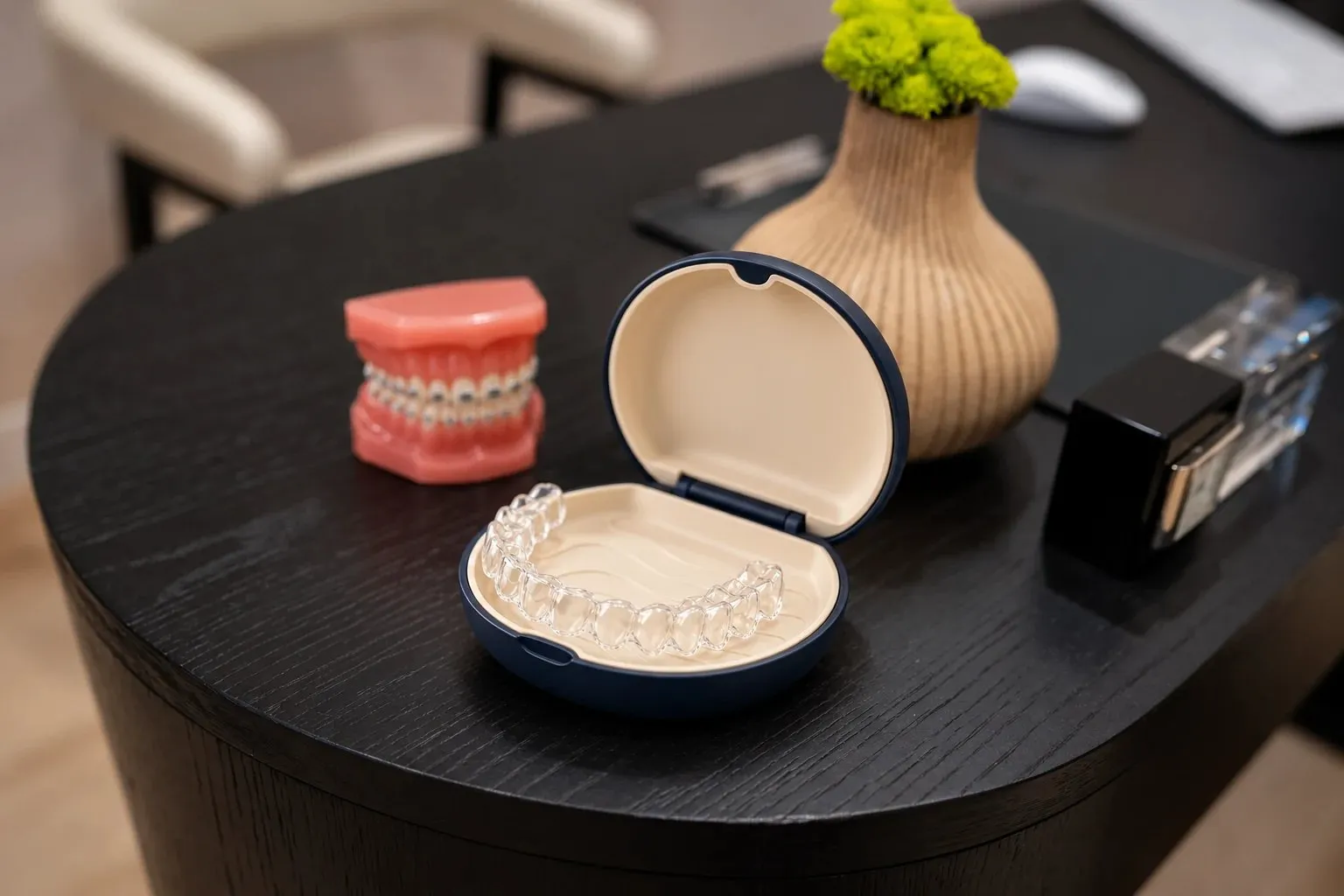
Spark uses custom clear-plastic trays made from a digital scan and your orthodontist’s treatment plan. Each set applies forces for a small part of the planned tooth movement. Wearing the right trays in the right order matters; changing sooner or skipping a set is not a shortcut.
More than a clear shell
Small tooth-colored attachments may be bonded to selected teeth to help the trays apply the intended forces. Some plans also use elastics for bite correction. These are treatment tools, not signs that aligners have failed; we explain which parts your own plan needs.
What might be visible?
The aligner edge, attachments and any prescribed elastics may be noticeable. Clear aligners are a discreet option, not an invisible one. We explain the parts your plan needs before you decide.
Creating room when needed
A plan may include interproximal reduction (IPR): carefully removing a small amount of enamel between selected teeth to create space. It is not needed for everyone, and enamel removal is permanent. If proposed, ask why, where and what the alternatives are. Our IPR guide explains the questions to bring.
02Before the first tray
Who is Spark
best for?
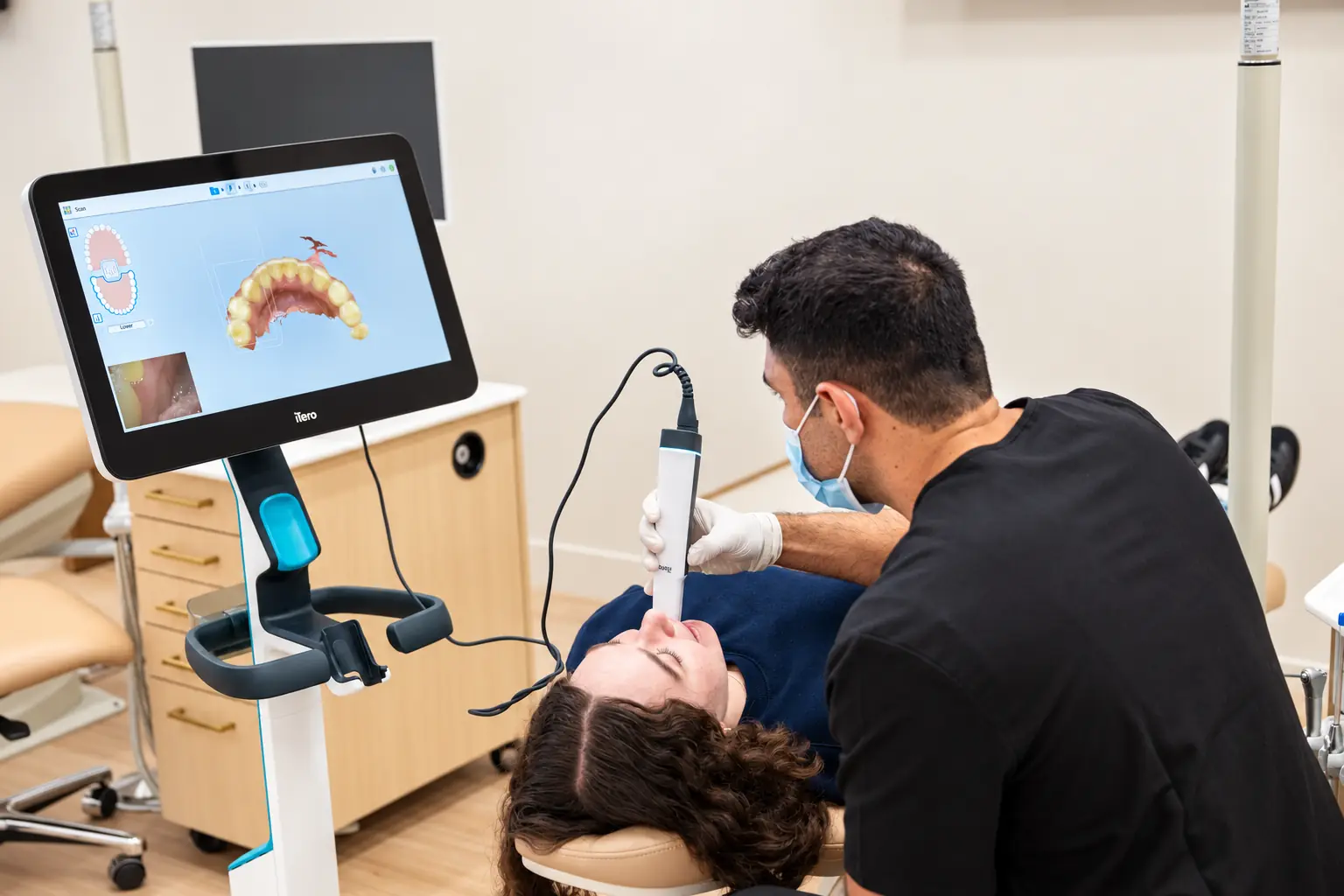
Spark is best for people who value a discreet appearance and the freedom to remove trays for meals and cleaning—and can commit to consistent daily wear. Dr. Haykani checks the movements needed, how your teeth meet and your dental health before recommending Spark or another approach.
Your Santa Clarita consultation
A scan records tooth surfaces; it does not replace an examination or clinically needed X-rays. Bring previous treatment records, dental concerns and questions to our Valencia office. Gum disease or other active dental problems may need attention before tooth movement begins.
What does the digital preview show?
The preview shows intended movements, not a guaranteed final smile or finish date. We review the fit of the trays and the way your teeth and bite are responding. If more movement is needed, a revised plan, another scan or additional aligners may be appropriate. Ask how those possibilities affect your treatment scope, timing and written fee.
Spark, Invisalign or fixed braces?
Spark and Invisalign both suit people who prioritize removable, discreet treatment. Compare the plan for your bite, the steps involved and what the fee includes—not a promise that one brand is always faster. Metal braces or ceramic braces can be a better fit when you prefer a fixed appliance or particular tooth movements favor braces. Each option still needs careful cleaning and follow-up.
- 01
Examine and discuss
Review your dental health, tooth positions, bite and priorities. Discuss suitable approaches and what each would leave unchanged before choosing an appliance.
- 02
Plan and prepare
Use your records to plan the sequence. Explain any attachments, elastics or space-making steps, the estimated course and the written treatment fee.
- 03
Fit and review
Check the first trays and show you how to insert, remove and care for them. Follow your prescribed change schedule and attend reviews so fit and progress can be assessed.
Before your visit: what a consultation includes · what scans and X-rays show · braces and aligner routines compared.
03Make room for the routine
Daily wear, meals
& cleaning.
Keep wear consistent
Spark recommends 22 hours of daily wear, including sleep. Follow your individual instructions and plan meals, drinks and cleaning around that routine. Repeatedly leaving trays out through a workday or school afternoon can interrupt the planned sequence; tell us early if the routine is difficult.
Look after teeth and trays
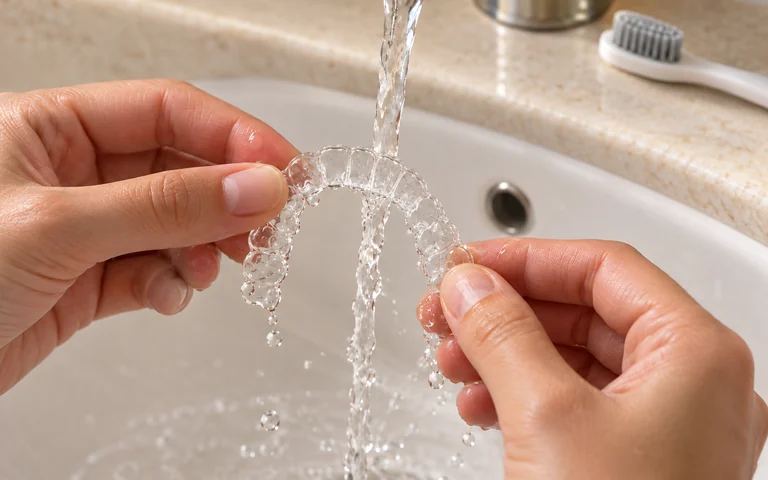
Remove trays for meals and drinks other than plain water. Brush and clean between your teeth, and clean the aligners using the method we recommend for your Spark trays. Keep them away from heat and store them in their case—not a napkin or pocket—when they are out. Cleaner instructions for a different brand are not automatically suitable.
If your day gets off schedule
Tell us about missed wear, a lost tray, a detached attachment or an aligner that no longer seats as instructed. Keep your recent trays and contact the office for advice. Do not skip forward, force a poor-fitting tray or use heat to change its shape. The next step depends on your fit and treatment stage, not just the original calendar date.
04After the final aligner
After aligners:
your retainer plan.
A retainer has a different job
Active aligners move teeth; retainers help hold the result afterward. Finishing is a clinical decision about the agreed alignment and bite goals, not simply reaching the last tray in a box. Teeth can shift later, so follow your individual retainer schedule over the long term and report a lost, damaged or poorly fitting retainer.
Before you decide
Spark aligner costs
& payment options.
SC’s published fee guide lists Spark with the same case-length fee structure as Invisalign. It is a starting point, not a diagnosis of your case or a promised timeline. Your consultation provides the recommended plan and exact written fee; ask what visits, additional aligners and retainers are included.
Plan the monthly amount
Our 0% financing spreads the remaining treatment balance into payments. The amount depends on your quoted fee, down payment and plan length. Use the current examples to prepare questions rather than assuming one advertised monthly amount fits every case.
Check coverage for your plan
A dental policy may include orthodontic benefits, but coverage for the proposed treatment must be checked. Review insurance verification and bring your card. The written benefit estimate is separate from the treatment fee; payment depends on your policy and eligibility.
A little more detail
Questions about
Spark aligners.
The practical questions matter as much as the clear appearance.
Who is Spark best for?
Spark is best for patients who want discreet, removable treatment and can stick to the daily wear routine. Taking trays out makes meals and tooth cleaning straightforward. The best fit still depends on your bite and dental health; fixed braces may be more practical if regular tray wear is difficult.
Spark or Invisalign—how do I choose?
Compare the proposed treatment, not just the brand. Spark and Invisalign use different materials and planning systems, but both need consistent wear and professional monitoring. Ask which can address your bite, what attachments or other steps are needed, and what the written fee includes. Neither brand is best for everyone.
When are braces a better choice than Spark?
Braces are the better fit when you want a fixed appliance rather than trays to remove and remember. Some tooth movements may also be more predictable with braces. The tradeoff is cleaning around brackets and wires and avoiding foods that could damage them. We compare suitable options at your consultation.
Can Spark treat crowding, gaps or bite problems?
Spark may be suitable for crowding, spacing and a range of bite concerns. The required movements, tooth and gum health, and ability to follow the wear routine determine suitability. Some cases are better suited to braces or a combined approach; an examination comes before the recommendation.
Can teenagers have Spark aligners?
Yes, Spark can be an option for teens. Dental development, the bite and reliable wear matter more than age alone. Think through school lunches, cleaning and keeping trays safe. Dr. Haykani can help you compare that routine with fixed braces before choosing treatment.
Do Spark aligners contain BPA or latex?
Spark states that its aligners are made with TruGEN material and are BPA- and latex-free. Tell us about material allergies before treatment so we can check every part of your plan, including any attachments or elastics, not only the trays.
Can I start wearing Spark at my first consultation?
Spark trays are made for your teeth after records and treatment planning, so a consultation is not a promise of same-day aligners. Once your plan is ready, we explain the next steps and arrange the fitting appointment.
How long does Spark treatment take?
The timeline depends on the tooth movements and bite correction needed, your dental health and consistent wear. Additional aligners can change the original estimate. Your consultation gives you a case-specific range; neither a digital preview nor a tray count guarantees the day treatment will finish.
Will I need attachments, elastics or IPR?
Not every patient needs the same steps. Attachments help trays apply planned forces; elastics may help with the bite; interproximal reduction creates space by removing a small amount of enamel between selected teeth. If any are proposed, we explain their purpose and alternatives before you decide.
Can I wear Spark only at night?
No. Spark recommends 22 hours of wear a day, including sleep. Nighttime alone does not meet that schedule. If daytime wear will be difficult, discuss a fixed-braces option rather than shortening your prescribed wear time.
Can I eat or drink coffee with Spark aligners in?
Remove your aligners for meals, coffee and drinks other than plain water. Clean your teeth before putting the trays back in. Keep the aligners in their case while they are out, and plan meals and drinks around your prescribed daily wear time.
How should I clean my Spark aligners?
Gently clean the trays with a soft toothbrush, soap and water, then rinse well. Avoid hot water and abrasive toothpaste. Follow the cleaning instructions supplied for your Spark trays, and check with us before using soaking solutions or whitening products.
Will Spark hurt or affect how I speak?
Pressure or tenderness can happen when you start or change trays, and speech may feel different at first. Discomfort is not a measure of progress. Contact us about severe or persistent pain, swelling, sores or a tray that does not fit as instructed.
How often will I change trays or have check-ins?
Your tray-change and appointment schedules are part of your individual plan. Change trays only as directed, keep your review visits and tell us if wear has been interrupted. Additional aligners may be needed, so the initial tray count is not a guaranteed finish date.
What are refinements or additional aligners?
They are extra aligner stages used when the teeth or bite need more adjustment after the initial series. Dr. Haykani reassesses your progress and may take another scan to plan them. Ask how additional stages affect your estimated timeline and what your written treatment fee covers.
What if I lose a tray or it no longer seats fully?
Contact the office for advice and keep your recent trays. Do not skip ahead, force an aligner that will not seat or try to reshape it with heat. We will advise which tray to wear and whether your treatment needs a check.
Do I still need dental checkups during Spark treatment?
Yes. Keep seeing your dentist for cleanings and checks for decay and gum problems. Orthodontic visits assess tooth movement and your bite; they do not replace routine dental care. Tell both offices about dental work planned during treatment.
Is Spark cheaper than Invisalign, and what does it cost?
SC Orthodontics lists Spark and Invisalign under the same case-length fee structure in the published fee guide. Spark is not automatically the cheaper option here. Your exact fee is confirmed in writing after evaluation; compare what visits, additional aligners and retainers are included, not just the starting price.
Does dental insurance cover Spark aligners?
Some dental plans include orthodontic benefits; others do not. Coverage depends on your policy and eligibility, not the Spark name alone. Bring or send your insurance card so we can check the applicable benefits and provide an estimate alongside your treatment fee. An estimate does not guarantee insurer payment.
Can I make monthly payments for Spark?
SC Orthodontics offers monthly payment plans at 0%. Your monthly amount depends on the written treatment fee, down payment and payment-plan length. We can review those choices with you at the consultation so you can compare the total cost as well as the monthly payment.
Will I need retainers after Spark treatment?
Yes. Aligners move teeth; retainers help maintain the result afterward. Your retainer type and wear instructions are individual. Tell us promptly if a retainer is lost, damaged or no longer fits.
Your next step
Discuss Spark
at a free consultation.
Meet Dr. Haykani at SC Orthodontics in Valencia, serving Santa Clarita. We’ll discuss your teeth, your goals and suitable treatment options.
- Visit
- 25385 Wayne Mills Pl
Valencia, CA 91355 - Call / text
- (661) 425-0559
Spark near you
Directions and timing from your part of the valley.
Also consider