
Open weekdays, Sundays & evenings
(661) 425-0559 Request appointment
SC Orthodontics Book online
Smile Gallery First Visit
Call or text, same-day reply(661) 425-0559
Book free consultation

Resources / Frequently asked questions

Asked often. Answered plainly.

69 questions from real consultations, grouped so you can find yours.

Every answer here is the one Dr. Haykani gives in the chair. Where a question depends on your case, we say so, and the free consultation is where you get the specific answer with your own scans on the screen.

The consultation area at SC Orthodontics in Valencia

01Getting started

Timing, cost, and the first visit.
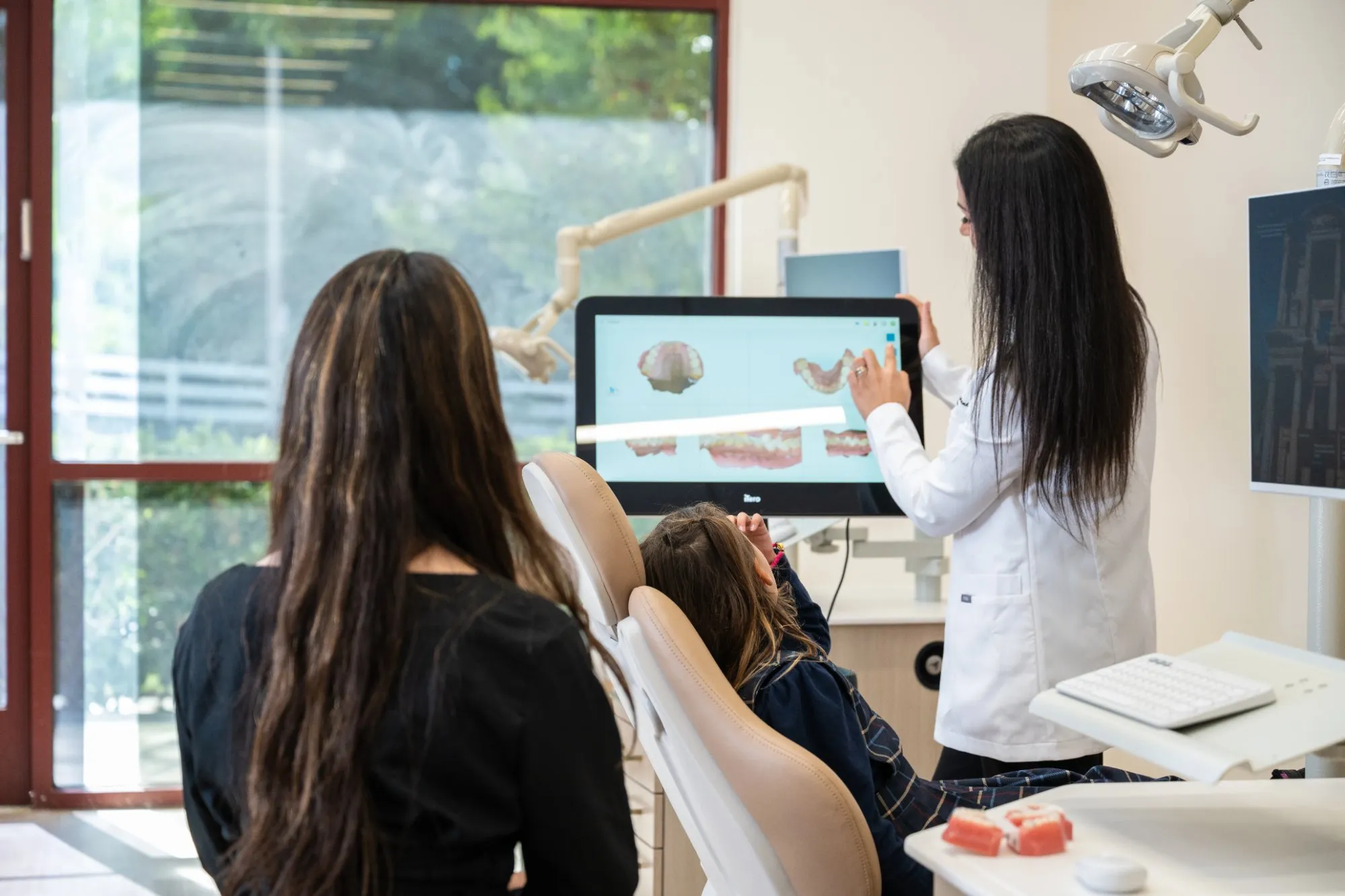
Dr. Haykani reviewing a plan with a patient
  • Orthodontic treatment time varies depending on the complexity of your case and the type of treatment you choose. Most patients with braces are in treatment for approximately 18–24 months. Invisalign treatment times can vary based on the amount of correction needed and how consistently the aligners are worn. After evaluating your smile and bite, Dr. Haykani can give you a more personalized treatment timeline.

  • It is normal to experience some mild soreness or tenderness for the first few days after braces are placed or adjusted. This usually improves quickly as your teeth and mouth adapt. Most patients find that any discomfort is temporary and manageable with soft foods and, when appropriate, over-the-counter pain relief.

  • Yes, but you will need to avoid foods that can damage your brackets and wires, especially hard, sticky, or very chewy foods. Softer foods are often more comfortable during the first few days after your braces are placed or adjusted. Maintaining good brushing and flossing habits throughout treatment is also especially important to keep your teeth and gums healthy.

  • Invisalign can treat many types of orthodontic concerns, including crowding, spacing, and a variety of bite problems. However, every case is different, and some patients may benefit more from braces or another treatment approach. Dr. Haykani will evaluate your teeth, bite, and treatment goals to determine the best option for you. For Invisalign treatment to stay on track, aligners should typically be worn about 20–22 hours per day.

  • Contact SC Orthodontics as soon as possible. Teeth can begin to shift when a retainer is not being worn, so it is best to replace or repair it quickly. Depending on the type of retainer and the extent of the damage, we can determine the best next step for keeping your smile in position.

  • Your treatment fee is quoted at the free consultation, before you decide. It includes visits, adjustments, emergency care, and your first set of retainers. If treatment needs more time, that is included. Insurance is verified and maximized and 0% financing runs through treatment.

  • Yes. It includes X-rays and digital scans, and you leave with the diagnosis, your options, the timing, the exact fee, and an insurance estimate. Second opinions are complimentary too.

  • New patients are usually seen the same week, including Sunday and evening appointments. You can request an appointment online, or call or text and hear back the same day.

  • Yes. She evaluates, plans, makes every clinical decision, treats you at every orthodontic visit, monitors progress, and finishes the case. Your treatment does not rotate between doctors.

  • SC Orthodontics is located at 25385 Wayne Mills Pl, Valencia, CA 91355. Our office is conveniently located near Magic Mountain Parkway and Wayne Mills Place, just off the Magic Mountain Parkway exit from the I-5 freeway, making us easily accessible for patients throughout Valencia and the Santa Clarita Valley.

02Clear aligners

Invisalign and Spark.
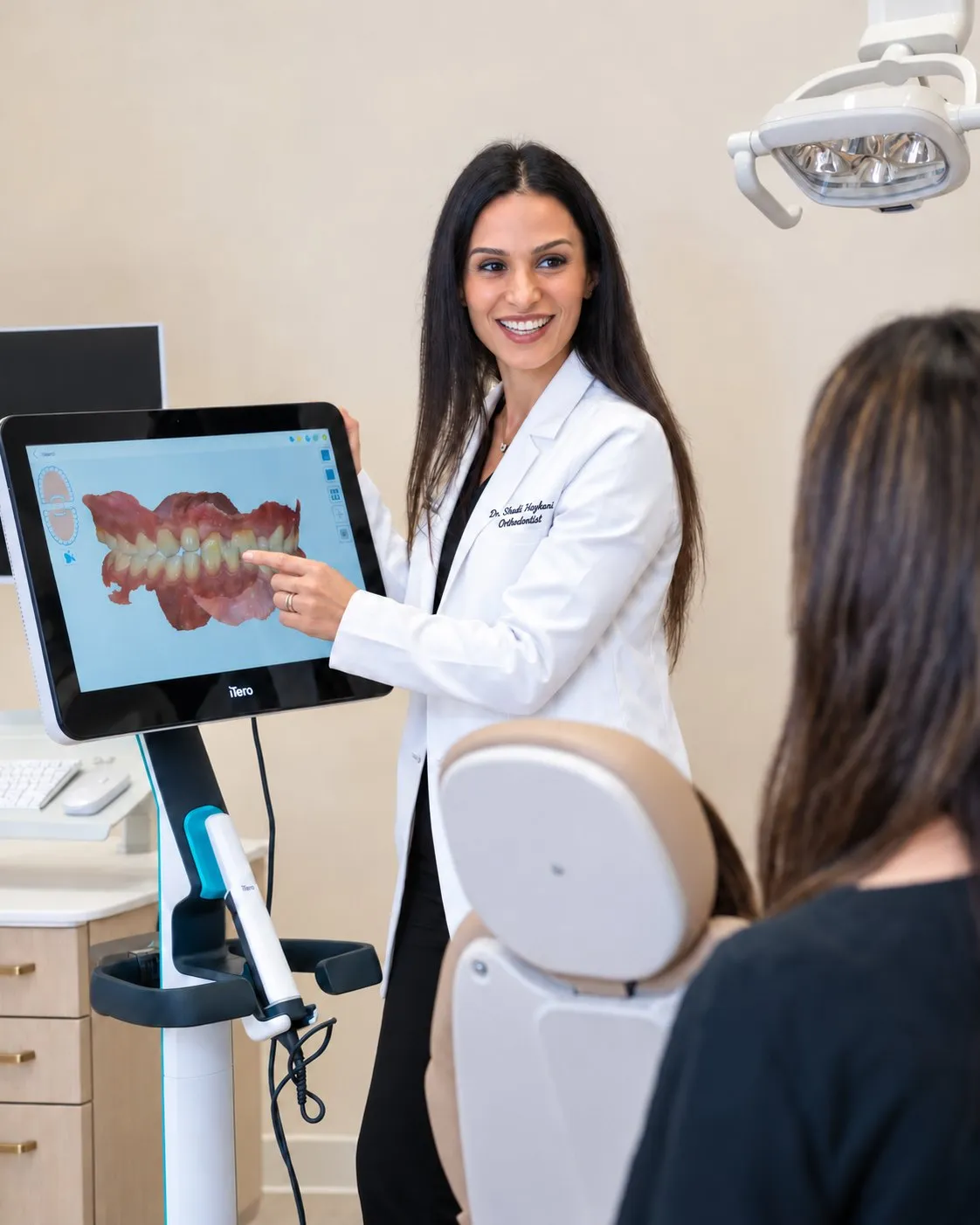
An aligner plan on screen at SC Orthodontics
  • Most patients finish in 12 to 18 months, and mild corrections can be quicker with Invisalign Express. Dr. Haykani gives you a timeline for your own case once she has your scan and X-rays.

  • Twenty to twenty-two hours. They come out to eat, to drink anything other than water, and to brush, then go straight back in. Consistent wear is what keeps treatment on schedule.

  • Each new set brings mild pressure for a day or two as the teeth begin to move. It settles quickly, and most patients find it gentler than they expected.

  • Yes. The trays come out for meals, so nothing is off the menu. Brush before putting them back in and they stay clear and fresh.

  • Invisalign corrects crowding, spacing, overbites, underbites, and crossbites, with precise control over each movement. For more complex cases Dr. Haykani walks you through every suitable option and recommends the one that gives your case the best finish.

  • Yes. Invisalign Teen includes compliance indicators that show wear time, and it is built around growing smiles and busy school schedules.

  • Call or text us and you will hear back the same day. Dr. Haykani will advise the best next step, whether that is moving to the next set or ordering a replacement.

  • Request an appointment online, or call or text (661) 425-0559. New patients are usually seen the same week, including Sundays and evenings.

  • Dr. Haykani herself, at every orthodontic visit, supported by a team who know your case. She plans every movement and checks the progress.

  • The aligners are comfortable to wear. Expect mild pressure for a day or two after switching to a new set, which is the sign your teeth are moving as planned.

  • Yes. The trays come out to eat and drink, so nothing is off the menu. Brush before putting them back in and they stay clear and fresh.

03Braces

Metal, ceramic, Damon, LightForce, InBrace.
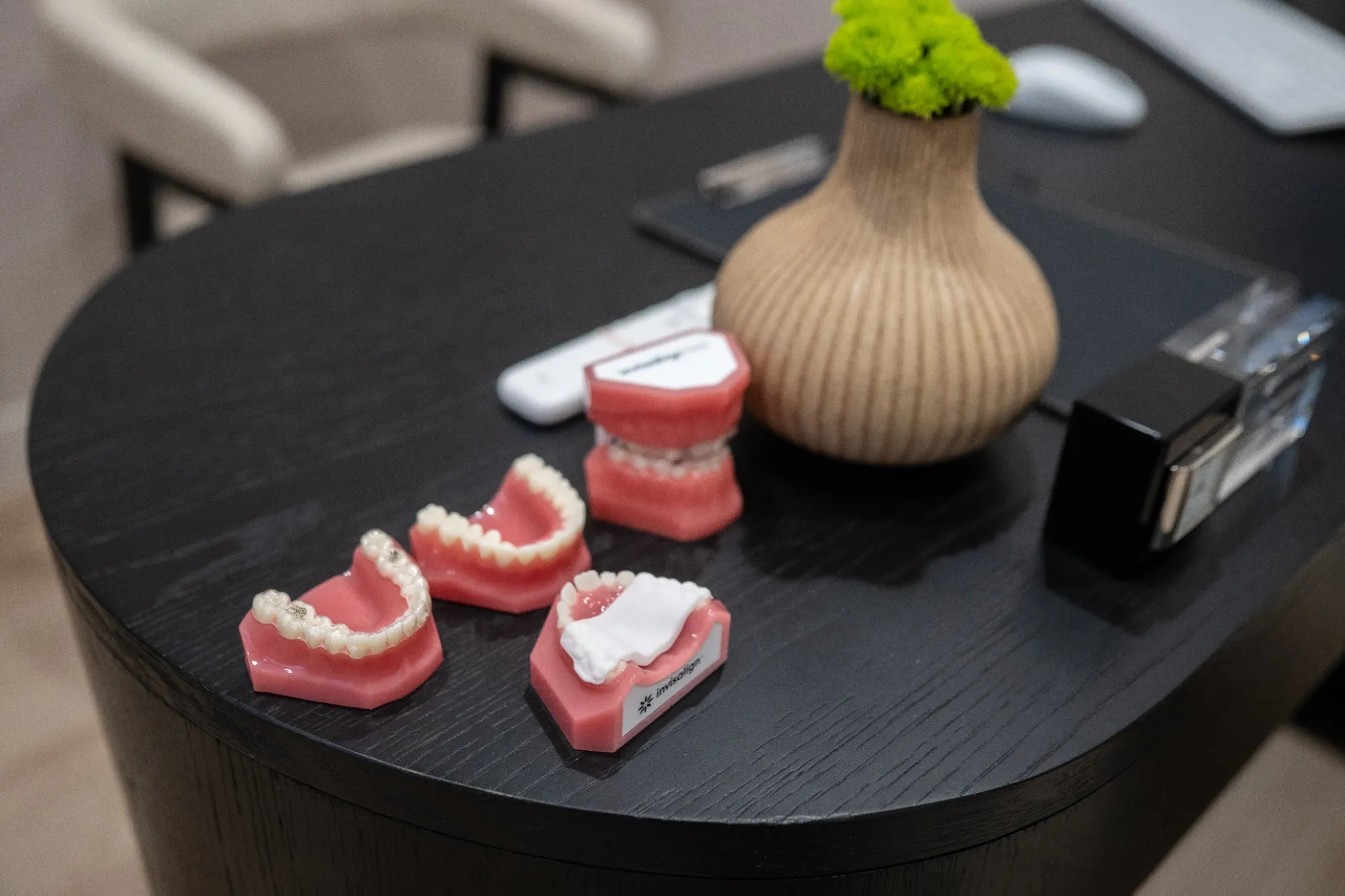
Bracket systems at SC Orthodontics
  • Most patients are in treatment between 18 and 24 months, depending on the case. Dr. Haykani gives you a personalized estimate at your consultation, and if your treatment needs more time, that time is included in your fee.

  • Mild soreness for a day or two after placement or an adjustment is normal, and it settles quickly. We send you home knowing exactly what helps, and soft foods make the first days easy.

  • Yes. Metal braces suit patients of every age, and many adults choose them for the precise control they give over complex movements.

  • Speech may feel slightly different for the first day or two, and almost everyone adapts quickly. Dr. Haykani checks in on it at your next visit.

  • Ceramic brackets use a more refined material, so the fee sits a little above metal braces. You get a clear breakdown at your consultation, with the exact number before you decide.

  • No. They move teeth just as efficiently as metal braces. Your timeline depends on the complexity of your case rather than the bracket material.

  • The ceramic brackets are highly stain resistant. The clear ties that hold the wire are replaced at every adjustment, so they stay fresh throughout treatment.

  • A self-ligating clip holds the archwire instead of elastic bands, which lowers friction and lets teeth move more freely. That usually means gentler forces, shorter appointments, and often a shorter overall treatment.

  • Yes, for teenagers and adults alike. Dr. Haykani evaluates your bite at the consultation and confirms that the mechanics suit your case.

  • Most patients report less soreness, because the self-ligating clips apply gentler force. Mild discomfort after an adjustment settles quickly.

  • LightForce uses fixed ceramic brackets bonded to the teeth, where Invisalign uses removable clear trays. LightForce is often the better choice for complex cases that call for precise bracket control, and Dr. Haykani will help you decide which suits your case at your consultation.

  • It depends on the complexity of your case. Because every movement is planned so precisely, many patients finish in a similar or shorter timeframe than they would with standard braces.

  • Most patients adjust within a few days. The low-profile ceramic design means less bulk in the mouth than traditional metal braces, which makes the adjustment easier.

  • Request an appointment online, or call or text (661) 425-0559. New patients are usually seen the same week, including Sundays and evenings.

  • Dr. Haykani herself, at every orthodontic visit, supported by a team who know your case. She plans the Smartwire, bonds the braces, and finishes the treatment.

  • Most cases run 12 to 24 months. Dr. Haykani gives you a timeline for your own case at the consultation, and if your treatment needs more time, that time is included in your fee.

04Children and growth

When to start, and when to wait.
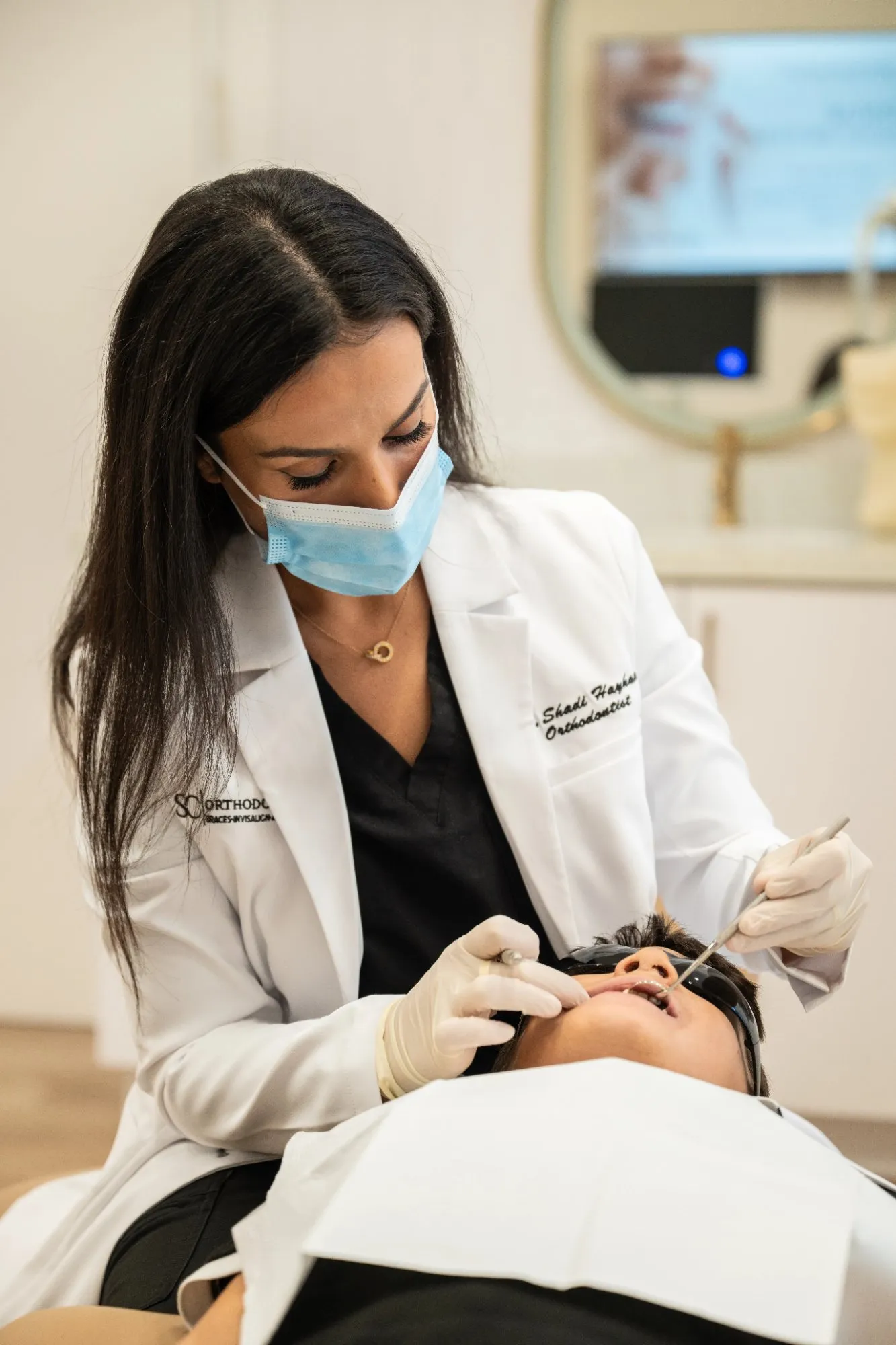
Dr. Haykani examining a young patient
  • Any age during childhood, and the earlier the better. Many issues are most effectively addressed between six and twelve, while the jaws and facial bones are still actively growing and most responsive.

  • Common signs are mouth breathing, snoring, restless sleep, crowded teeth, and a narrow upper jaw. If you have noticed any of these, it is worth booking a consultation.

  • Not at all. It is a clinical examination and, in some cases, imaging. There is nothing uncomfortable about the process.

  • Around 45 minutes to an hour, which allows time for a thorough examination, imaging if needed, and a full discussion of the findings with you.

  • Not necessarily. Many children simply need monitoring over time, which we do at no charge. Dr. Haykani explains what she finds and gives you a clear recommendation for your child.

  • No sharp pain. Your child feels pressure or mild tightness in the roof of the mouth or behind the nose for a few minutes after each turn, and it fades quickly.

  • The active turning phase usually lasts a few weeks. The appliance then stays in place around four to six months so the new bone hardens and holds the wider jaw.

  • A slight lisp and extra saliva are common for the first few days. The tongue adapts quickly and normal speech usually returns within a week.

  • Most of their normal diet, yes. Sticky, chewy, and very hard foods are best avoided so the appliance stays put, and cutting food smaller helps in the first few days.

  • Simply resume the normal schedule the next day. Avoid doing two turns at once to catch up, as that causes unnecessary discomfort.

05Complex cases

TADs and jaw surgery.
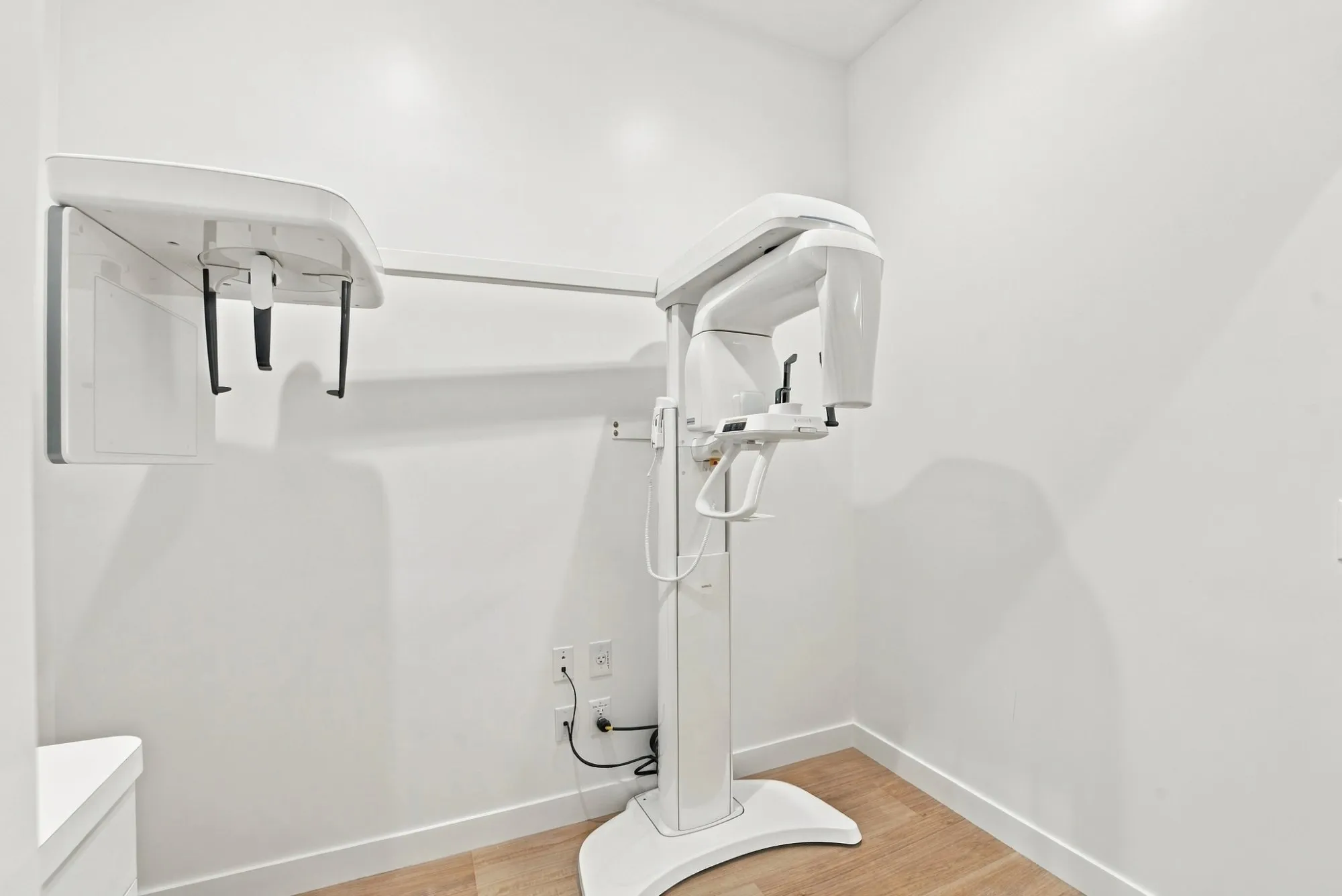
Digital records used for treatment planning
  • The site is numbed with local anesthetic, so there is no pain during placement. You may feel pressure, and mild soreness afterwards is normal and fades quickly. Over-the-counter pain relief is usually all that is needed.

  • It depends on the movement required. Some are needed for a few months, others a little longer. Dr. Haykani gives you an estimated timeline as part of your plan.

  • It is rare. If it happens, call or text and you will hear back the same day, and we adjust or replace it easily. Leaving it alone rather than playing with it keeps it secure.

  • Brush it gently with a soft toothbrush just as you do your teeth, and keep brushing and flossing as normal. An antimicrobial mouthwash helps keep the surrounding gums healthy.

  • The surgery is performed under general anesthetic, so you feel nothing during the procedure. Afterwards there is swelling and discomfort, managed with prescribed pain medication.

  • Usually one to two days, so the medical team can monitor your early recovery and keep you comfortable.

  • Modern techniques use small plates and screws to secure the bone rather than wiring the jaws together, so you can usually open your mouth a little right after surgery.

  • Swelling peaks around the third day and subsides over the following weeks. Minor residual swelling can linger for a few months.

  • Most patients take two to three weeks, which gives the body time to heal and adjust to the new jaw position.

06After treatment

Retainers, guards, whitening, TMJ.
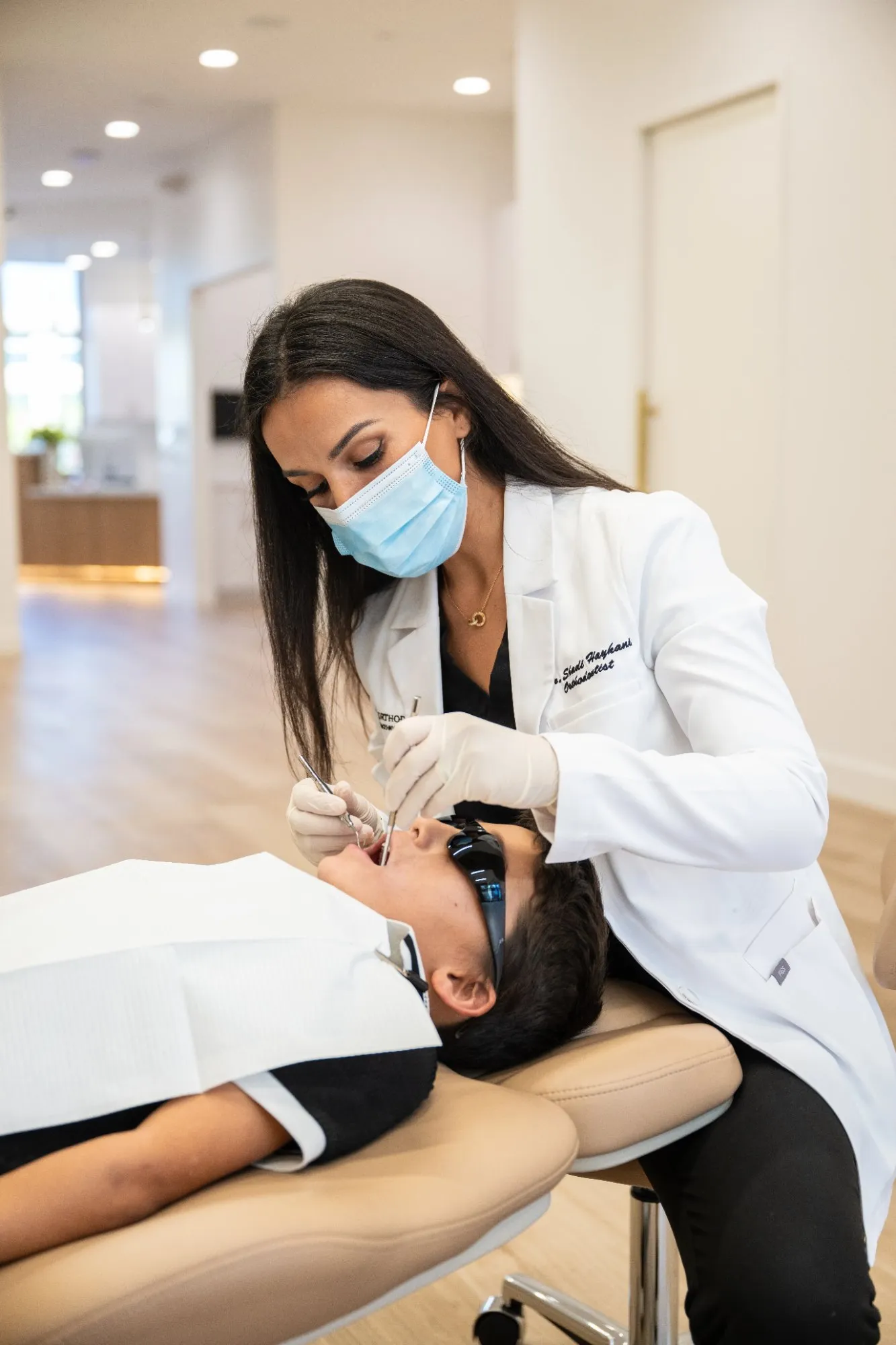
Dr. Haykani checking a finished result
  • Request an appointment online, or call or text (661) 425-0559. You will hear back the same day, including Sundays and evenings.

  • Dr. Haykani herself. She checks the fit, confirms every tooth is holding where she finished it, and makes any adjustment right there in the chair.

  • Most patients wear it full time for the first few months, then at night long term. Dr. Haykani sets the schedule your case needs rather than a generic rule.

  • Brush it daily with a soft toothbrush and mild clear soap, then rinse with cool or lukewarm water. Keep it away from hot water, which can warp the plastic, and store it in its case whenever it is out.

  • A scanned guard is slim, secure, and fits the way your teeth actually meet, so the force spreads evenly across the bite. That fit is also why patients keep wearing it, which is what makes it work.

  • Typically one to five years, depending on how heavily you grind and how you care for it. Dr. Haykani inspects it at your routine visits and refreshes it when it has earned it.

  • It takes the load off your teeth and lets the jaw muscles rest, which is what protects your enamel and relieves the morning ache. Where the clenching comes from the joint or from stress, Dr. Haykani treats that alongside it.

  • Request an appointment online, or call or text (661) 425-0559. You will hear back the same day, including Sundays and evenings.

  • Dr. Haykani examines your teeth and gums, confirms they are ready, and plans the shade with you herself.

  • Yes. Your gums and lips are protected with a barrier before the gel goes on, the strength is matched to your sensitivity, and the whole treatment is supervised.

  • Sometimes, when the bite is a contributing factor. Often the first step is a guard and muscle care, and Dr. Haykani starts with whichever step is most likely to bring relief.

  • Used therapeutically, it eases overactive jaw muscles, which can relieve clenching pain and headaches. It is one option among several, chosen when it fits what she finds.

  • Frequently, yes. A custom guard protects the teeth while the muscles settle.

Not answered here?

Ask us directly. You hear back the same day, every time.

Or book a free consultation and ask Dr. Haykani in person, with your own X-rays and scans on the screen.

(661) 425-0559
Book free consultationSundays & evenings available