
Tooth abnormalities: the ways teeth can form differently
The main kinds of tooth abnormalities, from missing and extra teeth to unusual shapes and enamel, what causes them, how they are found and who treats them.
SC OrthodonticsNovember 23, 20266 min read
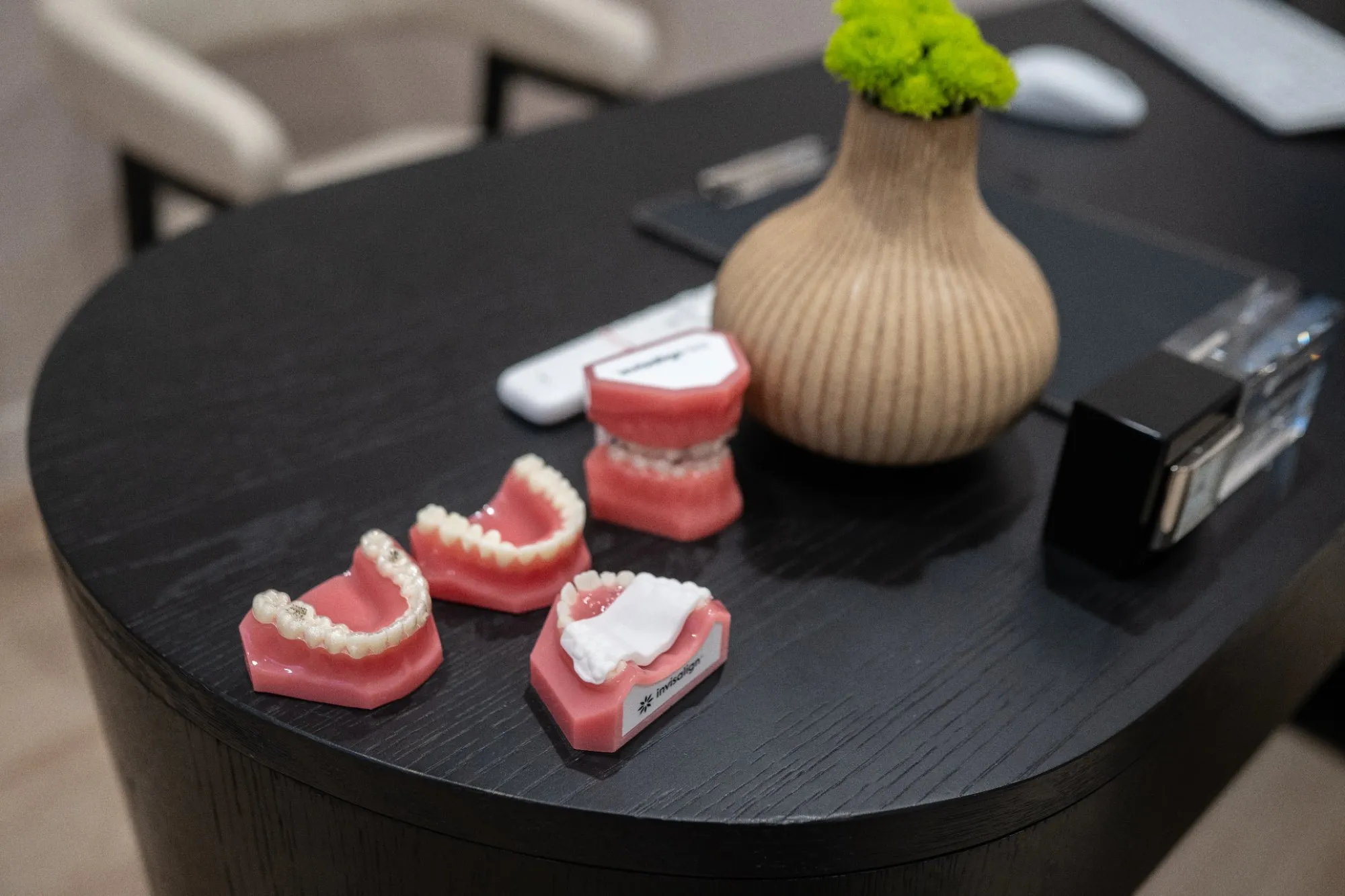
Tooth abnormalities, which dentists call dental anomalies, are differences in the way teeth form: teeth that are missing or extra, teeth of unusual size or shape, enamel or dentin that forms differently, and teeth that come in late or out of place. In a study of 3,043 orthodontic patients, 5.46% had at least one of the eight developmental anomalies the researchers looked for, and missing teeth were the most frequent. Genes play a part in many of them, and illness or medical treatment while the teeth are forming can cause others. A dentist can find them with an exam and X-rays, and care is often shared between a dentist, who can build up or restore a tooth, and an orthodontist, who moves teeth to close or open space.
- Dental anomalies are teeth that form differently in number, size, shape, enamel or dentin, or in when and where they come in.
- One study of 3,043 orthodontic patients found at least one of eight developmental anomalies in 5.46%, most often missing teeth.
- Genes play a part in many anomalies, and illness or medical treatment in childhood can affect teeth that are still forming.
- X-rays are often needed to find them, and finding one anomaly can alert the dentist to others in the same person or family.
What are tooth abnormalities?
They are differences in the way teeth develop. MedlinePlus lists an abnormal color or shape of the tooth among the common symptoms of tooth disorders, and says that in some cases a person was born with the problem.
An international group of dentists and geneticists sorted dental disorders into eight groups:
- teeth that never formed
- extra teeth
- teeth of unusual size or shape
- enamel that forms differently
- dentin that forms differently
- teeth that come in differently
- conditions of the gums and the tissues around the teeth
- growths that behave like tumors
Missing and extra teeth
Missing teeth are among the most frequent anomalies. When one or more teeth never develop, it is called hypodontia, and in the study of 3,043 orthodontic patients it was the most common anomaly, followed by microdontia. Our guide to missing lateral incisors compares closing the space with keeping it for a replacement tooth.
Extra teeth, called supernumerary teeth or hyperdontia, can appear among the baby or the adult teeth, and some stay hidden under the gum. Some only need watching, while others can keep a neighboring tooth from coming in or push it out of line. Our guide to extra teeth explains how they are assessed.
Teeth of unusual size or shape
Teeth can be smaller than usual, called microdontia, or larger than usual, called macrodontia.
A peg lateral incisor is one example: a small upper front tooth beside one of the two central incisors. A 2013 analysis of 36 studies put its overall prevalence at 1.8%, and in people with a peg-shaped tooth on one side, 55.5% were missing the lateral incisor on the other side. Our guide to peg lateral incisors explains how the tooth’s position and shape are planned together.
Some inherited conditions change the shape of many teeth at once. In ectodermal dysplasia, a group of conditions that also affect the skin, hair, nails and sweat glands, teeth can be missing, pointed, globe-shaped, smaller than normal or widely spaced.
What happens when enamel or dentin forms differently?
The tooth may look discolored and wear or break more easily. Enamel is the hard outer surface of a tooth and dentin the hard yellow layer beneath it. Either can form abnormally.
In amelogenesis imperfecta, a group of inherited disorders, the enamel does not form properly. The teeth may come in later than normal and may be unusually small, discolored, pitted or grooved, and they are prone to rapid wear, cavities and breakage. How often it occurs varies widely, from 1 in 700 people in northern Sweden to 1 in 14,000 in the United States.
In dentinogenesis imperfecta, the teeth are discolored, most often blue-gray or yellow-brown, and translucent. They are also weaker than normal, so they wear, break and are lost more easily. It affects an estimated 1 in 6,000 to 8,000 people.
Not every enamel or dentin defect is inherited. A 2014 review describes causes that range from genetic defects to environmental insults, including medical illnesses, and notes that enamel defects often bring discoloration, sensitivity and a higher risk of cavities, wear and erosion. Dental fluorosis is one example: faint white lines or flecks that form when a child regularly takes in more fluoride than recommended while the adult teeth are forming.
Teeth that come in late or in an unusual position
Some teeth form normally but do not come in when or where they should. MedlinePlus defines an impacted tooth as one that did not break through the gum when it should have; it is usually a wisdom tooth, but it can happen to other teeth. Our page on impacted teeth explains why it happens and how it is treated, and our guide to impacted canine teeth covers the pointed teeth at the corners of the smile.
Missing teeth and eruption problems often go together. A review of missing-teeth patterns notes that missing teeth are often found together with late eruption, transposition and crowding. Transposition means two neighboring teeth have swapped places, as our guide to tooth transposition explains.
A tooth can also come in out of its usual position, which is called ectopic eruption. A baby molar that sits lower than the teeth beside it may instead be ankylosed, fused to the surrounding bone.
What causes tooth abnormalities?
Anything that interrupts tooth development can cause one, and genes and the environment both play a part. A 2013 review describes genetics as a factor at different levels alongside environmental factors, and notes that researchers have asked whether one genetic defect could explain missing, misshapen and out-of-place teeth.
Many inherited dental disorders have a known genetic cause: in the international classification, a causal gene had been identified for 79% of the 408 it listed, some of which affect the whole body. Cleidocranial dysplasia, for example, brings extra teeth and adult teeth that come in late, and our page on cleft lip and palate explains how a cleft affects the teeth.
Illness and its treatment can affect teeth that are still forming. A 2023 review of 35 studies of people treated for cancer in childhood found discoloration in 53%, crown and root malformations or missing teeth in 36% and microdontia in 16%, and the survivors were more likely to have dental changes than people in the comparison groups.
How are tooth abnormalities found and treated?
Often at a dental visit. Your dentist looks at the teeth and, in some cases, takes dental X-rays, which can show teeth still under the gum that a look in the mouth cannot. A review of missing teeth says an accurate diagnosis needs X-rays, a clinical exam and dental models, and our guide to orthodontic X-rays explains what each kind of image shows.
Finding one anomaly is a reason to look for others. The same review notes that early diagnosis of one anomaly can alert the dentist to others in the same person or family, and a 2025 systematic review found, on limited evidence, that people with missing teeth were more likely to have microdontia, underdeveloped enamel and other anomalies.
Treatment depends on the anomaly and is often shared between a dentist and an orthodontist. The 2013 review on genetics notes that treating anomalies such as missing or impacted teeth involves orthodontic treatment as part of a team. Braces or clear aligners can move teeth to close a gap or make room for a replacement tooth, depending on what the teeth need, while a dentist can change the size or shape of a small tooth with dental bonding or a veneer.
Some anomalies need no treatment at all. An extra tooth that causes no problems may only be watched, and leaving a peg lateral incisor as it is can be a reasonable option once the tooth and bite have been assessed.
Frequently asked questions
How common are dental anomalies?
It depends on which anomalies are counted. A study of 3,043 orthodontic patients that looked for eight developmental anomalies found at least one in 5.46%. A 2024 study of panoramic X-rays from 923 people aged 8 to 27, which also counted impacted teeth and teeth coming in out of place, found anomalies in 27.8%, most often impaction.
Why are my teeth misshapen?
Some teeth are shaped differently from the time they form, and others change shape later. MedlinePlus says the causes of tooth problems vary: sometimes the teeth were not cared for well, sometimes a person was born with the problem, and sometimes an accident is the cause. Worn-down teeth and an abnormal color or shape are among the common symptoms. Your dentist can examine the teeth, with X-rays if needed, to tell which applies.
Can tooth abnormalities be a sign of a syndrome?
Sometimes. Dental anomalies occur often in a number of genetic disorders and act as major signs in diagnosing them, according to an international group of dentists and geneticists. NIDCR says ectodermal dysplasia, for example, is often first suspected by a dentist when a child’s teeth do not come in or have an irregular shape, and the dentist then refers the family to a medical geneticist or a doctor with experience in the condition.
Do tooth abnormalities run in families?
Some do. Dentinogenesis imperfecta is inherited in an autosomal dominant pattern, which means one altered copy of the gene is enough to cause it. NIDCR says ectodermal dysplasia can be passed on from parents but can also occur with no family history. If a parent or sibling has missing, extra or unusually shaped teeth, mention it at your child’s dental visits.
More notes