
Macrodontia: when teeth are larger than usual
How large teeth are measured, one large tooth versus several, the known causes, what studies say about crowding, and the ways macrodontia is treated.
SC OrthodonticsNovember 23, 20265 min read
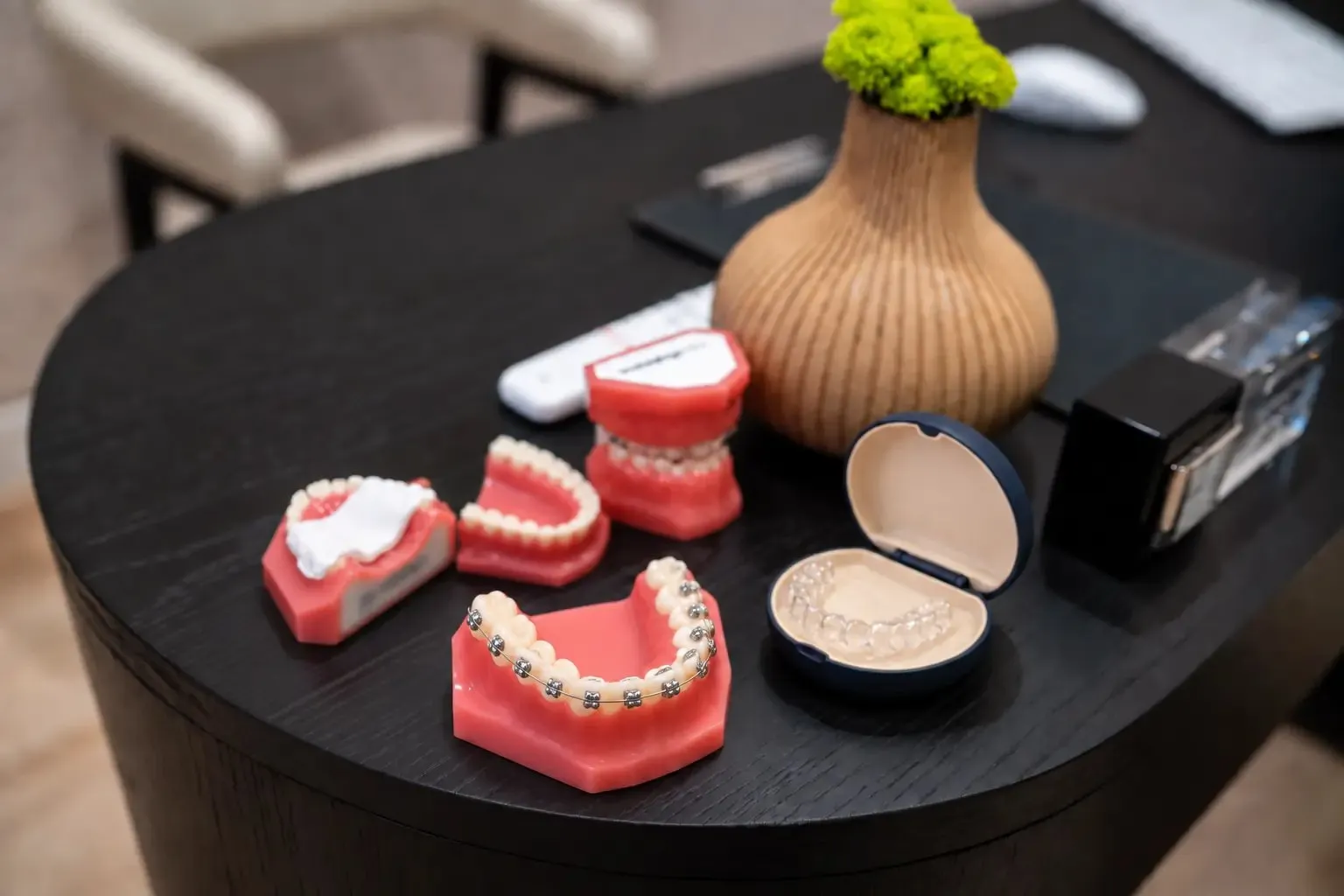
Macrodontia means one or more teeth are larger than average. The National Human Genome Research Institute’s definition is a tooth whose width, measured from side to side, is more than 2 standard deviations above the mean for age, or a tooth that appears wider than usual. It is rare and usually becomes apparent in childhood, sometimes as part of a genetic or hormone condition such as KBG syndrome. A large tooth can crowd its neighbors or push them off course, and care can call for root canal, restorative, surgical and orthodontic input, depending on the tooth.
- Macrodontia means one or more teeth are wider than average for age, either by measurement or by appearance.
- It is rare, usually becomes apparent in childhood, and can be part of a genetic or hormone condition such as KBG syndrome.
- Studies disagree on crowding: one found larger teeth in crowded mouths, while another found smaller dental arches instead.
- Depending on the tooth, care can call for root canal, restorative, surgical and orthodontic input.
What is macrodontia?
Dentists judge a tooth’s size by its mesiodistal width, its width from side to side along the row. The National Human Genome Research Institute counts a tooth as macrodont when that width is more than 2 standard deviations above the mean for age, which puts it well outside the usual range, or when the tooth appears wider than usual.
Baby teeth and adult teeth can both be affected. A 2023 review in the British Dental Journal describes macrodontia as an increase in the size of a tooth or multiple teeth that may show in either set and usually becomes apparent in childhood.
It is uncommon. A 2020 review calls it rare, and a French study of 551 orthodontic patients found no macrodontia at all, while 11.43% of them had an ectopic eruption, a tooth coming in along the wrong path.
Some teeth look large for other reasons. The two upper central incisors are naturally the widest front teeth, as our guide to incisors explains. Two teeth joined into one wide tooth are called double teeth, a term that traditionally covers fused and geminated teeth, and the British Dental Journal review describes them separately. Front teeth that stick out past the lower ones are buck teeth, whatever their size, and teeth smaller than usual are microdontia.
Does macrodontia affect one tooth or all of them?
It can be one tooth or a group of teeth. In a 2014 case report, a child’s upper left front tooth measured 12.41 mm across against 10.06 mm for the right one, and an X-ray showed the rest of the teeth developing normally.
Large lower second premolars, the teeth just in front of the lower molars, are a pattern of their own. A 2001 report found only six earlier published cases with this shape, and notes that the large crowns cause problems as the teeth come in and disrupt the teeth around them.
Macrodontia also turns up as part of other conditions: a 2013 article on managing large teeth calls it an established feature of numerous systemic conditions and syndromes.
What causes large teeth?
Research ties macrodontia to several genetic and endocrine (hormone) conditions and to a few other things:
- KBG syndrome, a rare genetic condition caused by changes in the ANKRD11 gene. MedlinePlus Genetics calls unusually large upper front teeth a characteristic feature of it, along with differences in the face, the skeleton and development.
- Radiotherapy to the face and neck given early in childhood, generally before age 5. A 2015 review lists macrodontia, microdontia and missing teeth among its possible effects on the teeth.
- Other dental anomalies, which macrodontia often accompanies. In a study of 2,348 Turkish children aged 7 to 12, 9 of the 177 children who were missing teeth also had macrodontia.
Can teeth be too big for your mouth?
A large tooth can crowd the teeth around it. The British Dental Journal review lists crowding, ectopic eruption of neighboring teeth and gum (periodontal) concerns among the problems macrodontia may cause.
Whether teeth at the large end of normal make crowding more likely is less clear, and two older studies came to different answers:
- A 1981 study of 80 people found that arches with more than 4 mm of crowding had larger teeth than well-aligned arches, a statistically significant difference.
- A 1983 study of dental casts could not tell crowded and uncrowded groups apart by tooth width. The crowded group had smaller dental arches instead.
The 1981 authors suggest weighing the total width of the teeth alongside the space in the arch when planning treatment. Our guide to braces for crowded teeth explains how orthodontists make room.
When should large teeth be checked?
As soon as they are noticed, which is usually in childhood. The American Association of Orthodontists recommends an orthodontic evaluation by age 7 or at the first sign of an orthodontic problem, and case reports on macrodontia stress early referral.
X-rays are part of the check. In the 2014 case, an X-ray confirmed the enlarged front tooth and showed the other teeth developing normally, and the authors stress X-rays to support what the exam finds.
If your child’s large upper front teeth come with other concerns about growth or development, raise them with your child’s doctor. MedlinePlus Genetics notes that doctors think KBG syndrome is underdiagnosed because its signs can be mild.
How is macrodontia treated?
There is no single treatment. A 2013 article on managing large teeth describes a range of options and notes that many factors influence each case.
Care can involve more than one kind of dental professional. The 2023 British Dental Journal review says macrodontia can require endodontic (root canal), restorative, surgical and orthodontic input. Your dentist or oral surgeon treats the tooth itself, and our office coordinates with them on the orthodontic side.
- Orthodontic care uses braces and similar devices to straighten teeth, correct the bite and close gaps, and braces or clear aligners may be used depending on what needs correcting.
- Removing a large tooth is sometimes part of the plan. In a 2012 case, a 12-year-old’s two large lower second premolars were stuck under the gum, so they were removed surgically, and orthodontic treatment then began to correct the bite.
- When the teeth are crowded, the 1981 study suggested considering removing teeth when the 20 permanent teeth measured add up to 140 mm or more in width, while the 1983 study favored techniques that lengthen the dental arch over ones that reduce tooth size.
Changing a tooth’s size or shape is restorative work, done by a dentist. Our guide to peg lateral incisors shows how an orthodontist and a dentist plan that kind of work together, and our guide to interproximal reduction explains how removing a small amount of enamel between teeth can create room for alignment.
Frequently asked questions
What does macrodontia look like?
It shows as a tooth that is noticeably wider than the teeth around it, or than its partner on the other side of the mouth. Large lower second premolars can look like molars: a 2012 case report describes large crowns with many cusps, the raised points on a tooth’s biting surface, and tapering single roots. Because the size and shape of the root matter too, an X-ray is part of the check.
Can braces fix big front teeth?
Braces can move big front teeth into line, close gaps and correct the bite, but they do not change a tooth’s size. Making a tooth look smaller, or a small neighbor look bigger, takes restorative work by a dentist, planned together with the orthodontic treatment. Our guide to peg lateral incisors gives an example: braces can reposition a small tooth and redistribute space, while changing its visible size may need restorative material.
Are big front teeth genetic?
Sometimes. Unusually large upper front teeth are a characteristic feature of KBG syndrome, which is caused by changes in the ANKRD11 gene. A 2017 review says it is passed on in an autosomal dominant pattern, meaning one changed copy of the gene is enough, and that about a third of cases are new in the child rather than inherited. Other causes, such as radiotherapy in early childhood, are not genetic.
Do large teeth cause other problems?
Besides crowding, the British Dental Journal review lists gum (periodontal) concerns and says the look of these teeth can affect a child’s psychosocial development, meaning how they feel about themselves and get along with others. A 2001 report adds that large lower premolars have a shape that makes them prone to decay once they are in.
More notes