
Buck teeth: why upper front teeth stick out and how to fix them
What buck teeth are, the habits and jaw shapes behind them, why children's prominent front teeth are checked early, and the treatments that bring them back.
SC OrthodonticsNovember 19, 20264 min read
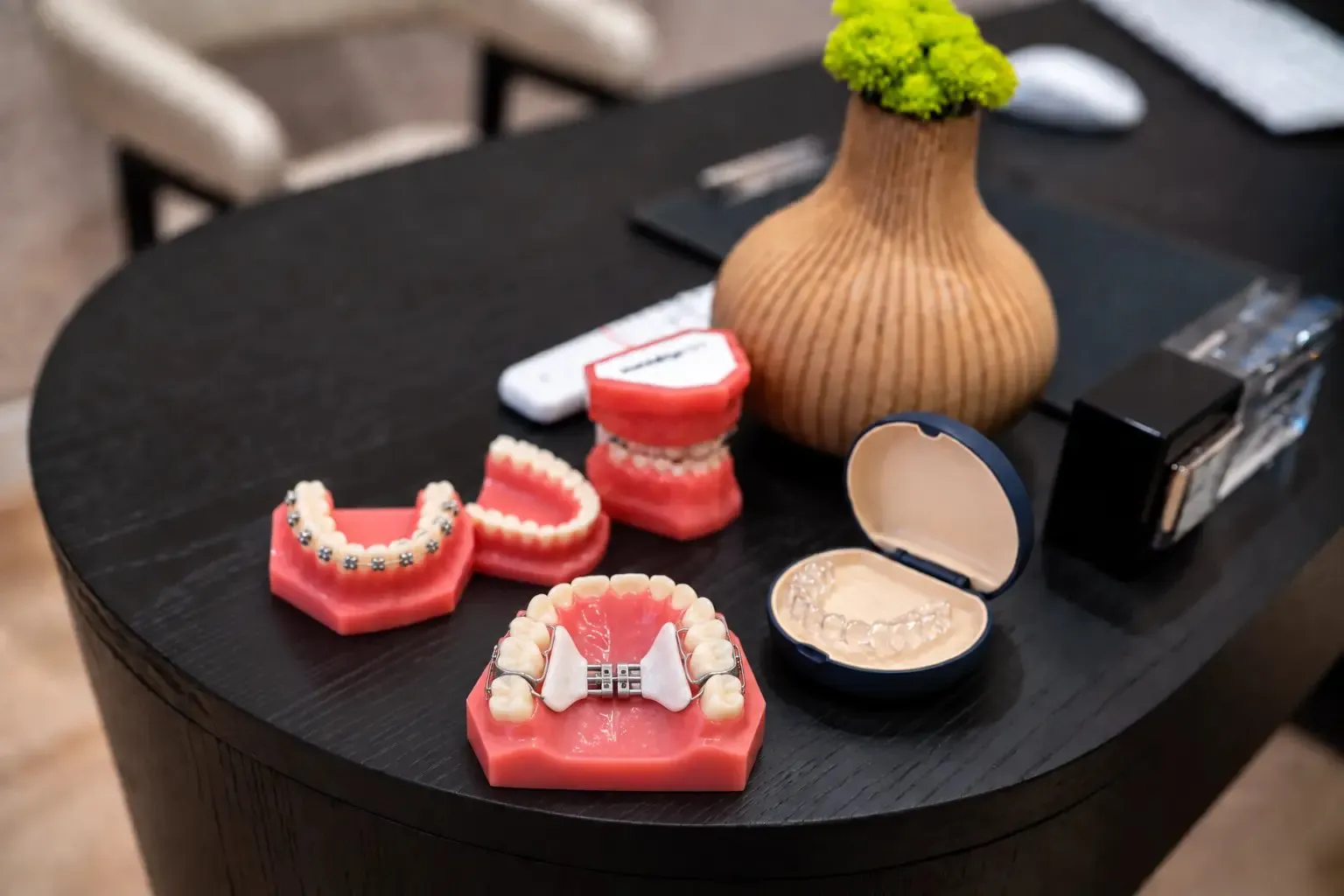
Buck teeth are upper front teeth that stick out past the lower ones. Orthodontists measure the front-to-back gap as overjet, and a Cochrane review describes prominent upper front teeth as a common problem affecting about a quarter of 12-year-olds in the UK. They can come from the teeth, the jaws or habits such as thumb sucking that last into the adult teeth. Teeth that stick out are more easily injured, which is one reason children are checked early. Braces, clear aligners and, while a child grows, functional appliances can bring them back.
- Buck teeth are upper front teeth that stick out past the lower ones, measured by orthodontists as overjet.
- A Cochrane review describes prominent upper front teeth as affecting about a quarter of 12-year-olds in the UK.
- Increased overjet was linked with injury to the upper front teeth in a study of 900 children.
- Early treatment reduced those injuries in a Cochrane review, with no other advantage over treatment in adolescence.
What are buck teeth?
Buck teeth is the everyday name for prominent upper front teeth. Orthodontists measure how far the upper teeth sit in front of the lower ones as overjet, and one study took 2 to 4 mm as the normal range. When the back teeth meet in the same pattern, the bite is called Class II.
The Cochrane review notes that the problem develops as the adult teeth come in. Our page on overbites covers the related problem of too much vertical overlap, and our article on overbite vs. overjet explains how the two are measured.
What causes buck teeth?
- The jaws. In a skeletal Class II bite the upper jaw tends to sit forward and the lower jaw back, and it is common in the years when children are changing to their adult teeth.
- Genes. A 2021 analysis of gene studies linked 19 genes to skeletal Class II bites.
- Sucking habits. A thumb, finger or pacifier habit that continues while the adult teeth come in can contribute to an abnormal bite, and a 2024 review linked persistent habits with higher chances of a bite problem.
Often it is a mix, which is why the cause is checked before treatment is chosen. Our guide to thumb sucking and teeth covers the habit side.
Why are buck teeth checked early?
Mainly because teeth that stick out are easier to injure. In a study of 900 children with a mix of baby and adult teeth, an overjet of 7 mm or more was the only Class II feature linked with injury to the upper front teeth.
A Cochrane review compared starting treatment at 7 to 11 years old, in two phases, with one course of treatment at around 12 to 16. Early treatment reduced injuries to the upper front teeth, on evidence of low to moderate quality, and the review found no other advantages of starting early. Our article on Phase 1 and Phase 2 orthodontics explains the choice.
The American Association of Orthodontists recommends an orthodontic evaluation by age 7 or when a problem is first noticed.
How are buck teeth fixed?
- Braces. Children are often referred for braces to reduce the prominence of their upper front teeth. Our metal braces page explains how they work.
- Functional appliances. In the Cochrane review, treatment in adolescence with functional appliances reduced the prominence of the upper front teeth compared with no treatment, on low-quality evidence.
- Clear aligners. When the teeth rather than the jaws cause the problem, aligners can move the upper back teeth back to make room: a 2025 review found aligners effective for this movement in people with all their adult teeth and mild or no jaw difference.
- Jaw surgery. For some adults whose jaws cause a large difference, orthodontics is combined with surgery; our page on surgical orthodontics explains how.
After refinements, the aligners in that review moved the upper molars back by 1.84 mm to 2.98 mm. Planning the movement in steps and adding refinements improved the results, and starting Class II elastics (small rubber bands worn between the upper and lower teeth) early and checking that the aligners are worn as directed may make treatment more efficient.
After treatment, retainers keep the teeth in place, because without a phase of retention teeth tend to drift back toward where they started.
What happens at a check?
At an orthodontic assessment, the orthodontist may examine the teeth and jaws and take X-rays, photographs or scans. At our free consultation, we explain the diagnosis, the recommended treatment and its estimated timing before you decide.
Treatment itself averages about two years, according to a review for family physicians, and routine preventive dental care should continue during that time.
Buck teeth in adults
Adults can be treated too: most orthodontic patients are children, but adults get braces too. Because the jaws have finished growing, the plan moves the teeth within the jaws or, for a large jaw difference, combines orthodontics with surgery. Our page on adult orthodontics covers what changes with age, and our Invisalign page describes aligner treatment at our office.
Frequently asked questions
What are buck teeth called in orthodontics?
Orthodontists measure them as increased overjet, the front-to-back gap between the upper and lower front teeth, and call prominent upper front teeth a Class II bite when the back teeth meet in the same pattern. One study took 2 to 4 mm as the normal range for overjet.
Can thumb sucking cause buck teeth?
It can contribute. Thumb, finger and pacifier sucking are common in young children, but a habit that continues while the adult teeth come in can contribute to an abnormal bite, and a 2024 review linked persistent habits with higher chances of a bite problem. Our guide to thumb sucking covers ways to help a child stop.
Are buck teeth more likely to be injured?
Yes, in children. In a study of 900 children, increased overjet was the Class II feature linked with injury to the upper front teeth, and a Cochrane review found that early treatment reduced these injuries compared with one course of treatment in adolescence. A sports mouthguard is worth asking about for contact sports.
Can buck teeth be fixed without braces?
Clear aligners are one option when the teeth rather than the jaws cause the problem, and functional appliances are used while a child is growing. Trying to push teeth back with rubber bands or other home methods can damage them, so ask an orthodontist which approach suits your bite.
More notes