
Microdontia: why some teeth are small and how they are fixed
What microdontia is, one small tooth compared with small teeth throughout the mouth, the causes, the gaps small teeth leave and how they are fixed.
SC OrthodonticsNovember 23, 20265 min read
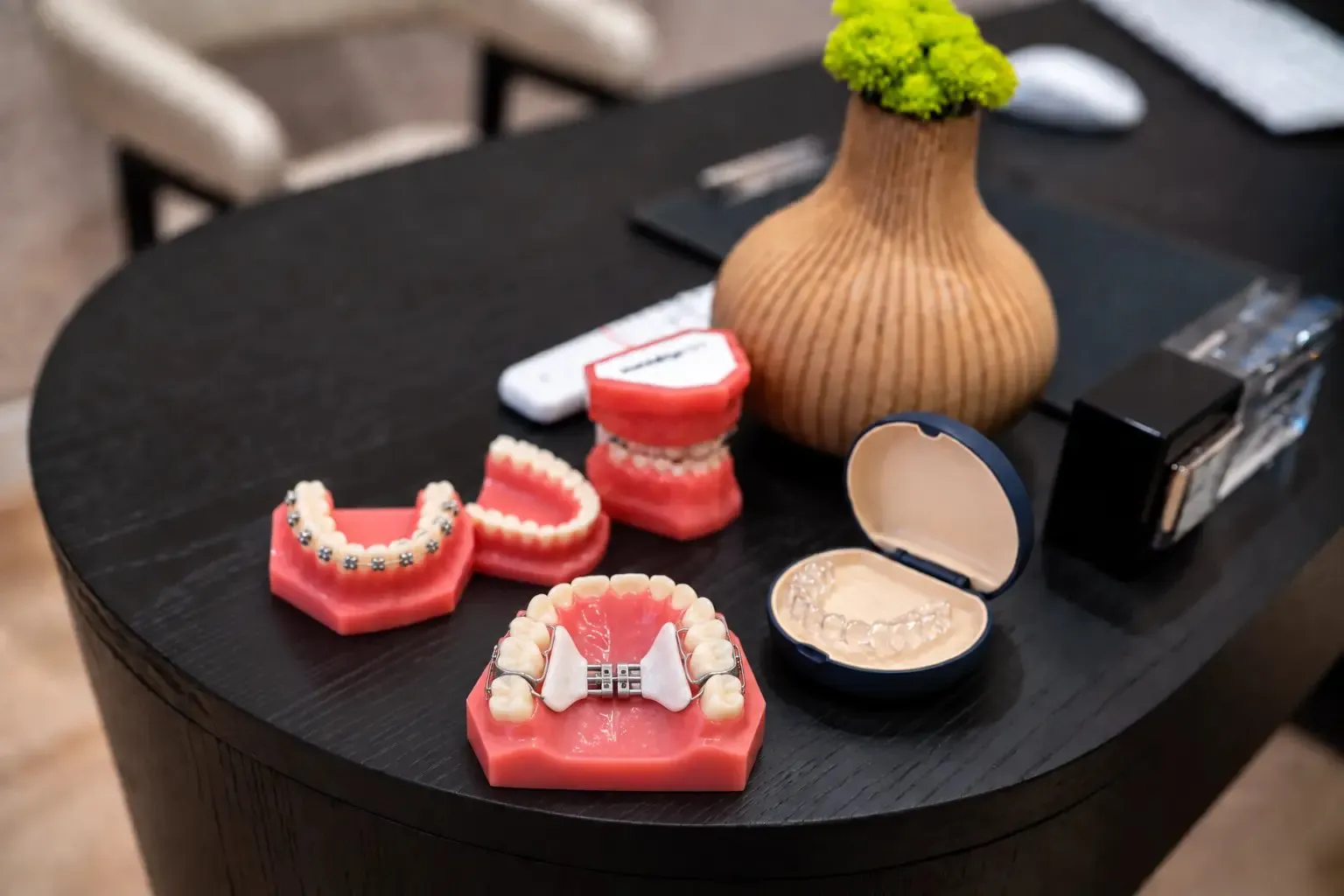
Microdontia means teeth that are smaller than usual. An NIH definition counts a tooth whose width is more than 2 standard deviations below the average, or one that looks narrower than it should. It can affect a single tooth, such as a peg-shaped upper lateral incisor, a matching pair or, rarely, every tooth. In a study of 3,043 orthodontic patients, it was the second most common of eight developmental tooth anomalies, after missing teeth. Genes and environment both play a part, and small teeth tend to go with missing teeth. Braces or clear aligners can place the teeth and share out the space, and a dentist can then build small teeth up with bonding or veneers.
- Microdontia means one or more teeth are smaller than usual, from a single small tooth to, rarely, every tooth in the mouth.
- Genes and environment both play a part, and small teeth tend to go with missing teeth in the same person or family.
- Small teeth leave gaps between them, especially among the front teeth of both jaws.
- Braces or clear aligners place the teeth and share out the space, and a dentist can then build the teeth up with bonding or veneers.
What is microdontia?
It is the medical name for teeth that are smaller than usual. The Elements of Morphology project of the National Human Genome Research Institute judges it two ways: by measuring, when a tooth’s width is more than 2 standard deviations below the average, and by eye, when a tooth looks narrower than it should. A standard deviation is a measure of how far a value sits from the average.
Microdontia is one of the developmental tooth abnormalities, differences in the number, size, shape or structure of the teeth. It is one of the more frequent ones. Of 3,043 orthodontic patients checked for eight such anomalies, 5.46% had at least one, and microdontia was the second most common after hypodontia (missing teeth).
Does microdontia affect one tooth or all of them?
It can be one tooth, a matching pair or, rarely, all of the teeth. The upper lateral incisors, the teeth on either side of the two front teeth, are a familiar example: when one is small and peg-shaped, it is called a peg lateral. Our guide to peg lateral incisors covers how that tooth is planned for.
A 2013 meta-analysis found peg-shaped upper lateral incisors in 1.8% of people overall and in 2.7% of orthodontic patients, with one side affected about as often as both.
When every tooth is small, the condition is called generalized microdontia. True generalized microdontia, in which all the teeth are smaller than normal, is rare. The opposite condition, teeth that are larger than usual, is macrodontia.
Why are my teeth so small?
It comes down to how the teeth formed. A 1984 study of schoolchildren and families proposed that genetic and environmental factors together set tooth number and size, usually through many small influences and occasionally through one large one, such as a major single gene.
- A link with missing teeth. The 1984 study found that missing teeth and microdontia tend to occur together, and in the peg lateral meta-analysis, people with one peg lateral were missing the lateral incisor on the other side in 55.5%. Our guide to missing lateral incisors covers that planning question.
- An inherited condition. Ectodermal dysplasias are genetic conditions that affect the skin, sweat glands, hair, teeth and nails, and NIDCR lists smaller-than-normal teeth and widely spaced teeth among their mouth problems.
- Cancer treatment in early childhood. In a 2019 review of 16 studies covering 1,300 childhood cancer survivors, microdontia was the most common defect of the tooth crowns, and age, radiation dose and the area treated were linked with more dental defects.
Teeth can also look short when the gums cover more of them, which is a separate question. Our guide to a gummy smile explains that one.
Why do small teeth leave gaps?
They take up less room than the jaw has for them. The Elements of Morphology definition notes that in microdontia the gaps between the teeth are increased, particularly among the front teeth of the upper and lower jaws.
Small teeth also leave the upper and lower teeth out of proportion with each other, which dentists call a tooth size discrepancy. A 2004 report describes building up narrow or peg-shaped teeth with composite to correct these discrepancies alongside orthodontic treatment.
Gaps have other causes as well, and our guide to the gap between front teeth goes through them, so finding the cause comes before choosing a fix.
When should small teeth be checked?
When they are first noticed, in a child or an adult. The American Association of Orthodontists recommends an orthodontic evaluation by age 7 or when a problem is first noticed, whichever comes first.
A small tooth can point to something else. Because a single peg lateral so often comes with a missing tooth on the other side, the dentist may take X-rays to see whether that adult tooth has formed. In ectodermal dysplasia, NIDCR says a dentist commonly suspects the condition when a child’s teeth do not come in or look irregular in shape, and may take X-rays to look for teeth that have not come in yet.
How do you fix small teeth?
Often with two kinds of care, one after the other. A 2022 clinical guide says the treatment of peg-shaped laterals is often multidisciplinary, and its own protocol combines orthodontic treatment with veneers and composite.
- Braces or clear aligners move the teeth. Orthodontic care can close gaps between teeth, or it can open and share out the space so a small tooth can be built up to a fuller size. Our Invisalign and metal braces pages explain both kinds of treatment.
- Bonding builds the tooth up. A dentist adds tooth-colored composite resin to the tooth and shapes it, and our guide to dental bonding explains how it is placed and how long it lasts.
- Veneers cover the front of the tooth. A veneer is a thin facing bonded to the front surface, and our comparison of braces and veneers sets out what each one changes.
The options are the same for adults: MedlinePlus notes that adults get braces, too, and the bonding or veneers follow once the teeth are in position.
Dr. Haykani plans the tooth movement and coordinates with your dentist, who places the bonding or veneers.
Frequently asked questions
Is microdontia genetic?
Partly. In a 1984 family study, the relatives of children with tooth anomalies, microdontia among them, had much higher rates of these anomalies than the general population, and females had microdontia more often than males. The same study points to environmental factors as well. Some inherited conditions, such as ectodermal dysplasia, cause small teeth too. If small or missing teeth run in your family, mention it at your child’s dental visits.
Is microdontia bad?
Often the main concern is how the teeth look. A British Dental Journal article notes that microdontia often brings people to the dentist because of aesthetic concerns, and treatment aims at that. A check is still worthwhile, because a small tooth can come with a missing tooth nearby, and small teeth together with teeth that do not come in can be a sign of ectodermal dysplasia.
Can braces fix small teeth?
Braces change where the teeth sit, so they fix the spacing and leave the size to the dentist. They can close the gaps small teeth leave, or open and share out the space so a dentist can build the teeth up. In a 2025 review of a small lateral incisor paired with a missing one on the other side, both opening and closing the space were viable options. The choice depends on the case, with attention to how the teeth will look and the health of the gums.
What is a microdont?
A microdont is a single tooth that is smaller than usual. Dentists call this focal or localized microdontia: a single abnormally small front or back tooth. A peg lateral is one kind. Because the tooth is already small, the same review points out that adhesive work such as bonding can better preserve its structure.
More notes