
Orthodontist vs. dentist: what is the difference?
What each one does, how long it takes to become an orthodontist, when to see which, and why you keep seeing your dentist during braces.
By Dr. Shadi Haykani, DDSNovember 20, 20265 min read
Medically reviewed by Dr. Shadi Haykani, DDSLast reviewed November 20, 2026
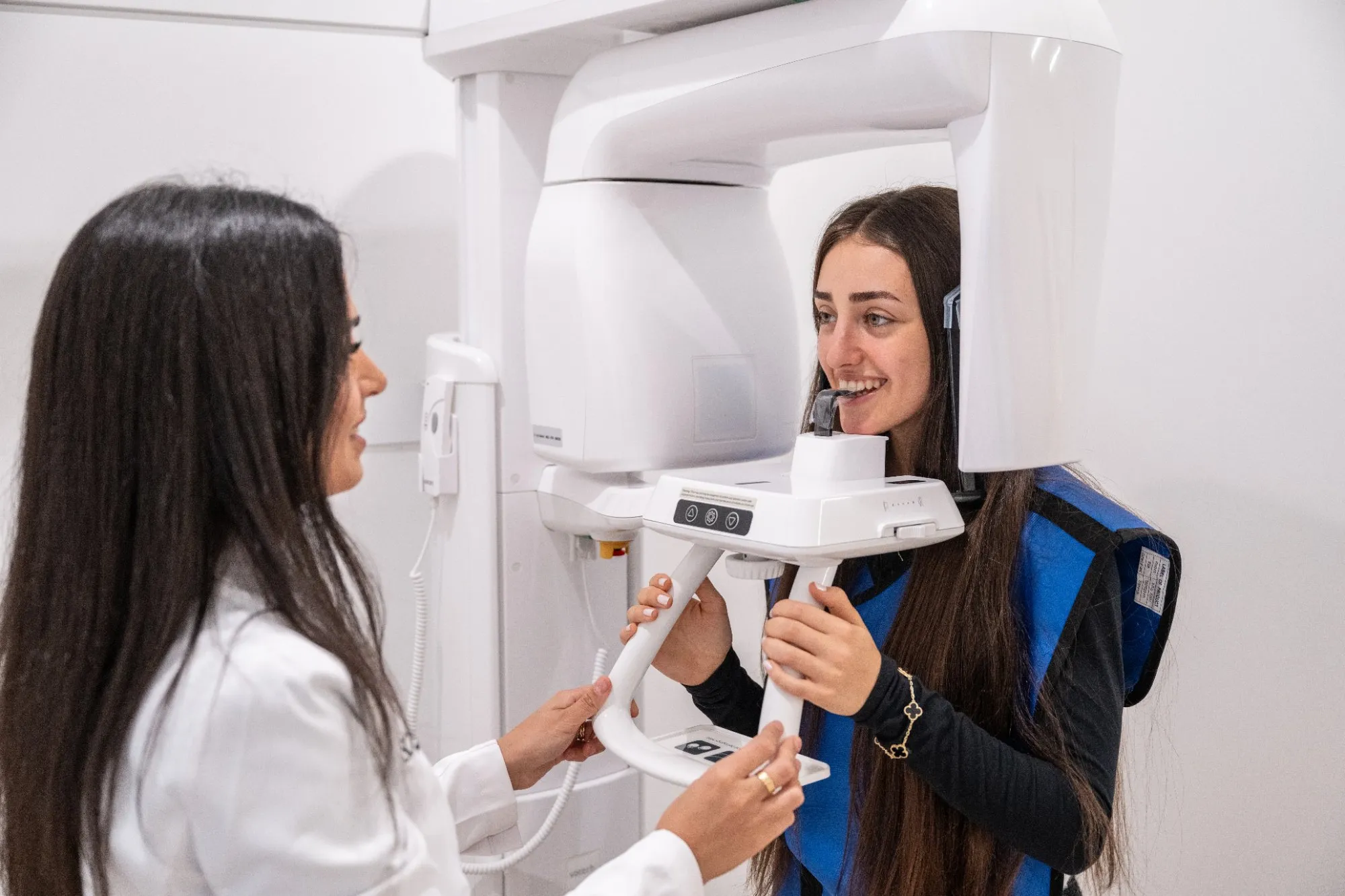
An orthodontist is a dentist who went on to specialize. Both start with a dental degree, a DDS or DMD, and an orthodontist then completes postdoctoral training in orthodontics, the branch of dentistry that deals with abnormalities of the teeth and jaw. A general dentist looks after the health of your teeth and gums. An orthodontist straightens teeth and corrects the bite with braces, clear aligners and other appliances. If you wear braces or aligners, you see both, because routine preventive dental care should continue during treatment.
- An orthodontist is a dentist who completed extra training in orthodontics after earning a DDS or DMD dental degree.
- Dental specialty training is usually a 2- to 4-year residency after dental school, according to the Bureau of Labor Statistics.
- General dentists treat problems with the teeth and gums, while orthodontists straighten teeth and correct the bite with braces or other appliances.
- Keep seeing your dentist during braces or aligners, because routine preventive dental care should continue during treatment.
What is the difference between a dentist and an orthodontist?
They differ in training and in the work they do. Most dentists are general practitioners who handle a variety of dental needs, and general dentists do not need additional training after dental school. Orthodontics is one of the dental specialties, and all dental specialties require additional training before a dentist can practice them.
A general dentist diagnoses and treats problems with the teeth, gums and nearby parts of the mouth: removing decay and filling cavities, repairing damaged teeth, reading X-rays and teaching patients about diet, flossing and fluoride. Orthodontists straighten teeth by applying pressure to them with braces or other appliances, and you may need orthodontic care if you have problems with your bite or the spacing of your teeth.
| Feature | General dentist | Orthodontist |
|---|---|---|
| Degree | DDS or DMD | DDS or DMD |
| Training after dental school | Not required | Postdoctoral training in orthodontics, usually a residency of 2 to 4 years |
| Main focus | The health of the teeth, gums and mouth | How the teeth line up and how the bite fits together |
| Typical care | Checkups, preventive care, fillings, repairs and X-rays | Braces, clear aligners and other orthodontic appliances |
Our guide to orthodontic conditions shows the bite and alignment problems an orthodontist treats.
Is an orthodontist a dentist?
Yes. Orthodontists start as dentists, and dentists typically need a DDS or DMD degree from an accredited dental program. DDS stands for Doctor of Dental Surgery and DMD for Doctor of Dental Medicine. A dentist who practices a specialty such as orthodontics must also complete postdoctoral training.
The reverse is not true. Dentists held about 161,400 jobs in the United States in 2025, and the Bureau of Labor Statistics counts 141,900 of them as general dentists and 7,100 as orthodontists. A dentist becomes an orthodontist only by completing that specialty training.
How long does it take to become an orthodontist?
Longer than it takes to become a general dentist. Specialty training comes after dental school, and the Bureau of Labor Statistics says it is usually a 2- to 4-year residency in an accredited program, which often ends with a postdoctoral certificate or a master’s degree.
Dr. Shadi Haykani earned her Doctor of Dental Surgery degree at the UCLA School of Dentistry and completed her orthodontic specialty residency at New York University, as her profile on our About page shows. She is board certified by the American Board of Orthodontics.
How is an orthodontist different from an oral surgeon or a pediatric dentist?
They are separate dental specialties, each with its own training after dental school. As the Bureau of Labor Statistics describes them, oral and maxillofacial surgeons operate on the mouth, jaws, teeth, gums, neck and head, with procedures such as repairing a cleft lip and palate or removing impacted teeth. Pediatric dentists focus on dentistry for children and special-needs patients. Periodontists treat the gums and the bones that support the teeth, and endodontists perform root canal therapy.
Orthodontists are the specialists who move teeth and correct the bite. Some plans need two specialists: when a canine tooth has not come into place on its own, treatment may involve a surgeon as well as the orthodontist, as our guide to impacted canine teeth explains.
When should you see an orthodontist instead of a dentist?
When the question is how your teeth line up or how your upper and lower teeth meet. Common reasons include:
- Crooked or crowded teeth that overlap or turn
- A gap between the front teeth or spaces elsewhere
- Upper front teeth that stick out, often called buck teeth
- An overbite, an underbite or a crossbite
- An open bite, where some teeth do not meet when you bite down
Alignment can matter for more than looks: a 2015 review for family physicians notes that improper tooth alignment due to crowding, malocclusion (a bite where the teeth do not meet as they should) and missing teeth can cause difficulties with eating and speech, and premature wear.
For children, the American Association of Orthodontists recommends an orthodontic evaluation at the first sign of a problem and no later than age 7. Our guide to when a child should first see an orthodontist explains what that first check covers.
You do not need a referral from your dentist to see us: you can request a free consultation directly. If your dental plan requires a referral for orthodontic benefits, our team can check that before the visit. Bring recent dental X-rays if you have them, and be ready to talk about your dental history and any dental work you have planned.
Can a general dentist provide braces or aligners?
Some do. The FDA describes clear aligners as provided by a licensed practitioner, such as a dentist or orthodontist, and says your dentist or orthodontist regularly tightens the wire on braces. The difference is the training behind the plan: an orthodontist has completed postdoctoral training in orthodontics, while general dentists do not need additional training after dental school.
Whoever you choose, ask who will plan your treatment and check on it, and what happens if the teeth do not move as planned. Our guide to getting a second orthodontic opinion explains how to compare two treatment plans.
Do you still need your dentist during braces?
Yes. Braces and aligners do not replace checkups and cleanings, and the same 2015 review says routine preventive dental care should be continued during treatment. Cleanings, fillings and gum care stay with your dentist, while your orthodontist moves the teeth and corrects the bite.
At home, our guide to brushing with braces shows how to clean around brackets and wires, and our other patient guides are on the blog.
Frequently asked questions
Is an orthodontist a doctor?
Yes, a doctor of dentistry. Orthodontists start with the same dental degree as general dentists, usually a DDS (Doctor of Dental Surgery) or DMD (Doctor of Dental Medicine), and then complete postdoctoral training in orthodontics. For dental specialties, that training is usually a residency of 2 to 4 years, according to the Bureau of Labor Statistics.
What does a general dentist do?
A general dentist diagnoses and treats problems with the teeth, gums and nearby parts of the mouth. The Bureau of Labor Statistics lists duties such as removing decay and filling cavities, repairing or removing damaged teeth, examining X-rays and teaching patients about diet, flossing and fluoride. Most dentists are general practitioners who handle a variety of dental needs.
Do orthodontists clean teeth?
Routine checkups and cleanings stay with your general dentist during orthodontic treatment. A 2015 review for family physicians says routine preventive dental care should be continued during the treatment period. The orthodontist focuses on moving the teeth and correcting the bite. At home, clean carefully around brackets, wires and aligner attachments every day.
What does an orthodontist do?
An orthodontist diagnoses and treats problems with how the teeth line up and how the bite fits together. Orthodontists straighten teeth by applying pressure to them with braces or other appliances, such as clear aligners, expanders and retainers. MedlinePlus describes orthodontia as the branch of dentistry that deals with abnormalities of the teeth and jaw.
More notes