
Invisalign for teens: what parents and teens should know
Who aligners suit, what the studies of teenagers found, why wear time matters so much, and the questions families ask about school, sports and lost trays.
By Dr. Shadi Haykani, DDSNovember 19, 20265 min read
Medically reviewed by Dr. Shadi Haykani, DDSLast reviewed November 19, 2026
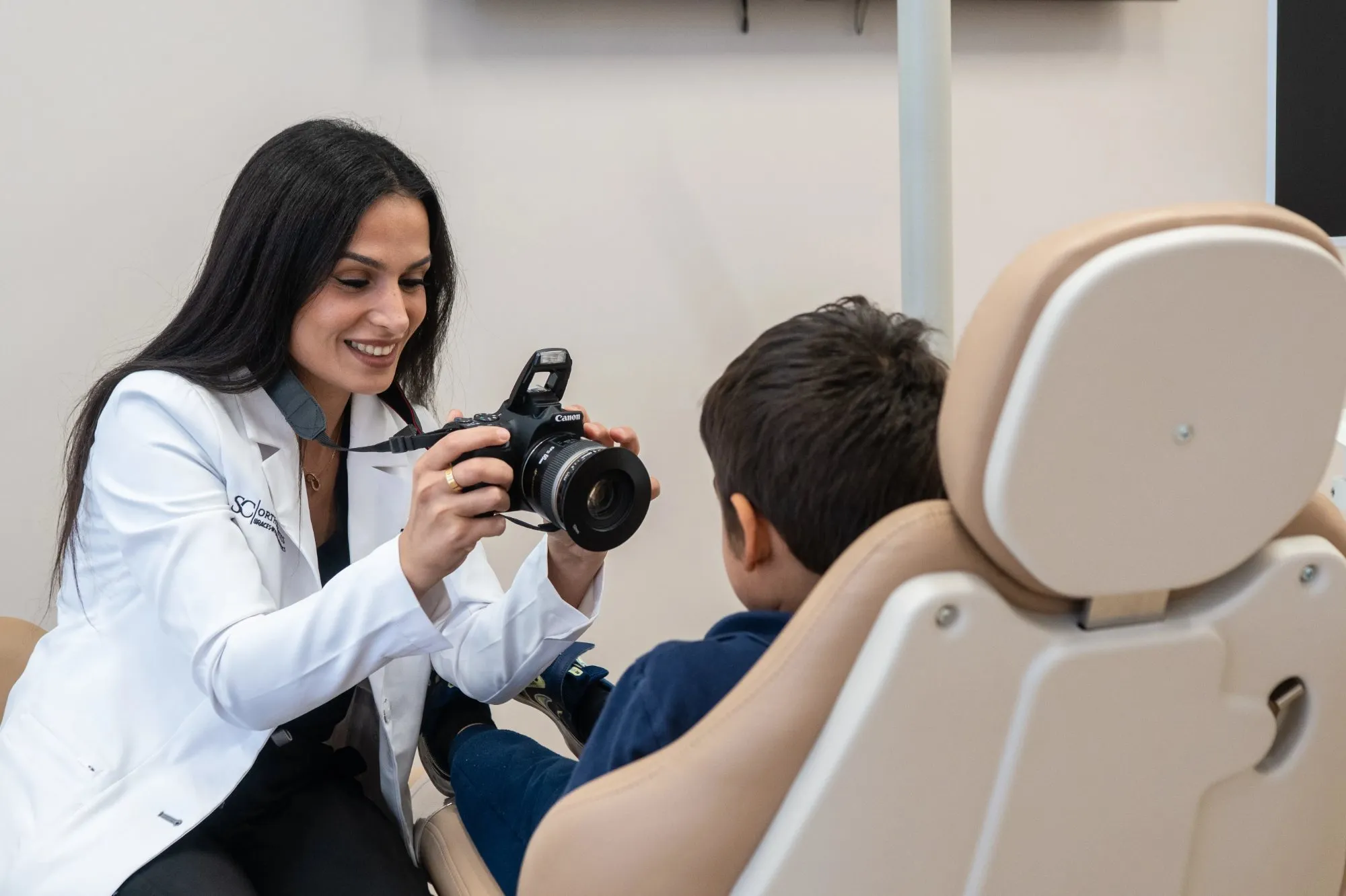
Invisalign can work well for a teenager whose teeth and bite suit aligners and who can keep them in most of the day. Our FAQ page puts that at 20 to 22 hours a day, and it adds that being a teenager does not make aligners the right choice by itself: Dr. Haykani checks growth and treatment needs first. Studies of growing patients find aligners reliable for moving teeth, with less certain effects on how the jaws grow. Parents matter too. In a study of children and teens with aligners, close, low-conflict families saw better wear and care.
- Teenagers can be good candidates for Invisalign when their teeth and bite suit aligners and they can keep the trays in most of the day.
- In studies of growing patients, aligners moved teeth predictably, while their effect on jaw growth is less certain.
- Aligners usually need 20 to 22 hours of daily wear, and a close, low-conflict relationship with parents went with better wear in one study.
- Call or text us about appliance problems; we reply the same day during office hours, and on Saturdays or after 7 PM, the next day we are open.
Is Invisalign a good option for teens?
For many teenagers it is. The practice’s answer on our FAQ page is that teenagers can be candidates if their teeth and bite are suitable and they can manage consistent wear, cleaning and safe storage of the trays.
The bite decides first. An overview of 18 systematic reviews found aligners effective for mild to moderate problems, with weaker results in severe cases and for some specific tooth movements. That is why Dr. Haykani compares aligners with braces for each teenager rather than starting from the appliance. Our comparison of Invisalign vs. braces sets out how the two differ day to day.
Growth matters too. A teenager’s jaws may still be growing, and some bite problems are treated with that growth in mind. Our article on Phase 1 and Phase 2 orthodontics explains how treatment can be split around growth, and our guide to choosing a children’s orthodontist covers the first visits.
What does the research show for teenagers?
Aligners are now common for young patients, and the studies have followed. A 2025 systematic review of 32 studies in patients under 18 found consistent changes in the teeth themselves, while the findings on the jaws were mixed. It also found gum health and bacterial levels seemed better controlled with aligners than with braces in the short term, and no consistent difference in quality of life.
A 2026 umbrella review pulled the reviews together: aligners in growing patients were associated with predictable correction of the teeth, while the evidence for effects on the jaws remains limited. Its authors rated most of the underlying reviews as low quality, so the conclusions are cautious.
The open question is the lower jaw. Some aligners for growing teens include features meant to guide the lower jaw forward, much like a functional appliance. One 2025 meta-analysis found they might be a viable option for mild to moderate cases of this kind, while the 2025 systematic review found the literature does not support them over traditional functional appliances. Both call for better studies, so ask what the plan is meant to do for your teen’s jaws as well as the teeth.
Why wear time matters for teens
An aligner moves teeth only while it is in. Our FAQ puts daily wear at 20 to 22 hours, and in a trial in adults with mild crowding, the group that wore aligners 22 hours a day had more correction of the lower front teeth than the group that wore them 12 hours. Orthodontists name wear as a common difficulty: in a survey of Australian orthodontists, problems with patients following the wear schedule were commonly reported.
Invisalign Teen aligners carry a blue dot meant to fade as a tray is worn. A lab study found that the color also faded with time, heat, acidic drinks and some cleaning methods, so the dot gives an estimate of wear time rather than an exact measure.
Home life plays a part. The 2026 study asked the parents of 124 children and teens aged 6 to 18 about wear and care: those with high closeness were 2.2 times more likely to have better overall compliance, especially with cleaning the trays and changing them on time. Using chewies, the small soft cylinders some plans use to help seat the trays, was the habit kept least often.
School, sports and everyday care
- Meals and snacks: take the aligners out to eat and brush before they go back in, as the FDA’s guide to aligners says. A case in the backpack keeps the trays out of lunch napkins.
- Cleaning: the FDA guide warns that not cleaning the teeth carefully can lead to decay and swollen or bleeding gums, which matters more when trays sit over the teeth most of the day.
- Sports: for sports with a risk of mouth injury, ask whether your teen should wear the aligners, a sports mouthguard or both. Our sports mouthguard guide lists the questions to ask.
- A lost or broken tray: call or text us rather than skipping ahead to the next aligner.
Call or text us about appliance problems at (661) 425-0559. During office hours, Sunday to Friday from 8 AM to 7 PM, you hear back the same day; on Saturdays and after 7 PM, call or text anyway, and we reply the next day the office is open. Use the comfort steps in the meantime, and do not wait for our reply when a warning sign applies.
Questions to ask at the consultation
- Does my teen’s bite fall in the range aligners treat well, or would braces do the job better?
- Is jaw growth part of the plan, and what is the plan meant to change?
- How many hours a day must the aligners be worn, and how will we know they are being worn?
- What happens if a tray is lost, broken or stops fitting?
- How often are visits, and how do they fit around school?
More notes on aligners and braces are in our practice notes, and the Invisalign page describes treatment at our office.
Frequently asked questions
What is Invisalign Teen?
It is the version of Invisalign used for teenagers. Its aligners carry a blue dot meant to fade as a tray is worn, which helps families keep track of wear. A 2011 lab study found the dot also faded with time, heat, acidic drinks and some cleaning methods, so it gives an estimate of wear time rather than an exact measure.
Can teens play sports with Invisalign?
Yes, with a plan for protecting the mouth. For sports with a risk of mouth injury, ask whether your teen should wear the aligners, a sports mouthguard or both, and have the fit checked as the teeth move. Bring the sport and the season to the consultation so the plan can account for them.
What should a teen do after losing an aligner?
Call or text us about appliance problems; we reply the same day during office hours, and on Saturdays or after 7 PM, the next day we are open. Do not skip ahead to the next tray or try to reshape an old one without asking, since each tray is planned for a step in the sequence.
Do aligners or braces work better for teenagers?
It depends on the bite. In reviews of the studies, aligners did well with mild to moderate problems and less well with severe ones and some movements, and braces gave better results in cases where teeth were taken out. Wear matters more with aligners, since a tray works only while it is in. Dr. Haykani compares both for your teen’s teeth.
More notes