
How to disinfect a toothbrush
How to clean and disinfect a manual or electric toothbrush, what studies of soaks, sanitizers and covers found, and where to keep a brush between uses.
By Dr. Shadi Haykani, DDSNovember 23, 20266 min read
Medically reviewed by Dr. Shadi Haykani, DDSLast reviewed November 23, 2026
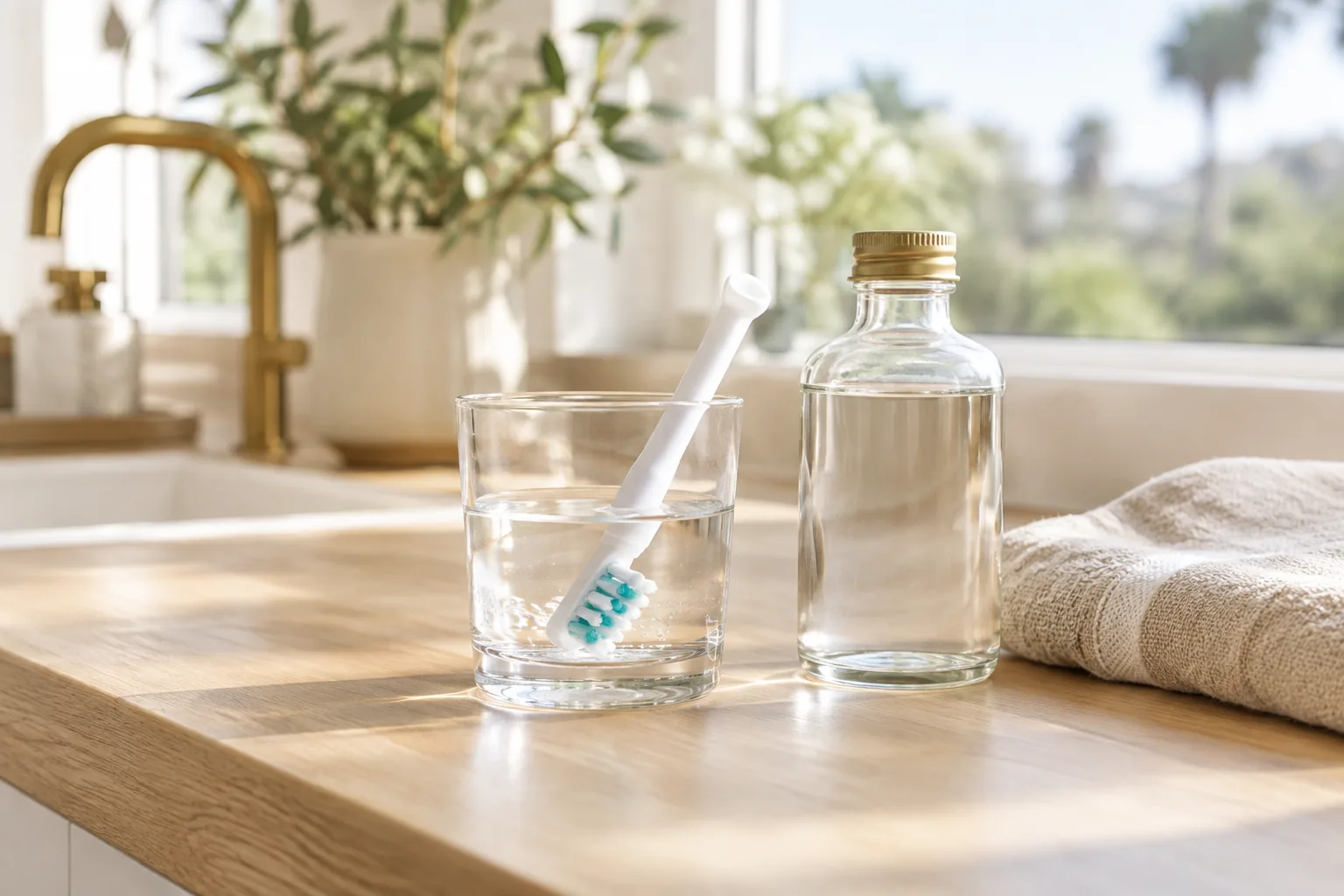
For everyday care, rinse your toothbrush well under tap water after brushing and let it air-dry in the open, away from the toilet. To disinfect it, you can soak the head in an antibacterial mouthwash or in 50% white vinegar, two methods that cut bacteria on brushes in studies. A 2026 review of 41 studies found that chemical soaks, home remedies and physical methods such as UV light all reduced contamination, but it rated the certainty of the evidence as very low. The studies counted germs on bristles, not illnesses, so none of them shows that a disinfected brush keeps you from getting sick.
- Rinse the brush under tap water after each use and let it air-dry away from the toilet, where humidity adds to the germs on it.
- Soaking the head in an antibacterial mouthwash or 50% white vinegar reduced bacteria on brushes in studies, but a 2026 review rated that evidence very low certainty.
- The studies counted germs on bristles, not illnesses, so none of them shows that disinfecting a brush prevents getting sick.
- Keep toothbrush methods away from retainers and aligners, since hot water can distort the plastic and aligner care advice rules out mouthwash soaks.
How do you clean a toothbrush after brushing?
Rinse it under running tap water until the toothpaste and food are gone, shake off the water, and stand it where it can dry in the open air. Drying helps: in a 2022 lab study, a cat coronavirus and a bird flu virus, standing in for their virus families, faded on toothbrush heads as the brushes air-dried, especially after a water rinse, and no infectious virus could be recovered from the rinsed heads after 12 hours.
Every used brush carries some germs. A toothbrush becomes contaminated even after its first use, a 2024 review found, and the level rises with continued use. NIDCR, the National Institute of Dental and Craniofacial Research, advises that you replace your toothbrush when the bristles become worn, and our note on how often to change your toothbrush explains how to tell.
How do you sanitize a toothbrush?
If you choose to sanitize it at home, soak the head in an antibacterial mouthwash or in 50% white vinegar after rinsing it. Studies have tested those two and chlorhexidine, a prescription rinse, soaking brushes for anywhere from 20 minutes to overnight, and some also tried a dishwasher. This is what they found:
| Method tested | What the study found |
|---|---|
| 50% white vinegar | Removed the most bacteria of the five methods compared with tap water in a study of 60 volunteers, and showed a very large effect in the 2026 review |
| One brand of mouthwash, 20 minutes | Almost completely removed Streptococcus mutans bacteria from brushes in a 2011 lab test |
| A mouthwash with essential oils and alcohol | Lowered bacteria, though by less than vinegar, in the study of 60 volunteers |
| A chlorhexidine and CPC mouthwash, 2 hours | Left fewer live bacteria on the bristles than a plain solution in a trial of 12 brushes |
| Chlorhexidine | The reference standard in the 2026 review, though a 2019 analysis found no significant effect |
| A normal dishwasher cycle | Almost completely removed the bacteria in the 2011 lab test, and did better than tap water, but not as well as the liquids, in the study of 60 volunteers |
Chlorhexidine needs a prescription in the US: its label marks it Rx only and lists it for treating gingivitis (early gum disease) between dental visits. The studies used it as a reference, so ask your dentist before using it for anything.
The studies differ a great deal in how they were run. The 2026 review found high heterogeneity and risk of bias across them and says its findings should be interpreted with caution.
Do toothbrush sanitizers work?
UV sanitizers lower the number of germs on the bristles, though one lab test found them weaker than other methods. In a 2008 trial with 25 people, brushes stored in an ultraviolet light holder had an average of 86% fewer bacteria than brushes rinsed in cold tap water, and the 2026 review found a significant effect for UV methods overall.
In the 2011 lab test, UV light cut the bacteria compared with doing nothing, but by significantly less than every other method it was tested against, including air-drying for 4 hours. None of these studies measured whether people who use a sanitizer get sick less often.
Do you need to disinfect your toothbrush?
The research has not settled it. A 2012 literature review found that the brushes of healthy adults, and of adults with mouth disease, become contaminated with bacteria that can cause disease, and a 2019 meta-analysis and the 2026 review both found that disinfecting brushes lowers those counts.
None of the studies has shown a health benefit yet. The 2026 review rated the certainty of its evidence as very low and calls for high-quality, standardized trials to confirm clinical efficacy. Rinsing, drying and replacing a worn brush are the steps everyone can take, and a soak is an extra you may choose to add.
Should you cover your toothbrush?
Studies disagree, and a cover that traps moisture may make things worse. The 2024 review names increased humidity from a plastic cover or a toilet setting among the factors that add to contamination, and a 2007 study found that a plastic cap led to the growth of Pseudomonas aeruginosa, a germ that may cause infection in the mouth.
One small study points the other way. When 20 dental students capped their brushes after brushing for a month, those brushes carried fewer microbes than 20 uncovered ones.
A brush that dries in the open avoids the trapped moisture the review describes.
How do you keep a child’s toothbrush clean?
The same way as yours: rinse it, let it dry in the open and give it its own space. Children’s brushes pick up bacteria quickly. In a study of 52 preschool children in day care, brushes carried mutans streptococci bacteria after a single brushing, and in a trial with 40 children aged 6 to 11, every brush had significant bacterial growth after 14 days of use.
Both studies lowered the counts with chlorhexidine. Sprayed on the bristles, it left no colonies in the day-care study, and in the older children’s trial a chlorhexidine solution reduced colony counts by 99.98%. Chlorhexidine is a prescription product, so ask your child’s dentist before using it.
If you soak a brush in mouthwash, keep the cup out of a young child’s reach: one cetylpyridinium chloride mouthwash label says to keep it out of reach of children under 6 years of age.
How do you clean an electric toothbrush?
Clean the head the way you would a manual brush: rinse it under running water after each use and let it air-dry. For the handle and the charger, follow the maker’s instructions for your model.
The design of the head may matter. In a 2014 pilot study, a solid-head power brush carried significantly less microbial contamination after 3 weeks of twice-daily brushing than two hollow-head designs. Bristle material has been studied too: in the 2024 review, charcoal brushes showed significantly less contamination than regular bristles, though its authors call for more trials. Replace the head when its bristles wear, as you would a manual brush.
Can you clean a retainer or aligner the same way?
No. Orthodontic appliances have their own cleaning rules, and several toothbrush methods break them. Our guide to cleaning retainers notes that hot or boiling water can distort plastic. Our guide to cleaning Invisalign aligners advises avoiding hot water, mouthwash soaks and denture cleaners, and says the aligner instructions call for hand-washing the case with soap and water rather than using a dishwasher.
If you wear braces, our guide to brushing teeth with braces covers the brushing itself, and our dental health notes answer more everyday questions about teeth and gums.
Frequently asked questions
How do you clean a toothbrush after being sick?
Rinse it well and let it dry in the open, as you would any day. In a 2022 lab study, a cat coronavirus and a bird flu virus, used to stand for their virus families, faded on toothbrush heads as they air-dried, and none could be recovered after 12 hours from heads rinsed with water first. The authors concluded that the toothbrush itself plays an insignificant role in passing these viruses back to its user. Whether to buy a new brush is covered in our note on how often to change your toothbrush.
Is it bad to share a toothbrush?
Yes, keep your toothbrush to yourself. MedlinePlus lists not sharing personal items such as toothbrushes, razors or nail clippers among the ways to prevent hepatitis C, because such items may have come in contact with another person’s blood. It gives the same advice for preventing hepatitis B.
Can you put a toothbrush in the dishwasher?
A dishwasher lowered the bacteria on brushes in two studies, by different amounts. In a 2011 lab test, a normal dishwasher cycle almost completely removed Streptococcus mutans bacteria from contaminated brushes. In a study of 60 volunteers, the dishwasher lowered bacteria compared with tap water, but less than the four liquid soaks tested. Check your brush’s instructions first, and keep a retainer or aligner case out of the dishwasher.
Where should you keep your toothbrush?
Somewhere it can dry in the open, away from the toilet. The 2024 review lists humidity from a toilet setting among the factors that add to contamination. Give each brush its own space as well: the authors of a 2023 trial note that the bacteria on a brush could include some from nearby toothbrushes.
More notes