
Are electric toothbrushes better than manual ones?
What trials and reviews show about electric and manual toothbrushes, how two electric types compare, whether they are safe for gums, and what matters more than the brush.
By Dr. Shadi Haykani, DDSNovember 22, 20265 min read
Medically reviewed by Dr. Shadi Haykani, DDSLast reviewed November 22, 2026
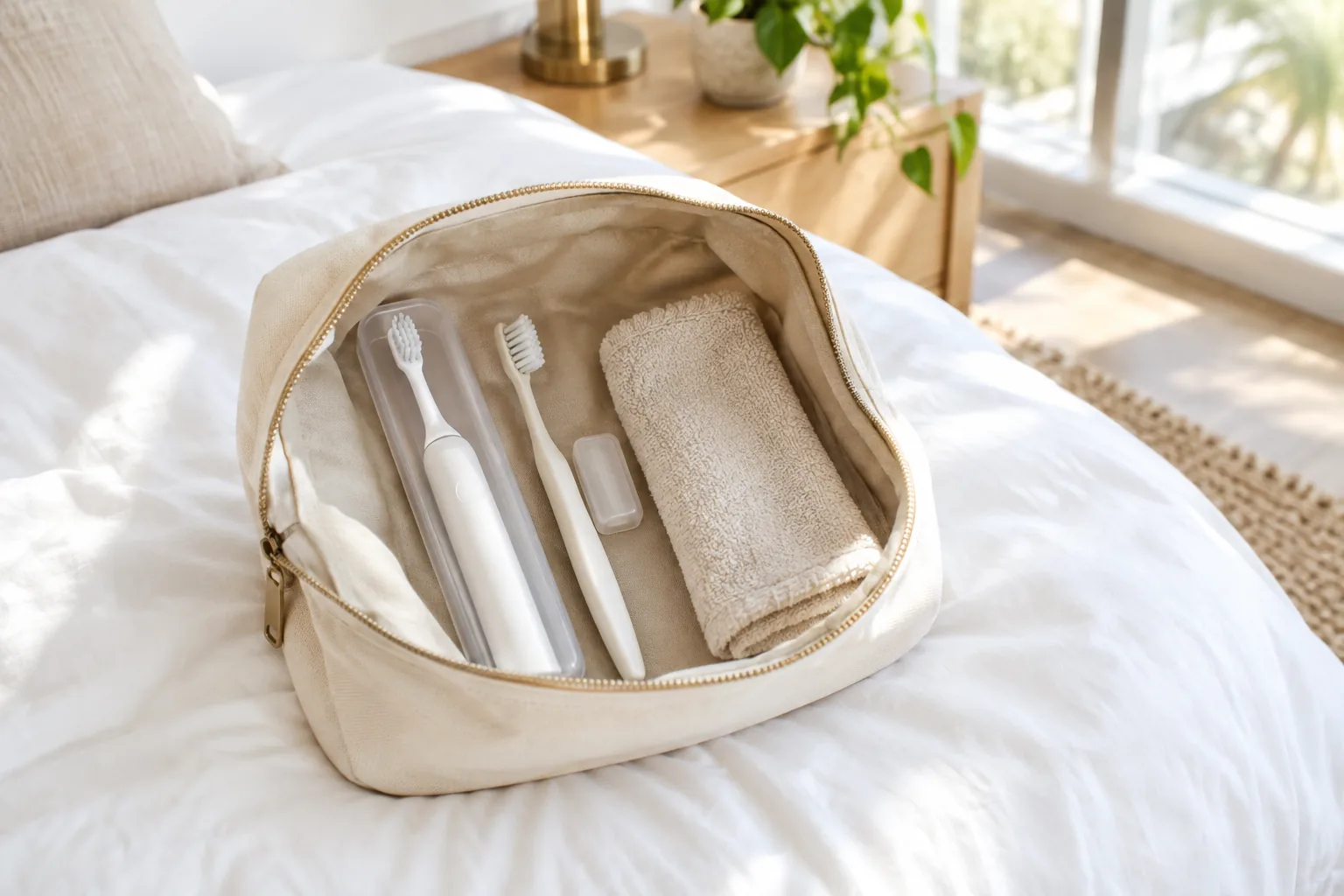
Electric toothbrushes clean a little better on average. A Cochrane review of 56 trials found that they reduced plaque by 11% after one to three months and 21% after more than three months compared with manual brushes, and gingivitis (gum inflammation) by 6% and 11%. The reviewers said the clinical importance of these differences remains unclear. A manual brush still does the job: the NHS says both kinds are equally good as long as you clean every surface of every tooth and use fluoride toothpaste, and some people find an electric brush easier.
- On average, electric toothbrushes remove somewhat more plaque and reduce gum inflammation slightly more than manual brushes, though how much that matters is unclear.
- In a Cochrane review, electric brushes cut plaque by 11% in the short term and 21% in the long term compared with manual brushes.
- A manual brush works well when you clean every surface of every tooth twice a day with fluoride toothpaste.
- A review found oscillating-rotating brushes safe for gums and teeth, and in a Cochrane review, side effects were inconsistently reported and only temporary.
Is an electric toothbrush better than a manual one?
Slightly, in the trials. The Cochrane review pooled randomized trials in which children and adults used a powered or a manual brush at home, unsupervised, for at least four weeks. It found moderate quality evidence that powered brushes removed more plaque and reduced gingivitis more, both in the short term (one to three months) and the long term (more than three months).
| Measure | After 1 to 3 months | After more than 3 months |
|---|---|---|
| Plaque | 11% less than with a manual brush | 21% less than with a manual brush |
| Gingivitis | 6% less than with a manual brush | 11% less than with a manual brush |
The reviewers wrote that the clinical importance of these findings remains unclear, and the results varied widely from trial to trial. Only five of the 56 trials were at low risk of bias, and 51 of them, with 4,624 people, supplied data for the pooled analysis.
Do electric toothbrushes clean better?
They remove a little more plaque in a single brushing. A 2022 network meta-analysis, a type of review that compares several options at once, looked at plaque scores after one brushing in healthy adults across 28 publications. It found high certainty for a small effect of a powered brush over a manual one. The authors took this as support for recommending a powered brush for daily plaque removal.
Plaque is a film of bacteria that contributes to gum disease and tooth decay, and brushing with either kind of brush stops it building up, the NHS says.
Do electric toothbrushes help you keep your teeth longer?
One large long-term study suggests they may. An 11-year study of 2,819 adults found that people who used powered brushes had less progression of gum pocket depth and gum attachment loss (signs of gum disease), 17.7% less progression of decayed, missing and filled tooth surfaces, and 19.5% more teeth retained than people who brushed by hand. Over the study, the share of people using a powered brush rose from 18.3% to 36.9%.
This was a cohort study, which follows people over time without assigning them a brush, and the powered-brush users were younger. The authors adjusted for differences at the start and wrote that in the long term a powered brush seems to be effective. A study of this kind cannot rule out every other difference between the two groups.
Sonic vs rotating toothbrush: is one type better?
Electric brushes are grouped by how the head moves, and the 2022 analysis compared two kinds: oscillating-rotating and high-frequency sonic brushes. The rotating kind has the most research behind it: in the Cochrane review, rotation oscillation brushes had the greatest body of evidence, 27 of the trials, and reduced plaque and gingivitis at both time points. The review also counted 10 trials of side-to-side brushes, 7 of ultrasonic brushes, 5 of counter-oscillation brushes and 4 of ionic brushes.
Between the two, the gap is very small. The 2022 network meta-analysis found moderate certainty for a very small benefit of an oscillating-rotating brush over a high-frequency sonic one for plaque removal after one brushing. Ranked by that measure, oscillating-rotating brushes came first, sonic brushes second and manual brushes third. Either type is a reasonable choice, and comfort and how easily you can reach every tooth are good reasons to pick one.
Are electric toothbrushes better for older adults?
The trials so far have not shown a clear difference. Manual dexterity decreases with age, which can make brushing harder, and a 2024 review of six published trials in people aged 55 and older compared powered and manual brushes for that reason. It found no significant difference in plaque, gum inflammation or bleeding, and the authors called for more research before favoring either kind.
If holding or moving a brush has become hard for you, ask your dentist or hygienist to watch you brush and suggest what to try.
What matters more than the type of toothbrush?
How thoroughly and how often you brush. The NHS says that thoroughly cleaning your teeth at least twice a day is more important than the type of brush you use. A few habits help with either kind of brush:
- Use a fluoride toothpaste.
- Clean the inside, outside and chewing surfaces of every tooth.
- Clean between your teeth with floss or interdental brushes.
Some people find it easier to clean their teeth thoroughly with an electric brush, the NHS notes, so if brushing well is hard for you, that is a reason to try one. For braces, our guide to a water flosser or floss covers the between-the-teeth part of the routine.
Is an electric toothbrush better with braces?
The research is mixed. A 2020 review of trials in people with fixed braces found no significant difference in plaque or gum inflammation between powered and manual brushing at 4 and 8 weeks, based on low quality evidence from few studies. A 2026 review of 23 papers found that powered brushes may moderately improve plaque scores, with medium to large effects on the gums, but rated the evidence low quality and the true effects uncertain. Most single comparisons in that review found no overall difference, and the pooled analyses favored powered brushes.
Brackets and wires add surfaces to clean, so choose a brush you can use well around them. Our guide to brushing with braces answers whether to use an electric brush with braces and shows how to clean above, on and below each bracket. Our article on gum recession with braces names aggressive tooth brushing among the factors that may lead to recession.
Our dental health articles answer more everyday questions about teeth and gums. Dr. Shadi Haykani, our orthodontist in Santa Clarita, can check your bite at a free consultation.
Frequently asked questions
Are electric toothbrushes worth it?
They can be, if you will use one well, but the gain is modest. In a Cochrane review, electric brushes lowered plaque scores by 11% to 21% compared with manual brushes, and the reviewers said the clinical importance of that remains unclear. The trials reported cost and reliability inconsistently, so the evidence cannot say whether the price is worth it for everyone. A manual brush used thoroughly twice a day with fluoride toothpaste works well.
Do dentists recommend electric toothbrushes?
Recommendations differ. The authors of a 2022 network meta-analysis wrote that their results support the recommendation to use a powered toothbrush for daily plaque removal. The NHS says electric and manual brushes are both equally good if you clean every surface and use fluoride toothpaste. Ask your own dentist which suits your teeth.
Can an electric toothbrush damage gums?
Research on oscillating-rotating brushes, the most studied type, has not found a problem. A 2011 systematic review of 35 publications concluded that these brushes do not pose a clinically relevant concern to the gums or teeth compared with manual brushes, and studies that tracked safety reported few brushing-related problems. In the Cochrane review, side effects were inconsistently reported, and any that were reported were localized and only temporary. Gums that bleed or feel sore often are worth showing to your dentist.
Can an electric toothbrush cause receding gums?
Two trials that looked for it found no significant difference. In the two trials in a 2011 review that made safety their main outcome, the change in gum recession (gums pulling back from the teeth) was not significantly different between oscillating-rotating and manual brushes. Those trials covered one type of electric brush, so if you notice your gums receding, ask your dentist to check them.
More notes