
Does Invisalign hurt? What each new aligner feels like
What the pressure feels like, how long it lasts with each tray, how aligners compare with braces in the studies, and the signs that mean you should call.
By Dr. Shadi Haykani, DDSNovember 19, 20265 min read
Medically reviewed by Dr. Shadi Haykani, DDSLast reviewed November 19, 2026
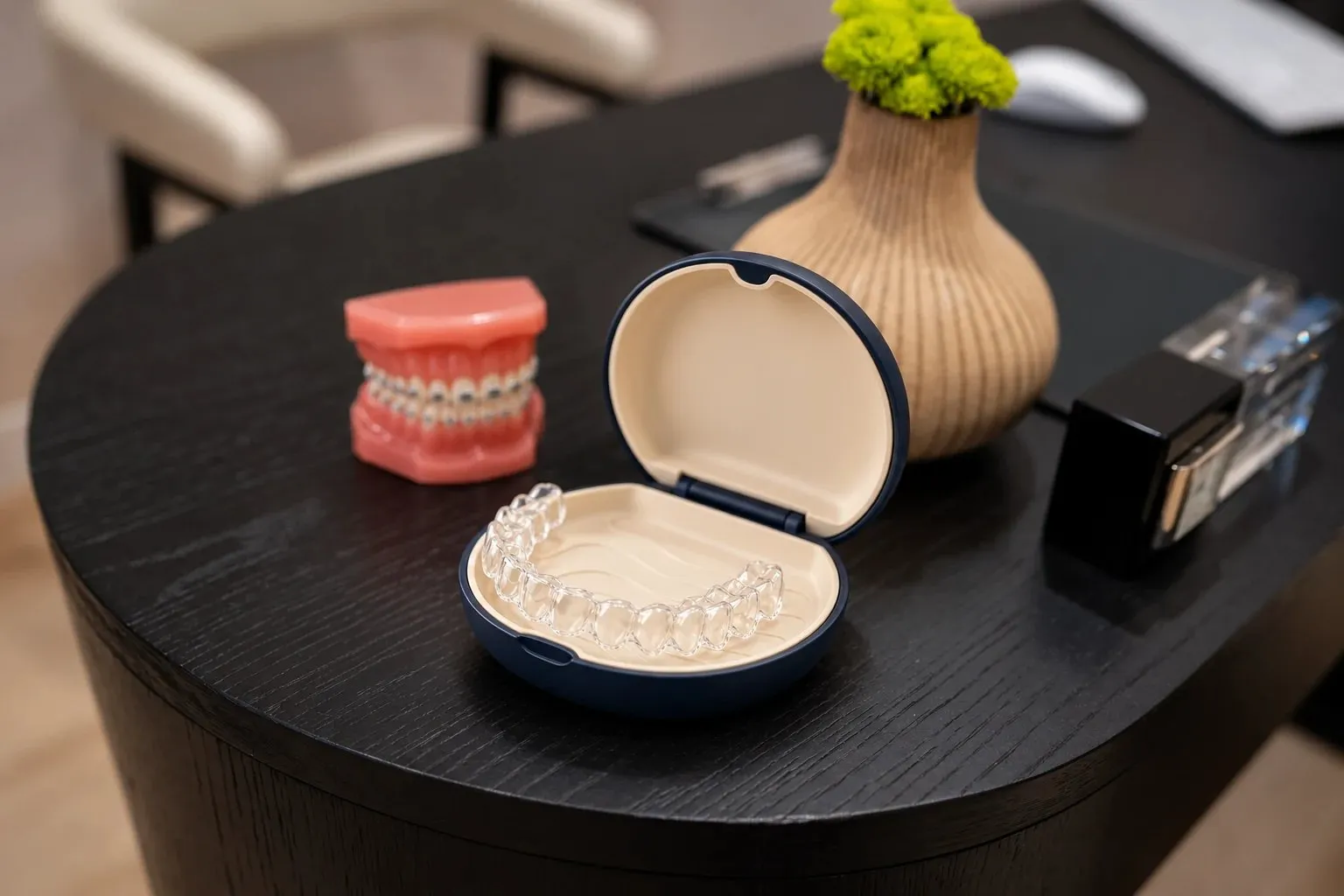
Invisalign usually brings pressure and a dull soreness for a day or two after each new aligner goes in, while the teeth start to move. In a systematic review of seven studies, people treated with Invisalign felt less pain than people with fixed braces during the first few days of treatment, and after that the difference disappeared. Pain that is severe, keeps going or gets worse is a reason to contact the office, as our Invisalign page says.
- Invisalign usually brings pressure and a dull soreness for a day or two after each new aligner, while the teeth start to move.
- In reviews of the studies, people with aligners reported less pain than people with braces in the first days, and then the difference disappeared.
- Pain relievers reduced orthodontic pain in trials, so ask a pharmacist which one suits you and use it as the label directs.
- Call or text us about appliance problems; we reply the same day during office hours, and on Saturdays or after 7 PM, the next day we are open.
What does Invisalign pain feel like?
Most people describe pressure or tightness, as if the tray is squeezing the teeth, and some tenderness when they bite down. In a 2024 study that followed 87 adults for six months, dull pain was the kind reported most often, by people with aligners and by people with braces alike.
When it hurts differs from braces. In the same study, people with aligners noticed the most pain at rest, while people with braces found chewing the most painful. That fits how aligners work. Each tray is shaped a little ahead of where your teeth are, so it presses on them whenever it is in, which is most of the day.
The pressure is how the teeth move. A steady force on a tooth starts a remodeling of the bone around it: bone is removed on the side the root presses toward and laid down on the side it moves away from. Our guide to how Invisalign works follows the process from the scan to the last aligner.
A tray can also rub. If an edge feels sharp against your tongue or cheek, or a small bump on a tooth catches, tell us rather than trimming or reshaping the tray yourself. Those bumps are attachments, and our article on Invisalign attachments explains what they do.
How long does Invisalign pain last?
Usually a day or two each time you change trays. That is the practice’s answer on our FAQ page: each new set brings mild pressure for a day or two as the teeth begin to move, and it settles quickly.
The first days of treatment are when the studies found the most pain. In a summary of seven studies, four found more pain with braces than with Invisalign in the first 24 hours, and the two studies that measured pain on day 14 found no difference between the groups.
Later in treatment, the studies found little difference. The 2020 review found no difference in pain between aligners and braces after the first days, up to three months into treatment. The 2024 study of adults followed both groups for six months: with braces, pain peaked two days after each appointment that brought a new wire or another change, while pain with aligners stayed low.
Soreness that does not follow that pattern is worth a call. If it is severe, keeps going or gets worse, tell us instead of waiting for the next tray.
Does Invisalign hurt more than braces?
In most studies it hurts less at the start and about the same later on. A 2026 meta-analysis pooled 28 studies and found that people treated with clear aligners had less pain than people with fixed braces, mostly in the early phase of treatment.
The difference is small, and the evidence has limits. The authors of that meta-analysis advise reading their results cautiously, because the studies varied, some were observational and the pooled effects were small. An overview of 18 systematic reviews called the results on pain unclear, while finding aligners more comfortable and less of a problem for eating and chewing.
Two more limits matter if you are comparing. Most of the studies used Invisalign, and the 2020 review found no evidence for other brands; it also noted that the bite problems in the studies were mild. Its authors put the predictability of the result ahead of comfort when choosing between the two.
Our comparison of Invisalign vs. braces covers the other differences, and our article Do braces hurt? describes the first week with braces day by day.
How to make Invisalign hurt less
- Keep to the wear schedule your orthodontist gives you, and ask before changing it. Each tray is planned for steady wear, which our FAQ puts at about 20 to 22 hours a day.
- Use a pain reliever if you need one, as the label directs. In a meta-analysis of 19 trials of orthodontic pain, pain relievers worked; ibuprofen and naproxen had their peak effect at about 6 hours, and the effect of acetaminophen grew from 2 hours through 24 hours. Ask a pharmacist or doctor which one suits you or your child.
- Take the aligners out to eat, as the FDA’s guide to aligners says, and brush before they go back in. Softer food can feel easier on a day when the teeth are tender.
- Tell us about an edge that rubs or a tray that will not sit fully on the teeth. Do not force it or cut it.
More notes on life with aligners and braces are in our practice notes.
When should you call about Invisalign pain?
Call when the pain is not following the usual pattern: when it is severe, keeps going or gets worse, or when a tray stops fitting. Our guide to an aligner that is not tracking covers trays that no longer seat.
Call or text us about appliance problems at (661) 425-0559. During office hours, Sunday to Friday from 8 AM to 7 PM, you hear back the same day; on Saturdays and after 7 PM, call or text anyway, and we reply the next day the office is open. Use the comfort steps in the meantime, and do not wait for our reply when a warning sign applies.
Severe pain with facial swelling or fever needs urgent assessment; when the office is closed, go to urgent care or an emergency room. Call 911 for breathing or swallowing difficulty, uncontrolled bleeding, or a serious facial or jaw injury.
Frequently asked questions
Does the first Invisalign tray hurt the most?
Often, yes. The first days of treatment are when studies found the most pain, and when aligners and braces differed most: in one summary of seven studies, four found more pain with braces in the first 24 hours. In a 2024 study of adults, though, both groups had similar pain two days after the first appointment. Later trays usually bring a day or two of pressure each.
What causes the pressure from a new aligner?
Each aligner is shaped a little ahead of where your teeth are, so it pushes on them. That steady force sets off remodeling of the bone around each tooth: bone is removed on the side the root presses toward and added on the other side, which lets the tooth move. The pressure is strongest while a tray is new and eases as the teeth catch up.
Which pain reliever helps with aligner soreness?
Trials of orthodontic pain found pain relievers effective. Ibuprofen and naproxen had their peak effect at about 6 hours, and acetaminophen built up more slowly over 24 hours. None of that makes one product right for everyone, so ask a pharmacist or doctor which suits you or your child, and use it as the label directs.
Does Invisalign hurt the whole time?
No. In the studies that followed people for weeks and months, pain with aligners was highest at the start and stayed low after that. Each new tray can bring a day or two of pressure, which settles as the teeth move. Pain that lasts or builds is not the usual pattern, so tell us about it.
More notes