
Do braces hurt? What the first week feels like
What the soreness feels like, how long it lasts after the braces go on and after a tightening, what helps, and the signs that mean you should call.
By Dr. Shadi Haykani, DDSNovember 19, 20265 min read
Medically reviewed by Dr. Shadi Haykani, DDSLast reviewed November 19, 2026
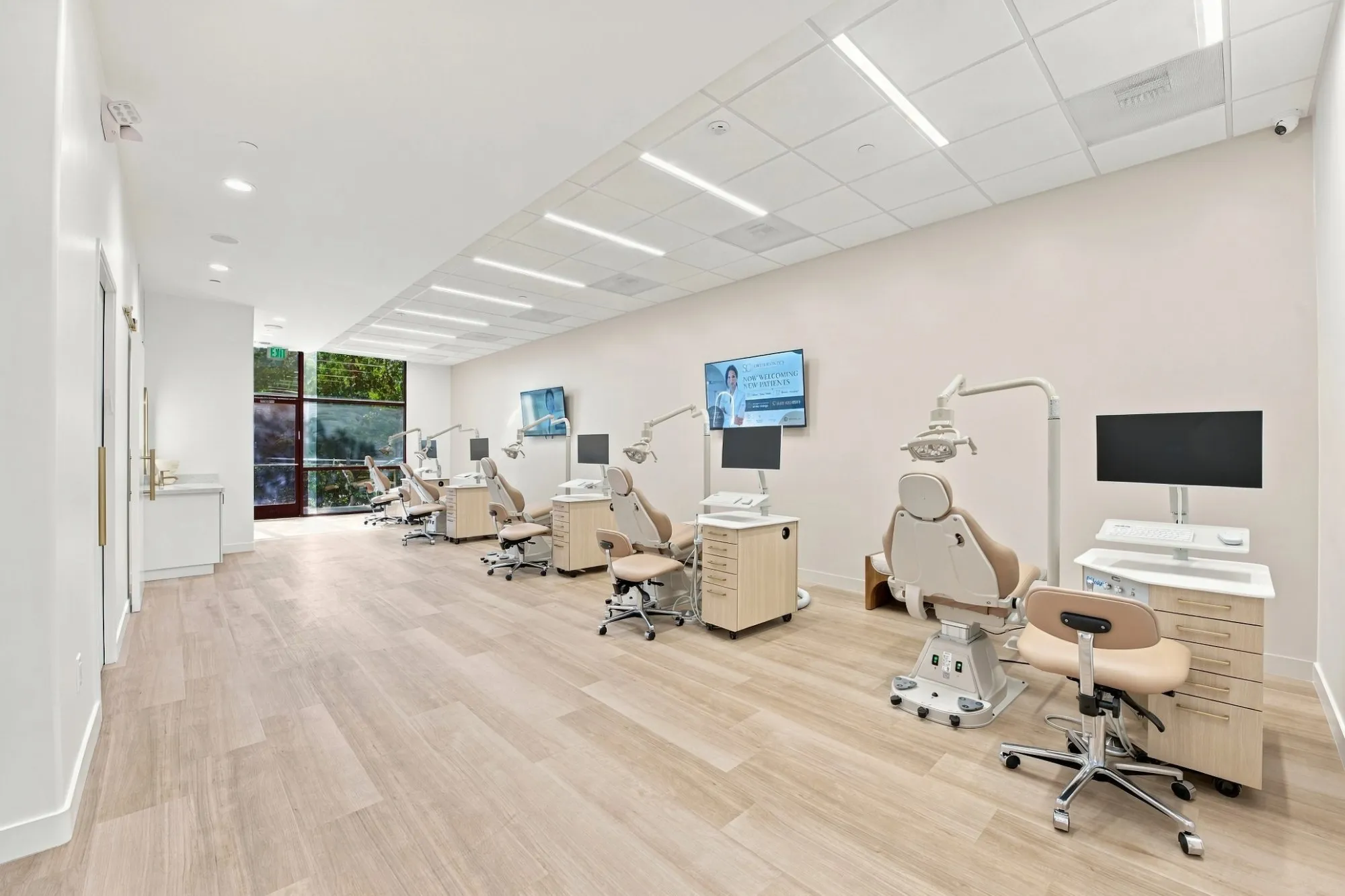
Yes, braces usually hurt for a few days. The teeth feel sore and tender, and chewing makes it worse. In a 2023 review of 37 trials with 2,277 patients, pain started soon after the braces went on, peaked on the first day and eased a little each day until the end of the first week. Soreness can come back for a while after a tightening, when the wire is changed. Soft food, a pain reliever used as the label directs and wax over a bracket that rubs can all help. The NHS braces guide says to contact your orthodontist if the pain lasts more than a few days.
- In trials, braces pain started soon after fitting, peaked on the first day and eased a little each day through the first week.
- Teeth can feel sore again for a while after a tightening, when the orthodontist changes the wire.
- Soft food, a pain reliever used as the label directs and wax over a bracket that rubs can all ease the soreness.
- Call or text us about appliance problems; we reply the same day during office hours, and on Saturdays or after 7 PM, the next day we are open.
Do braces hurt?
Your teeth may be sore for a few days after the braces are fitted, the NHS braces guide says. The soreness sits in the teeth themselves: they feel tender, and in the trials that measured it, pain was higher during chewing.
The braces can also rub. Friction between the brackets and the lining of the mouth can make the inside of the lips and cheeks sore, which is a different problem from sore teeth and has its own fix, orthodontic wax.
How much it hurts varies from person to person, and it is hard to predict. The 2023 review found no consistent effect of age, sex or how crooked the teeth were on the pain people reported.
How long does braces pain last?
On average, about a week. The 2023 review of 37 randomized trials looked at pain in the first stage of treatment, when the wires start to line the teeth up, and found the same course across studies: pain began soon after the braces went on, rose quickly to its peak on the first day and fell a little each day until the end of the first week. The trials scored pain on a 100-point scale.
| When | Average pain score (0 to 100) |
|---|---|
| Soon after the braces go on | 12.4 |
| Day 1, the peak | 42.4 |
| End of the first week | 9.0 |
In the same review, pain was a little lower in the evening than in the morning. It was higher in people who had teeth taken out as part of their treatment, and higher on the lower teeth than on the upper ones. About half the patients (54.5%) took a pain reliever at least once during that first week.
If the soreness is not easing after a few days, or it is getting worse, tell your orthodontist. The NHS braces guide lists teeth that are still painful more than a few days after the braces were fitted or adjusted as a reason to get in touch.
Do braces hurt after tightening?
They can. Patients often call an adjustment visit a tightening: the orthodontist checks the braces and may change the wire. The NHS braces guide describes appointments every 6 to 8 weeks to adjust the braces, and your orthodontist will set your own schedule.
A new or changed wire can make the teeth sore again for a while. Trials of pain relievers have measured pain 6 and 24 hours after a new archwire was placed, and ibuprofen reduced it at both times. Our guide to braces adjustment visits explains what happens at each one and what is worth asking.
Some treatments start with bands around the back teeth, and small spacers go between those teeth first to make room. Spacers can make the teeth sore as well, and in trials pain relievers reduced that soreness over the first 24 hours compared with a placebo. Our spacer guide covers that stage.
How to help braces pain
- Eat soft food while the teeth are sore. The NHS braces guide suggests soft food in the first days, and since chewing makes the pain worse, meals that need little chewing are easier. Our braces food guide has ideas.
- Take a pain reliever if you need one. In a 2020 review of 19 trials, ibuprofen, naproxen and acetaminophen all reduced orthodontic pain. Use any of them as the label directs, and ask a pharmacist or your doctor which one suits you or your child, especially if you take other medicines.
- Cover a bracket or wire that rubs with orthodontic wax. Wax contains no pain reliever; it works as a soft cover between the braces and your cheek or lip. Our orthodontic wax guide shows how to put it on.
In that review, the effect of ibuprofen and naproxen peaked at about 6 hours, while the effect of acetaminophen grew steadily from 2 hours to 24 hours. Your pharmacist can explain what that means for the product you have.
Ask your orthodontist before trying anything that goes on or around the braces, other than wax. More notes on daily life in braces are in our practice notes.
When should you call about braces pain?
Call when the pain does not follow the usual course. The NHS braces guide lists these reasons to contact your orthodontist:
- Your teeth are painful for more than a few days after your braces are fitted or adjusted.
- Your gums are very red, swollen or painful.
- Your braces are broken.
Call or text us about appliance problems at (661) 425-0559. During office hours, Sunday to Friday from 8 AM to 7 PM, you hear back the same day; on Saturdays and after 7 PM, call or text anyway, and we reply the next day the office is open. Use the comfort steps in the meantime, and do not wait for our reply when a warning sign applies.
Severe pain with facial swelling or fever needs urgent assessment; when the office is closed, go to urgent care or an emergency room. Call 911 for breathing or swallowing difficulty, uncontrolled bleeding, or a serious facial or jaw injury.
For a wire that pokes or a bracket that comes loose, our orthodontic emergency guide has the comfort steps to use until you hear back.
Frequently asked questions
Does getting braces hurt?
The fitting itself means gluing a small bracket to each tooth and connecting the brackets with a wire. The soreness comes afterward: in a 2023 review of trials, pain started soon after the braces went on, at an average of 12.4 on a 100-point scale, and peaked on the first day at 42.4. Plan soft meals for the first day or two.
How bad do braces hurt?
On the 100-point scale the trials used, the average peak on the first day was 42.4, and by the end of the first week the average was 9.0. Pain was higher while chewing, and about half the patients took a pain reliever at least once in that week. How much it hurts varies from person to person.
Can you take ibuprofen for braces pain?
Ibuprofen is one of the pain relievers tested for braces pain. In trials it reduced pain 6 and 24 hours after a new wire was placed, and acetaminophen worked about as well. Use any pain reliever as the label directs, and ask a pharmacist or doctor which one fits you or your child, especially if you take other medicines or have a health condition.
What should you eat when braces hurt?
Soft food, for as long as the teeth are sore. The NHS braces guide suggests soft food in the first days after braces are fitted, and chewing makes braces pain worse, so meals that need little chewing are easier. Once the soreness fades, the usual braces-safe foods are fine again.
More notes