
How long does Invisalign take? What sets your timeline
The usual range, what makes a case longer or shorter, how aligners compare with braces, and what happens once the last tray is done.
By Dr. Shadi Haykani, DDSNovember 19, 20265 min read
Medically reviewed by Dr. Shadi Haykani, DDSLast reviewed November 19, 2026
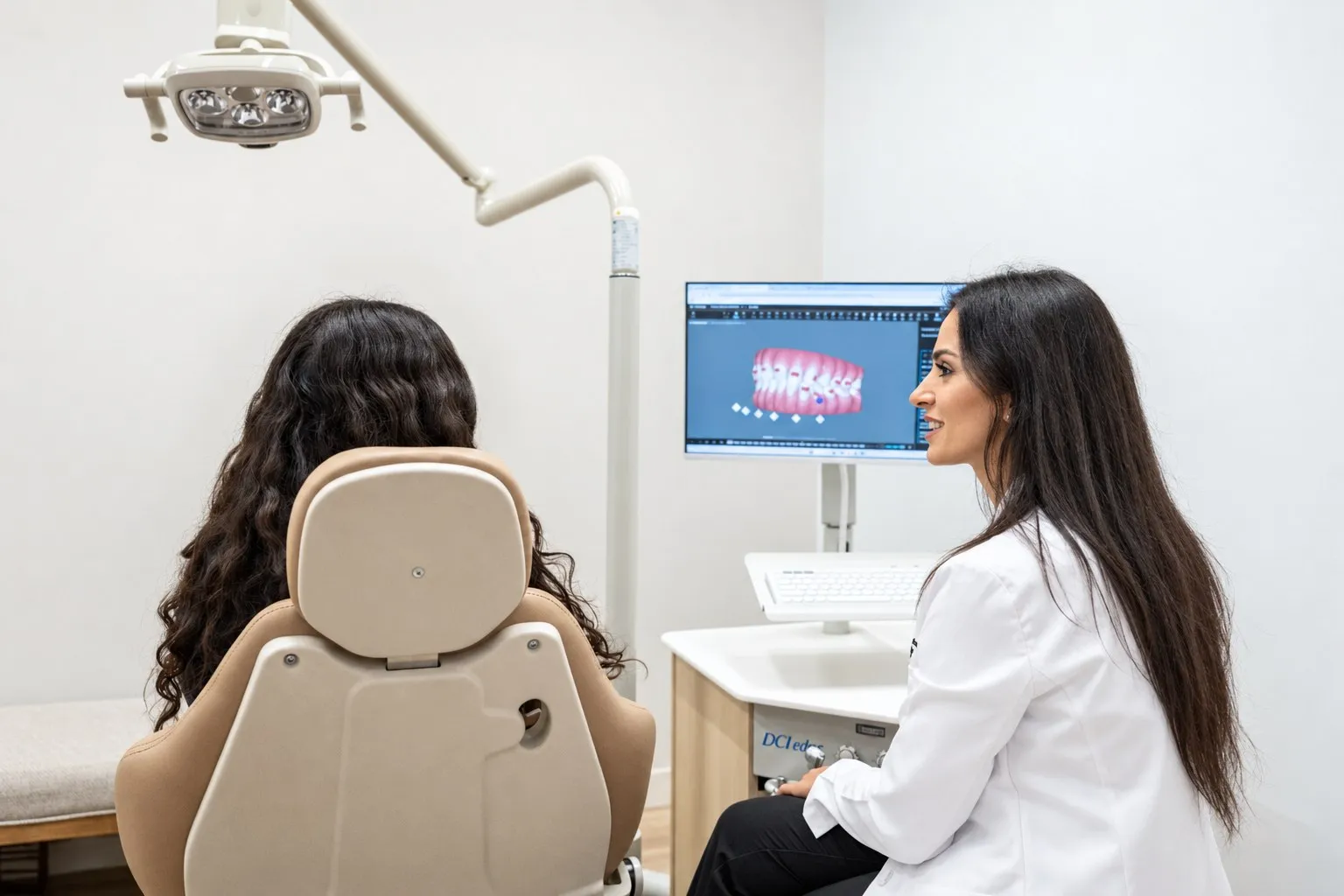
Invisalign takes months, usually about a year or more. The FDA’s guide to aligners puts the total at anywhere from six to 18 months, with each aligner worn for one to two weeks, and on our FAQ page the practice says most patients finish in 12 to 18 months. Your own timeline depends on how far the teeth need to move, how steadily you wear the aligners and whether extra aligners are needed at the end. Dr. Haykani gives an estimate after the assessment and updates it as treatment goes on.
- The FDA puts clear aligner treatment at six to 18 months, with each aligner worn for one to two weeks.
- The practice says most of its Invisalign patients finish in 12 to 18 months, and mild corrections can be quicker.
- In reviews of the studies, aligners and braces took about the same time for mild to moderate cases.
- In a trial in adults, aligners worn 22 hours a day corrected more crowding of the lower front teeth than aligners worn 12 hours.
How long does Invisalign take?
Most cases take between six months and a year and a half. That is the range in the FDA’s consumer guide, which explains that a dentist or orthodontist provides a series of custom-made aligners and that you wear each one for one to two weeks.
At our office, the answer on the FAQ page is that most patients finish in 12 to 18 months, and that mild corrections can be quicker. Dr. Haykani gives you a timeline for your own case once she has your scan and X-rays.
There is no single number for everyone. Our Invisalign page names what changes it: the movements planned, how steadily the aligners are worn and whether further adjustments are needed. It also says plainly that Invisalign is not automatically faster than braces.
What makes Invisalign take longer or shorter?
How much the teeth need to move
A small amount of crowding or spacing needs fewer steps than a bite that has to change. An overview of 18 systematic reviews found aligners effective for mild to moderate problems, with weaker results in severe cases and for some specific tooth movements.
How steadily you wear them
Each tray is planned for steady wear, about 20 to 22 hours a day in our FAQ. Wear time showed up in a trial that compared two schedules in adults with mild crowding: the 22-hour group had more correction of crowding in the lower front teeth than the 12-hour group. Taking the aligners out to eat is part of the routine, as the FDA’s guide says; leaving them out for long stretches is not.
How often you change trays
Some plans change trays every week and others every two weeks. A review of wear protocols found 7-day, 10-day and 14-day schedules worked about equally for most movements, with some movements doing better on 14 days. The schedule is part of your plan, so ask before changing it.
Extra aligners at the end
Many cases need a further set of aligners to finish. In a survey of Australian orthodontists, the average was about two of these refinements per patient. Our article on Invisalign refinements explains when they happen and what they involve.
Rushing the teeth is not an option. The FDA’s guide says there is no faster method of straightening teeth, because the slow pressure works through the bone around each tooth, and movement that is too rapid can lead to tooth loss or a breakdown of the bone.
Does Invisalign take longer than braces?
For mild to moderate cases, the studies found little difference. A 2020 review of 11 studies saw no significant difference in treatment time between aligners and braces, and a 2024 review of crowding cases found low-certainty evidence that the time was similar.
The picture changes with the case. A 2025 review of 15 trials found no significant difference in quality or treatment time when no teeth were taken out, while braces gave better results in cases with extractions. The same 2020 review found worse finishing results with aligners in adults, which is one reason the choice starts with what your bite needs.
Our comparison of Invisalign vs. braces covers the rest of that choice, and our guide How long do braces take? gives the timeline on the braces side.
How long does it take for Invisalign to work?
The teeth start to respond with the first tray. Steady force on a tooth starts the bone remodeling that lets it move, and each aligner takes the teeth one small step further. The change builds tray by tray, so how soon you see it depends on which teeth are moving and how far.
Getting used to the aligners is quicker. Each new tray usually brings a day or two of pressure, as our FAQ says, and our guide to how Invisalign works follows the process from the scan to the last aligner.
How long does it take to start Invisalign?
A few steps come before the first tray. Aligners do not suit every case, so the FDA’s guide says your dentist or orthodontist examines your teeth first. At our office that means an examination, a digital scan and the X-rays your case needs, after which Dr. Haykani explains whether Invisalign suits your teeth.
The plan itself can take more than one round. The aligners are made from a digital plan of each tooth’s movement, and orthodontists usually adjust that plan before approving it: in the Australian survey, the median share of first plans approved without changes was zero. Ask at your consultation when your first aligners are likely to be ready, since it depends on your plan.
A free consultation is where to start: it is the visit where the examination and scan happen and where you get the estimate for your case.
What happens when the last aligner is done?
Retainers come next. A Cochrane review of retention explains that without a phase of retention after treatment, teeth tend to drift back toward where they started. Our retainers page covers clear, Hawley and bonded options.
If the teeth have not reached the planned positions, a refinement adds time before the retainer stage. More notes on aligners and braces are in our practice notes.
Frequently asked questions
Can Invisalign be done in six months?
Sometimes. Six months is the short end of the range in the FDA’s guide to aligners, and the practice’s FAQ says mild corrections can be quicker than the usual 12 to 18 months. Whether your case fits depends on how far the teeth need to move, which Dr. Haykani checks with a scan and X-rays before giving you a timeline.
Does wearing aligners more than prescribed speed things up?
No. The FDA says there is no faster method of straightening teeth, because the slow pressure works through the bone around each tooth. What helps is wearing each tray as prescribed, about 20 to 22 hours a day, and changing trays on the schedule your orthodontist gives you.
Can I switch to the next aligner early?
Ask first. A review of wear protocols found 7-day, 10-day and 14-day schedules worked about equally for most movements, but some movements did better with 14 days, and your plan sets the schedule for your teeth. If a tray will not seat on the teeth, call us rather than moving on to the next one.
How many refinements will I need?
It varies from case to case. In a survey of Australian orthodontists, the average was about two refinements per patient, and some patients needed none. Each refinement means a new scan and a further set of aligners, which adds to the total time.
More notes