
Notes from the Practice / Braces care
Do ceramic braces stain? Brackets, ties and tooth care
Understand color changes and everyday care for ceramic braces in Valencia and Santa Clarita.
SC OrthodonticsOctober 26, 20264 min read
Quick answer
Ceramic braces can change color, but a yellow-looking brace is not always a stained ceramic bracket. Clear elastic ties, the adhesive around a bracket and the tooth itself can look different over time. The useful first step is to identify which part changed; stronger scrubbing or whitening is not a universal fix.
If you are considering ceramic braces at SC Orthodontics in Valencia and Santa Clarita, appearance between visits deserves a practical discussion alongside your bite and treatment plan. Here is how to separate a cosmetic concern from a tooth-health concern.
What can look stained around ceramic braces?
A fixed brace has several materials close together. The American Association of Orthodontists explains the bracket, wire and tie components; not every design uses elastic ties. Look at the location of the color change without picking at the appliance.
| Where you notice it | What may be involved | Useful next step |
|---|---|---|
| Small ring around the bracket | A clear elastic tie, also called a ligature, may have discolored. | Ask the orthodontic team to check it and discuss replacement or tie choices. |
| Bracket or its edge | The bracket, bonding adhesive or deposits may be contributing. | Have the area inspected; do not scrape the edge or remove a bracket yourself. |
| Tooth surface beside the brace | Surface stain, plaque or an enamel change may be present. | Arrange a dental assessment for a persistent or new patch, especially a chalky white area. |
This is a guide to what to point out at a visit, not a way to diagnose a spot from its color. AAO guidance distinguishes white enamel changes from ordinary staining: plaque and acid can remove minerals from enamel. A clear-looking bracket does not establish that the surrounding tooth is healthy.
Do the elastic ties stain, or do the brackets?
Both can change appearance; they should not be treated as the same material. In a 2025 clinical trial with 56 participants completing assessment, all four tested brands of aesthetic elastic ligatures showed discoloration after 28 days. The amount varied by brand. This supports setting realistic expectations for clear ties, but it does not predict exactly how yours will look or set your appointment interval.
“Ceramic brackets never stain” is too absolute. A 2022 laboratory study of ceramic brackets and bonding adhesives found color changes after exposure to several beverages; coffee produced prominent changes in many tested materials. The experiment immersed samples in solutions. It was not a trial measuring how many cups a person could drink before visible staining, and its results cannot be converted into a personal timetable.
The practical distinction is that an elastic tie is a separate component the team can replace when appropriate. A persistent change at a bonded bracket or on enamel needs its own assessment. Do not assume replacing ties will remove every visible mark.
Coffee, food and an everyday cleaning routine
Coffee and other strongly colored foods or drinks are worth mentioning if appearance is a priority. The bracket-and-adhesive study above shows that materials respond differently to exposure; it does not justify a guaranteed “stain-proof” food list. Follow any appliance-specific food instructions, and avoid hard or sticky foods that can damage fixed braces, as described in AAO advice on living with braces.
Focus home care on removing plaque and food, rather than trying to bleach the appliance:
- Use a soft brush and fluoride toothpaste. The ADA recommends two minutes of brushing twice daily with gentle pressure. Work around the bracket, above and below the wire, and along the gumline.
- Clean between the teeth every day. Ask for a demonstration with a floss threader or appropriately sized interdental brush. Our braces-brushing guide walks through the difficult surfaces.
- Keep water handy and avoid frequent sugary or acidic sipping. Rinsing away loose food is useful when you cannot brush immediately, but it does not replace brushing or guarantee unchanged tie color.
- Keep your regular dental visits. Orthodontic adjustments and general dental care serve different purposes. Mention new spots, bleeding or buildup rather than waiting until the braces come off.
AAO’s between-visit care guidance explains why cleaning around fixed appliances requires extra attention. Your team can adapt the tools to the spaces you actually have.
Will whitening toothpaste keep clear ties from staining?
It did not prevent discoloration in the products tested. In a 2025 randomized clinical trial involving 66 patients, two whitening toothpastes did not significantly improve the overall color stability of the two tested ligature brands compared with the regular toothpaste over four weeks. Both brands discolored. That finding concerns those ties and toothpastes; it does not prove that all products behave identically or that cleaning is unimportant.
Keep using the fluoride toothpaste recommended for your teeth. Do not use household bleach, scrape adhesive or try to remove ties yourself to improve their color. If the appliance looks yellow despite normal cleaning, identifying the material and discussing professional care is more useful than escalating to stronger products.
Choosing ceramic braces in Valencia and Santa Clarita
Ceramic braces offer a less noticeable bracket option while remaining fixed to the teeth. At SC Orthodontics, Dr. Shadi Haykani assesses your bite and discusses suitable appliances. Bring up coffee habits, cleaning access and how much visible color change would bother you before choosing.
Useful questions include which components the proposed system uses, how the team handles discolored ties, and what your written fee includes. Ceramic treatment is quoted individually; the metal-braces examples on our fee page are not a ceramic quote. Our braces-versus-aligners guide compares the different daily routines, and our elastic-tie color guide covers aesthetic choices. Neither bracket color nor a tie choice by itself establishes your treatment duration.
FAQ: ceramic braces and staining
Can I drink coffee with ceramic braces?
Coffee is a staining consideration, not proof that ceramic braces are unsuitable for you. The laboratory beverage study found color changes in tested materials, but cannot give an exact safe number of cups. Discuss your habits and follow your appliance’s care instructions; water and routine cleaning do not guarantee stain prevention.
Does a yellow elastic tie mean I have a cavity?
No. A tie can discolor independently of the tooth, as the clinical ligature study demonstrates. It also cannot rule out a cavity. Point out any persistent tooth mark, sensitivity or new chalky white patch so your dental team can examine the enamel.
Will switching to darker ties stop staining?
A darker shade may change how noticeable discoloration looks, but it is not a promise of stain resistance or better tooth health. Ask which tie options suit your appliance. The research on clear ligatures identifies material brand and staining exposure as relevant factors; it does not establish a universally stain-proof color.
Are self-ligating ceramic braces stain-proof?
No. A self-ligating bracket uses a built-in mechanism to hold the wire instead of a separate elastic ligature at that bracket. That removes one possible staining component; it does not make the bracket, adhesive or teeth immune to color changes. See the AAO explanation of brace designs and the material study above. Suitability still depends on your treatment plan.
Should I wait until my next adjustment to mention a new spot?
A concern limited to tie color can usually be discussed with the orthodontic team without trying a home repair. A new or persistent tooth patch, pain, sensitivity or swelling deserves earlier contact for advice. AAO recommends dental evaluation when white spots develop; changing ties alone does not address enamel mineral loss.
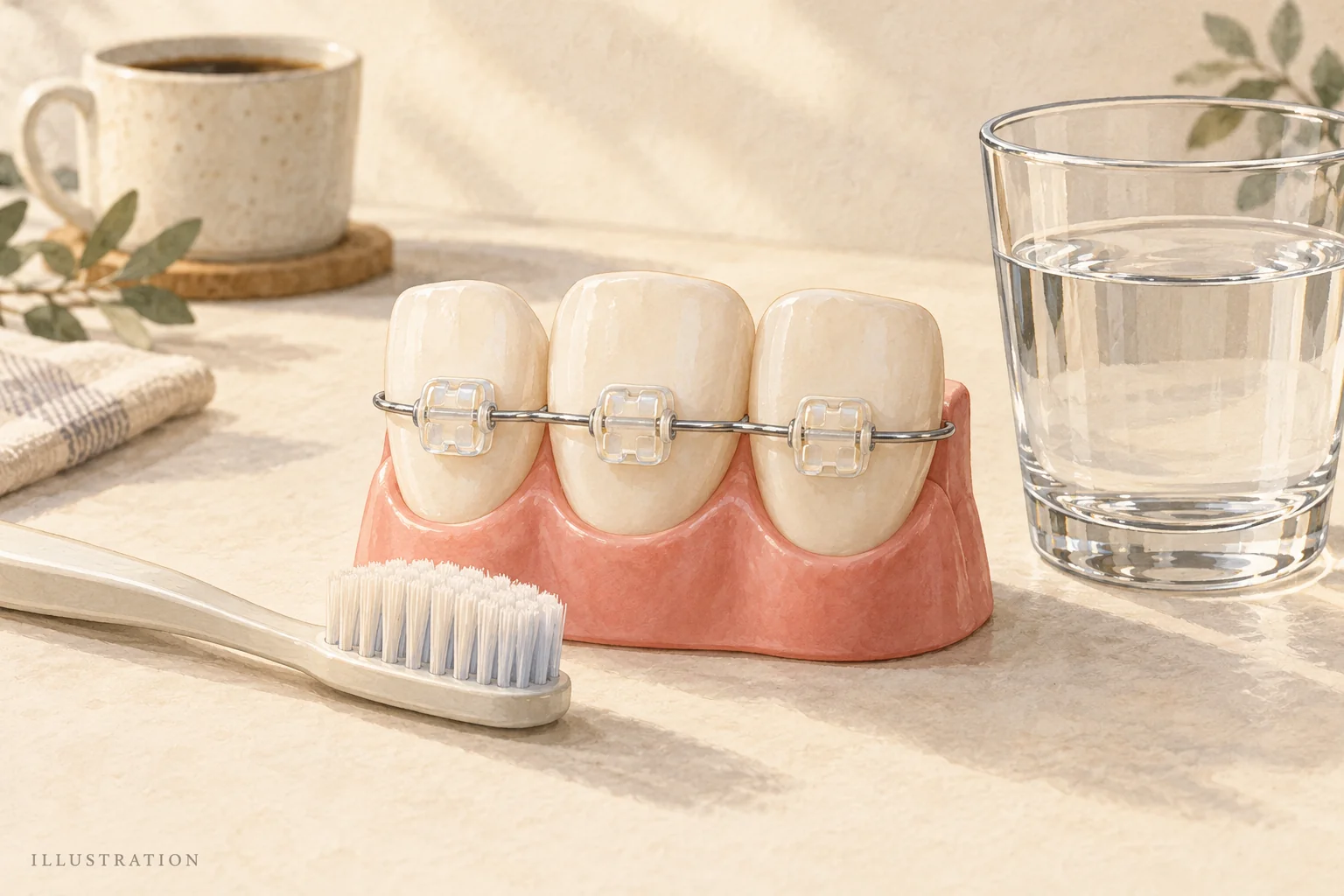
Educational information from SC Orthodontics. Research and professional guidance checked October 26, 2026. The illustration shows a generic teaching model, not a specific product or treatment result.
More notes