
What to eat after wisdom teeth removal: a day-by-day guide
When you can eat after wisdom teeth removal, which soft foods to start with, what to avoid while the socket heals and what changes with braces or aligners.
By Dr. Shadi Haykani, DDSNovember 22, 20266 min read
Medically reviewed by Dr. Shadi Haykani, DDSLast reviewed November 22, 2026
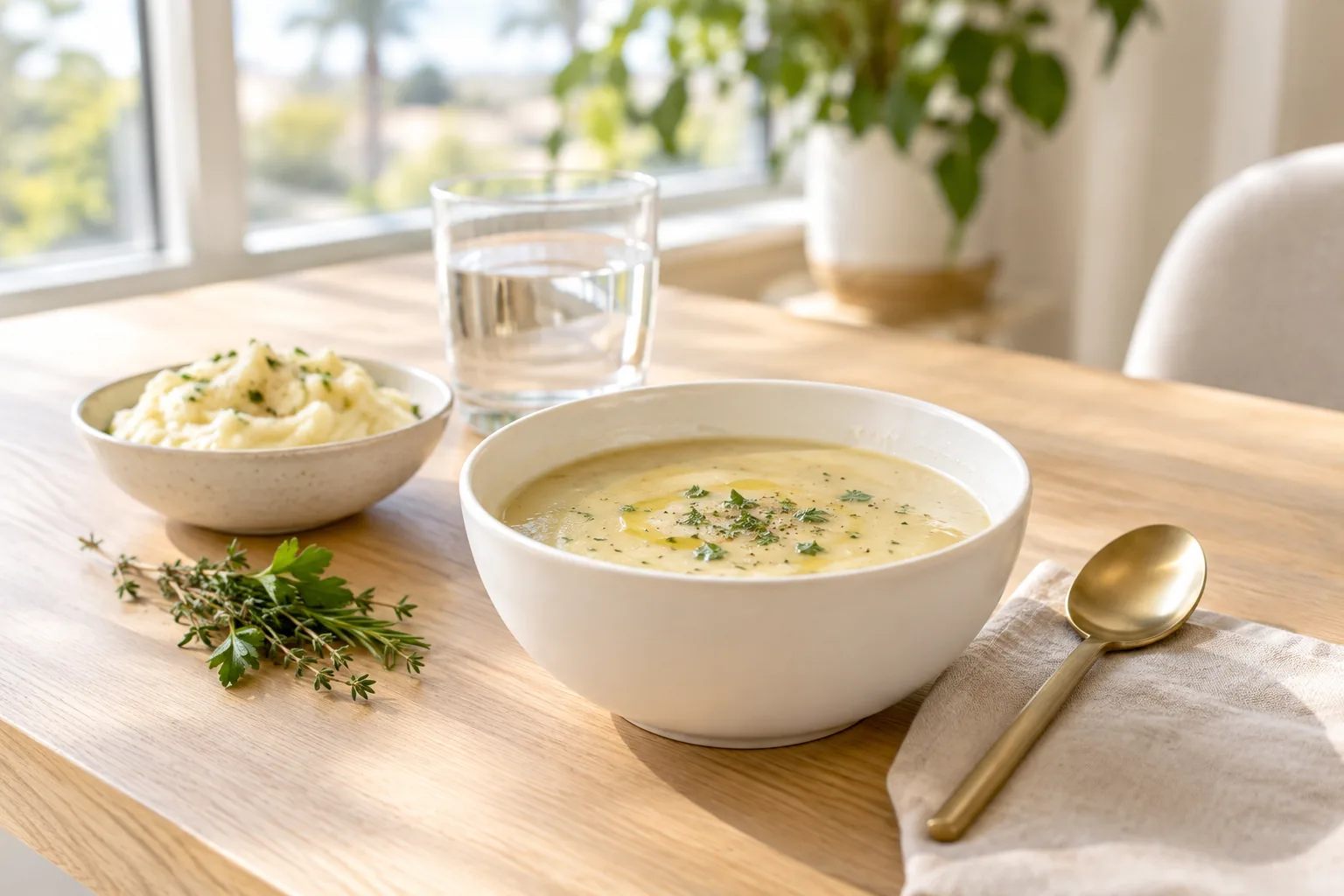
Start with liquids and soft foods once the numbness has worn off, and move to firmer food as chewing gets more comfortable. The NHS advises soft or liquid food at first, with no hard or crunchy food and nothing that could get stuck in the wound, such as nuts or seeds, and no alcohol or very hot drinks. Chewing is hardest at the start: in a study of 201 patients who had wisdom teeth removed, 85% had trouble chewing on the first day after surgery, and 19% still did by day 6. The instructions from the surgeon who treated you come first.
- Once the numbness wears off, eat liquids and soft foods, then add firmer food as chewing becomes comfortable.
- Avoid hard or crunchy food and anything that could lodge in the socket, such as nuts or seeds, plus alcohol and very hot drinks.
- In one study, 85% of patients had trouble chewing on the first day after surgery, and 19% still did by day 6.
- Severe pain with facial swelling or fever needs urgent assessment; when the office is closed, go to urgent care or an emergency room.
How long after wisdom teeth removal can you eat?
You can start with soft or liquid food on the day of the extraction, once the numbness has gone. Until a local anesthetic has fully worn off, you may not notice if you injure yourself, the NHS warns, so a numb lip, cheek or tongue is easy to bite and a hot drink can scald without you feeling it.
Use the aftercare advice you are given as your main guide. You’ll be given advice for the first few days of recovery, and our guide to tooth extraction for braces suggests discussing pain control, cleaning, food and activity with the treating team.
What can you eat after wisdom teeth removal, day by day?
Let chewing comfort set the pace. The NHS advises soft or liquid food until you can chew more comfortably, and it lists chewing and swallowing as uncomfortable for up to 2 weeks for some people. The jaw may be sore and stiff over the same weeks, which makes food that needs a wide bite harder to manage. As a rough guide, adjusted to your own instructions:
| When | What to eat | What to avoid |
|---|---|---|
| Until the numbness wears off | Nothing that needs chewing | Hot drinks, since a numb mouth may not feel a scald |
| Day 1 | Liquids and soft foods, such as cooled soup, yogurt, mashed potatoes or scrambled eggs | Alcohol, very hot drinks, hard or crunchy food |
| Days 2 to 5 | Soft foods, for as long as chewing is uncomfortable | Hard or crunchy food and anything that could get stuck, such as nuts or seeds |
| Once chewing feels comfortable | Firmer foods, added gradually | Anything that still hurts to chew |
In a study of 201 patients aged 13 to 37 who kept a daily diary after wisdom tooth surgery, 85% had trouble chewing and 78.5% had trouble opening their mouth on the first day; by day 6, those figures were 19% and 15%. Swelling peaked on days 1 and 2 and had dropped markedly by day 5, when daily life was getting back to normal for the group.
Some people take longer. The same study found a longer recovery after surgery that lasted 30 minutes or more, when all the wisdom teeth sat below the level of the other teeth, and in women. In a larger study of 958 patients, recovery of eating, daily activities and pain took longer in people aged 21 or older than in younger patients, and longer in women than in men. Move on to firmer food only when it feels comfortable.
If pain makes eating hard, take the pain reliever your surgeon recommends, as directed. A 2024 clinical practice guideline for teens and adults names nonopioid medicines as the first choice for pain after a tooth extraction.
Which soft foods are easiest after a tooth extraction?
Foods that need little or no chewing. The NHS lists soup, scrambled eggs, mashed potatoes and yogurt as soft foods for a sore mouth, and our patient care page adds smoothies and pasta for tender teeth. Good choices include:
- soup, cooled so it is not very hot
- yogurt
- mashed potatoes
- scrambled eggs
- smoothies without seeds
- soft-cooked pasta, once chewing is a little easier
Let hot food cool before you eat it. The NHS advises against very hot drinks after wisdom tooth removal to reduce the risk of bleeding or scalding, and food straight from the stove carries the same scald risk while your mouth is numb. For more soft meal ideas, our guide to foods to eat with braces has suggestions that also suit a sore mouth.
What should you avoid eating after wisdom teeth removal?
For the first few days, the NHS advises avoiding:
- hard or crunchy food
- food that could get stuck in the wound, such as nuts or seeds
- alcohol and very hot drinks, to reduce the risk of bleeding or scalding
Do not smoke either, because smoking can increase the risk of infection. The blood clot that forms over the wound helps it heal, and when it is lost too early the result is a dry socket, which brings severe pain 2 to 3 days after the extraction.
How do you keep the socket clean while you eat?
Rinse gently and keep your other teeth clean. The NHS advises keeping the wound clean by rinsing gently with mouthwash or warm salt water, and cleaning your other teeth carefully while avoiding the area so you do not damage the stitches or the blood clot. Ask your surgeon when to start rinsing.
Food in the socket can be a nuisance for a while: in the diary study, food collecting in the surgical sites was the biggest problem on day 9, reported by 20% of patients. Keep up the gentle rinses for as long as your surgeon advises.
What changes if you wear braces or aligners?
Soft food suits both a healing socket and braces. With braces, the FDA advises avoiding anything chewy or sticky, such as gummy bears or chewing gum, and hard candies or popcorn, which can damage the braces. Food also gets stuck in braces easily, so keep cleaning the brackets on your other teeth carefully and keep the brush away from the socket.
With clear aligners, take them out to eat, then brush and floss, avoiding the socket, before you put them back. Ask your treating teams for appliance instructions before the extraction rather than changing wear on your own, including when to put aligners or a retainer back in. Our guide to wisdom teeth and crowding covers how wisdom tooth removal fits with orthodontic treatment, and more of our dental health guides answer everyday questions about teeth and gums.
When should you call the surgeon after an extraction?
Call the dentist or oral surgeon who removed the tooth if eating gets harder instead of easier, or if the pain gets worse a few days after the extraction. Call them too if you have pain with a bad taste in your mouth, which the NHS lists as a reason to ask for an urgent dental appointment.
If the socket bleeds, press the area for at least 10 minutes with a clean cloth, as the NHS advises. Call 911 for breathing or swallowing difficulty, uncontrolled bleeding, or a serious facial or jaw injury.
Severe pain with swelling of the face, jaw or floor of the mouth, or with fever, needs urgent assessment; when the office is closed, go to urgent care or an emergency room. Call 911 if breathing or swallowing is affected.
Frequently asked questions
Can I drink coffee after wisdom teeth removal?
Not while it is very hot. The NHS advises against very hot drinks after wisdom tooth removal, to reduce the risk of bleeding or scalding, so let coffee cool well first. Wait until the numbness has worn off as well, because you may not feel a burn while your mouth is numb, and check your surgeon’s instructions for when hot drinks are fine again.
Can I eat rice after wisdom teeth removal?
Ask your surgeon first. Soft-cooked rice needs little chewing, but the NHS advises avoiding food that could get stuck in the wound, such as nuts or seeds, and loose grains can collect in a socket the same way. Once your surgeon says rice is fine, rinse gently after eating as they direct.
Can I eat pizza after wisdom teeth removal?
Not in the first days. Pizza crust takes firm chewing, and the NHS advises soft or liquid food until you can chew more comfortably, with no hard or crunchy food. In a study of 201 patients, 85% had trouble chewing on the first day after surgery and 19% by day 6, so wait until chewing feels comfortable.
Can I eat mac and cheese after wisdom teeth removal?
Usually, once the numbness has worn off and it has cooled. Soft-cooked pasta needs little chewing, and our guide to foods to eat with braces counts pasta among the soft foods. Let it cool first: the NHS advises against very hot drinks after wisdom tooth removal to reduce the risk of scalding, and hot food can scald too. Leave out crunchy toppings such as toasted breadcrumbs.
Can I drink alcohol 24 hours after a tooth extraction?
It is safer to wait. The NHS advises not drinking alcohol after wisdom tooth removal, to reduce the risk of bleeding. Alcohol can also react with pain medicines. The National Institute on Alcohol Abuse and Alcoholism lists drowsiness, overdose risk and slowed breathing when alcohol is mixed with prescription medicines for severe pain, such as after oral surgery. With pain relievers such as ibuprofen it lists stomach upset, bleeding and ulcers, and liver damage with acetaminophen. Ask your surgeon or pharmacist when it is safe.
When can I use a straw after a tooth extraction?
Follow the instructions of the surgeon who removed the tooth. In a small 2012 trial of 60 people who had all four wisdom teeth out, those who used a straw with every meal for 2 days after surgery had the same rate of dry socket, 15%, as those who did not. One small trial does not override your aftercare instructions, so ask the surgeon who removed the tooth.
More notes