
Salt water rinse: how to make it and when to use it
How to mix a warm salt water rinse, what it does for canker sores, toothache, gums and a healing socket, and when a sore mouth needs a dentist.
By Dr. Shadi Haykani, DDSNovember 23, 20267 min read
Medically reviewed by Dr. Shadi Haykani, DDSLast reviewed November 23, 2026
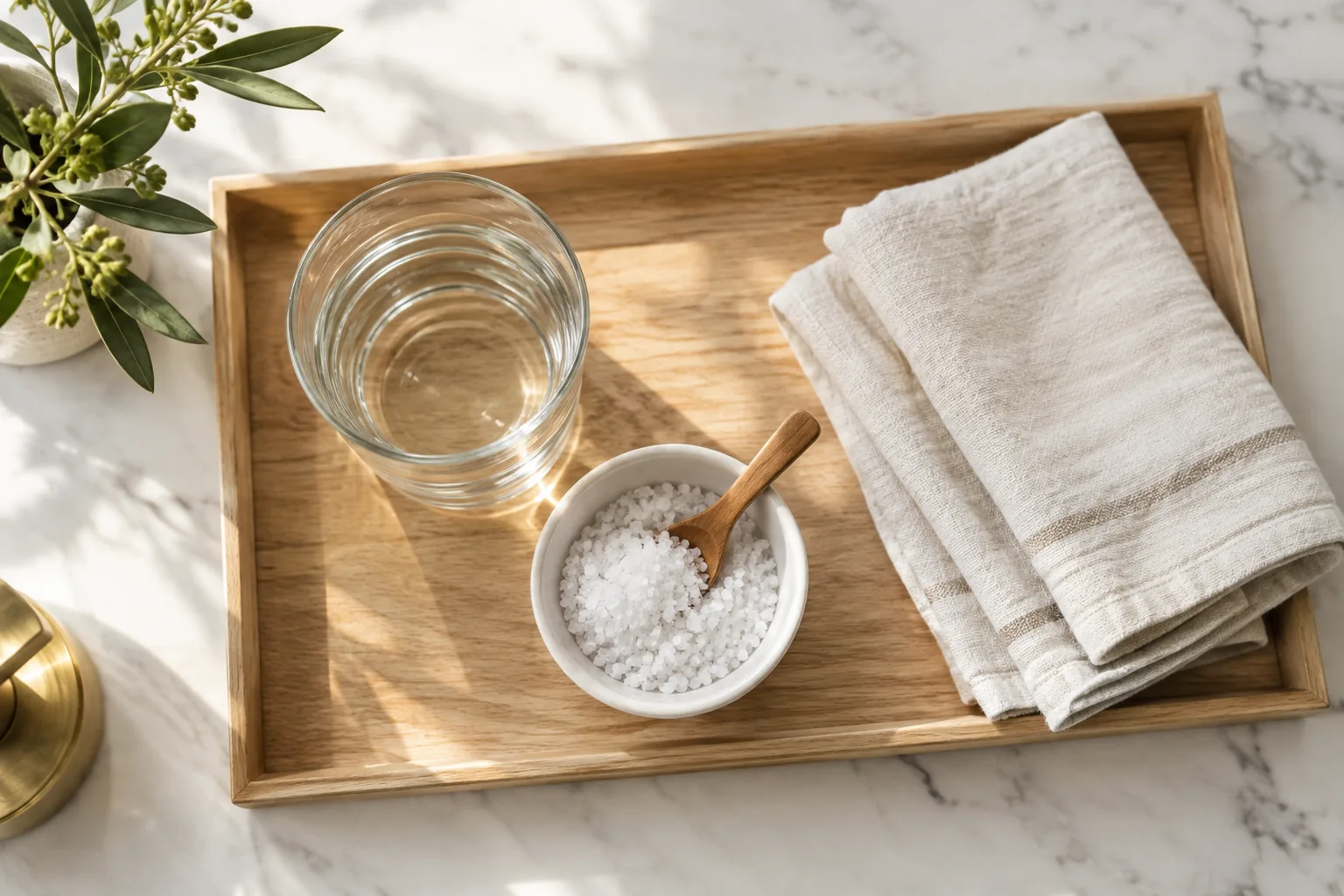
To make a salt water rinse, dissolve half a teaspoon of salt in a glass of warm water, rinse your mouth with it and spit it out without swallowing, as the NHS describes. The NHS suggests the rinse for mouth ulcers such as canker sores, for a toothache while you wait for a dental appointment, and for keeping the wound clean after a wisdom tooth comes out. It can ease a sore mouth for a while. A toothache that lasts more than 2 days needs a dentist, who can treat the cause, and children should not rinse with salt water in case they swallow it.
- Stir half a teaspoon of salt into a glass of warm water, rinse your mouth, then spit the rinse out without swallowing any.
- The NHS suggests salt water for mouth ulcers, for a toothache while you wait for the dentist and for keeping a wisdom tooth wound clean.
- Children should not rinse with salt water in case they swallow it, and a toothache that lasts more than 2 days needs a dentist.
- Severe pain with facial swelling or fever needs urgent assessment; when the office is closed, go to urgent care or an emergency room.
How do you make a warm salt water rinse?
All you need is salt and warm water. The NHS gives the same method on its mouth ulcer page and its toothache page:
- Dissolve half a teaspoon of salt in a glass of warm water. The warmth helps the salt dissolve.
- Rinse your mouth with the solution.
- Spit it out, and do not swallow it.
Children should not rinse with salt water, the NHS advises, in case they swallow it. If your child has a sore mouth or a toothache, ask their dentist or doctor what to do instead.
Rinse at a different time from brushing. To help prevent gum disease, the NHS advises spitting after brushing instead of rinsing, and not using mouthwash straight after you brush.
Does a salt water rinse help canker sores?
It may ease the pain while the sore heals: some rinses may help with the pain, MedlinePlus notes. For mouth ulcers, the NHS lists a salt (saline) mouthwash among the treatments a pharmacist can recommend, along with an antimicrobial mouthwash, painkilling tablets, gels or sprays, and corticosteroid lozenges.
Canker sores, also called aphthous ulcers, are painful white or yellow sores that form only inside the mouth, usually on the inside of the cheeks or lips or on the tongue, NIDCR explains. They typically go away on their own in 1 to 2 weeks. Mouth ulcers need that time to heal, and the NHS says there is no quick fix.
While a mouth ulcer heals, the NHS suggests these steps:
- Use a soft-bristled toothbrush.
- Drink cool drinks through a straw, and eat softer foods.
- Avoid very spicy, salty or acidic food, and rough, crunchy food such as toast or chips.
- Skip very hot or acidic drinks, such as fruit juice.
- Choose a toothpaste without sodium lauryl sulfate.
Cold sores are a different problem. They form outside the mouth around the lips, come from the herpes simplex virus and are contagious, while canker sores are not.
Is a salt water rinse good for your gums?
It can be an extra step, but brushing and flossing come first. Early gum disease, caused by plaque building up on the teeth, can often be reversed by daily brushing and flossing, NIDCR says. Plaque left on the teeth can harden into tartar, which only a professional cleaning by a dentist or dental hygienist can remove.
In a small 2017 school-based trial, 30 participants had a professional cleaning and then rinsed for 5 days with salt water or with chlorhexidine, a prescription rinse labeled for treating gingivitis between dental visits. Salt water was as effective as chlorhexidine at reducing plaque, though chlorhexidine did better against three of the four kinds of mouth bacteria the study counted, and the authors suggest salt water as an addition to routine brushing and flossing.
See a dentist if your gums bleed when you brush or eat hard foods, or if they are painful and swollen, the NHS advises. People with periodontal disease need treatment from a dentist or dental hygienist, according to NIDCR.
Can you use a salt water rinse after a tooth extraction?
Yes, as part of the aftercare you are given. After wisdom tooth removal, the NHS advises keeping the wound clean by rinsing gently with mouthwash or warm salt water, and you’ll be given advice for the first few days: follow it, including when to start rinsing. For questions after treatment at another office, such as numbness, soreness or a stitch, call the dentist or specialist who treated you. If pain or swelling gets worse after treatment at another office, or pain relief is not helping, ask the dentist or specialist who treated you for an urgent appointment.
If the wound bleeds, the NHS advises pressing on the area for at least 10 minutes with a clean cloth or piece of cotton. Call 911 for breathing or swallowing difficulty, uncontrolled bleeding, or a serious facial or jaw injury. Severe pain with swelling of the face, jaw or floor of the mouth, or with fever, needs urgent assessment; when the office is closed, go to urgent care or an emergency room. Call 911 if breathing or swallowing is affected.
In a 2015 trial of 160 patients aged 16 and older who had teeth removed, those told to rinse with warm salt water six times a day developed dry socket less often: the risk was 4 times higher in the group given no such instruction. Dry socket is a painful condition in which the blood clot over the socket does not form properly or comes loose before the gum has healed.
If a tooth is coming out to make room for braces, our guide to tooth extraction for braces covers what to ask the treating team about recovery.
Does salt water help a toothache?
It can ease the pain until you see a dentist. The NHS lists a salt water rinse among the things you can do while you wait for an appointment, together with a painkiller such as ibuprofen or acetaminophen used as the label directs, soft foods and a soft toothbrush. Children under 16 should not take aspirin.
Toothache can come from tooth decay, a dental abscess, a cracked or damaged tooth, a loose or broken filling, gum disease, teeth grinding or problems with braces, the NHS explains. See a dentist if it lasts more than 2 days or does not go away with painkillers: the dentist can treat the cause and stop the problem getting worse.
Severe pain with swelling of the face, jaw or floor of the mouth, or with fever, needs urgent assessment; when the office is closed, go to urgent care or an emergency room. Call 911 if breathing or swallowing is affected.
When does a mouth sore need a dentist or doctor?
When it lasts, comes back often or looks unusual. See a dentist or a doctor about any sore that lasts more than 2 weeks, as NIDCR advises, braces or not. The NHS also advises seeing a dentist or doctor if a mouth ulcer:
- lasts longer than 3 weeks
- is different from ulcers you have had before, for example bigger than usual or near the back of your throat
- bleeds or becomes more painful and red, which may be a sign of an infection
Most mouth ulcers are harmless, but a long-lasting one is sometimes a sign of mouth cancer, so it is worth having it checked. See a doctor as well if you have ulcers elsewhere on your body, or painful, red or swollen joints.
For canker sores, NIDCR advises seeing a doctor if they come back often or are severe enough to make eating or drinking difficult.
Can you use a salt water rinse with braces?
Yes, and it may soothe cheeks that new braces have rubbed. Our patient care guide suggests warm salt-water rinses for irritated cheeks in the first week, along with a pea-sized piece of wax pressed over any bracket that rubs.
Braces are among the causes of mouth ulcers that the NHS lists, and our guide to orthodontic wax shows how to cover a rough spot. A sore with braces can have other causes too, so our orthodontic emergencies guide gives NIDCR’s advice: see a dentist or a doctor if a sore lasts more than 2 weeks.
A wire that pokes or a bracket that comes loose needs more than a rinse. Call or text us about appliance problems at (661) 425-0559. During office hours, Sunday to Friday from 8 AM to 7 PM, you hear back the same day; on Saturdays and after 7 PM, call or text anyway, and we reply the next day the office is open. Use the comfort steps in the meantime, and do not wait for our reply when a warning sign applies.
For a child in braces, ask us before using a salt water rinse, since the NHS advises that children should not rinse with salt water in case they swallow it.
For store-bought rinses during treatment, our guide to mouthwash with braces explains how to choose one for a purpose such as cavity prevention. Our dental health notes answer more everyday questions about the teeth and gums.
Frequently asked questions
Does salt water kill bacteria in your mouth?
The NHS, which suggests salt water rinses for mouth ulcers and toothache, does not describe them as killing germs. Its mouth ulcer advice lists a salt (saline) mouthwash separately from an antimicrobial mouthwash, and for severe or infected ulcers it says a dentist or doctor may prescribe a mouthwash to kill or remove germs. For canker sores, NIDCR says over-the-counter antiseptic rinses may help prevent infection of the sore. An infection itself needs a dentist or doctor.
Can a salt water rinse cure a gum infection?
No. Gum disease is itself an infection that causes inflammation of the tissues that hold the teeth in place, NIDCR explains: early gum disease can often be reversed by daily brushing and flossing, and periodontal disease needs treatment from a dentist or dental hygienist. A dental abscess, a build-up of pus in the teeth or gums, will not go away on its own and needs urgent treatment by a dentist, the NHS says. Severe pain with facial swelling or fever needs urgent assessment; when the office is closed, go to urgent care or an emergency room.
Can you use salt water instead of mouthwash?
For a sore mouth, yes: the NHS calls it a salt (saline) mouthwash and suggests it for mouth ulcers. Some store-bought rinses do a different job. A fluoride mouth rinse is one way to get fluoride, a mineral that can prevent tooth decay from progressing, NIDCR explains. Our guide to mouthwash with braces shows how to match a store-bought rinse to its purpose.
How often should you rinse with salt water?
For a mouth ulcer or a toothache, the NHS says you can repeat the rinse as often as you like. After an extraction, follow the schedule your dentist or oral surgeon gives you. In a 2014 trial of 120 patients having teeth removed, rinsing with warm salt water twice a day and six times a day both lowered the rate of dry socket compared with no rinsing, with no significant difference between the two, and the authors call twice a day more convenient.
More notes