
How to clean a mouth guard after every use
How to clean and store a sports mouth guard, what studies of used guards found, when to disinfect or replace one, and how night guards and retainers differ.
By Dr. Shadi Haykani, DDSNovember 23, 20265 min read
Medically reviewed by Dr. Shadi Haykani, DDSLast reviewed November 23, 2026
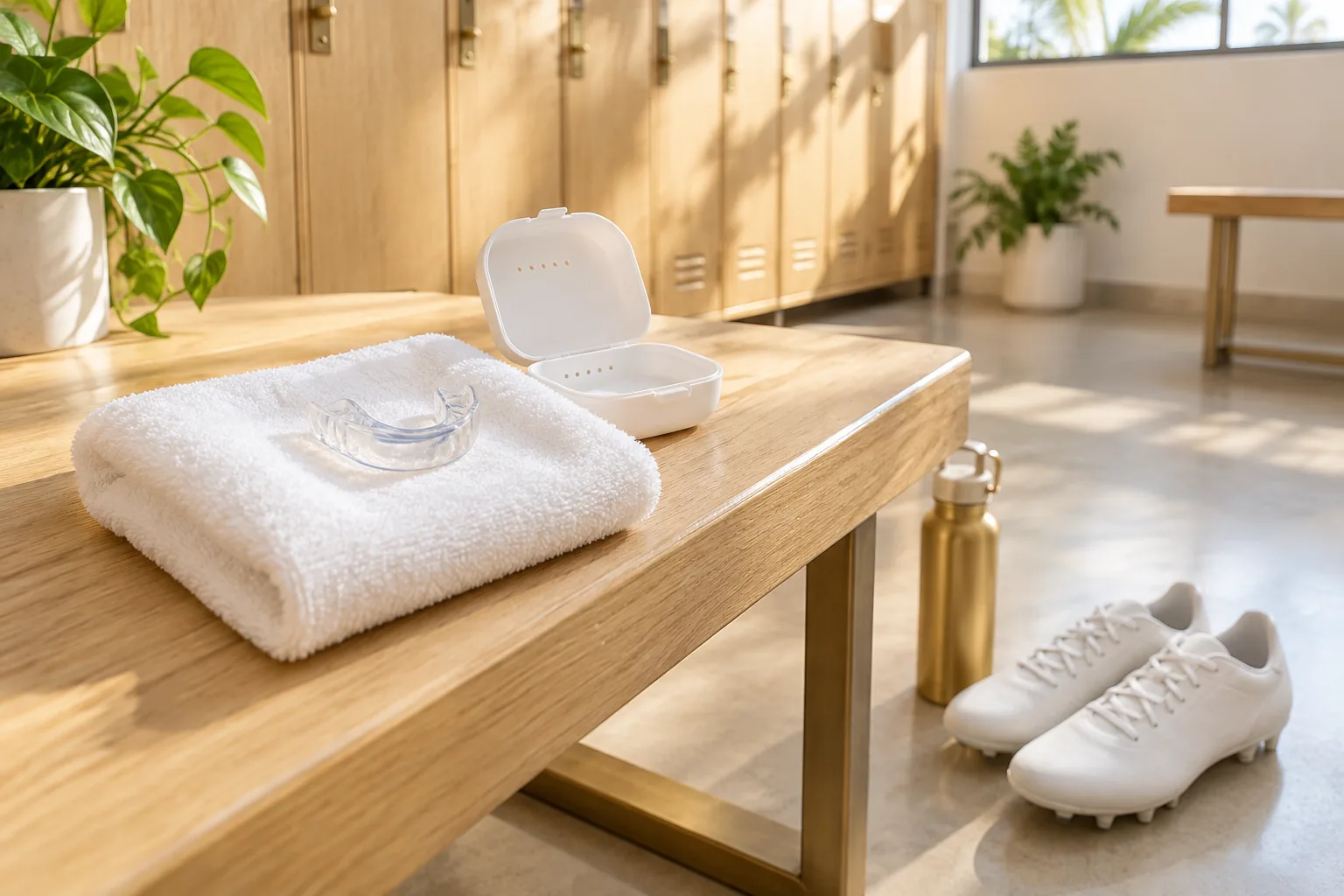
To clean a mouth guard, rinse it as soon as you take it out, brush every surface with a toothbrush and toothpaste or a mild liquid soap, rinse it again, then let it dry and keep it in a clean, ventilated case away from heat. Brushing removes far more than rinsing: in a 2025 Australian study of children’s football mouth guards, a toothbrush and toothpaste removed 98% of the bacteria, while rinsing with water removed only 60 to 70%. Use a disinfecting soak or spray only as the guard’s maker directs, and replace a guard that has turned sharp, jagged or loose.
- Rinse the guard after each use, brush it clean, then let it dry and store it in a clean, ventilated case.
- Brushing works far better than rinsing alone, removing 98% of bacteria against 60 to 70% for water in a study of children’s sports guards.
- Use any soak or disinfectant only as the maker directs, and keep the guard away from hot water, direct sunlight and heat.
- Replace a guard that turns sharp, jagged or loose, and bring it to dental visits so the fit can be checked.
What are the steps for cleaning a mouth guard?
If your guard came with care instructions, follow those for its material. These steps follow our sports mouthguard guide and the methods that worked in studies of used guards:
- Rinse the guard with water as soon as you take it out of your mouth.
- Brush every surface, inside and out, with a toothbrush and toothpaste or a mild liquid soap.
- Rinse it again to wash off the toothpaste or soap.
- Let it dry.
- Store it in a clean, ventilated case.
- Check it for cracks, damage and changes in fit.
Rinse it once more before it goes back in your mouth, as our guide advises.
Why does a mouth guard need cleaning?
Germs build up on it with use. In a 2011 study of 81 guards worn by 62 Division I college football players, the guards held a range of bacteria, yeasts and molds, and the authors concluded that substantial contamination occurs with use.
Wear gives bacteria more to cling to. Used guards were far rougher than new ones in the 2025 study, which collected guards and their cases from junior football players under 12, and under the microscope the worn surfaces carried about eight times more bacteria. A 2021 trial in 20 children aged 9 to 13 who practiced martial arts also found heavy contamination and rougher surfaces after use.
A guard may also affect the mouth. In a 2014 study of 60 children who wore sports mouth guards, plaque and gum bleeding scores were significantly higher after a year, and the pH and buffering capacity of their saliva had dropped, though the authors also noted that the children lost their initial motivation over time. They wrote that removable devices increase the surfaces plaque can cling to and reduce the protective effect of saliva.
Is rinsing a mouth guard enough?
No. In the 2025 study, brushing removed 98% of the bacteria from used guards and a water rinse only 60 to 70%, so give the guard a brush each time you clean it.
How you clean it also affects the plastic. A 2024 lab study cleaned samples of ethylene vinyl acetate (EVA), a plastic used for sports mouth guards, in several ways for 28 days. Brushing with water and a mild, neutral liquid soap caused minimal surface changes, and the authors called it the most promising method. A soak in baking soda (sodium bicarbonate) solution left the surface rougher than brushing with soap or toothpaste did.
How do you deep clean a mouth guard?
Brush it first, then use a disinfecting product only if your guard’s maker or your dentist recommends one for its material, and follow its directions exactly.
Disinfecting can lower germ counts further. In the 2011 football study, guards soaked in an antimicrobial solution between uses carried substantially fewer microorganisms, and the authors advised sanitizing guards daily. In the 2021 trial, when the children sprayed their guards with chlorhexidine, a disinfectant, after use, the guards were less contaminated than when they sprayed water.
Those disinfectants can also change the material a little. A 2023 lab study found small changes in the color and hardness of EVA samples after 3 months of disinfecting spray, limited to some colors of plastic, while sports drinks made almost no difference.
Lab studies disagree on which method is gentlest. A 2019 lab study of three custom mouth guard materials found grooves, holes and loose pieces on the surface after some cleaning methods, the fewest with a disinfecting spray, and its authors favored disinfection for keeping guards clean.
How should you store a mouth guard?
Dry, in a clean, ventilated case, away from heat. Most of the types of bacteria identified on the children’s guards in the 2025 study came from the environment rather than the mouth, and the authors traced that to how the guards were handled and stored. They advised regular brushing and hygienic storage.
Our sports mouthguard guide advises letting the guard dry before it goes into a ventilated protective case, and keeping it away from hot water, direct sunlight and heat. Our guide to cleaning retainers adds that hot or boiling water can distort plastic. Keep the case with your sports kit, so the guard has somewhere to go as soon as practice ends.
When should you replace a sports mouth guard?
When it turns sharp, jagged, cracked or loose, or no longer fits well. The authors of the 2011 football study advised changing guards once they become sharp or jagged, and our sports mouthguard guide says to check for cracks, damage and changes in fit.
Guards wear down with use. A small 2007 study measured custom-made guards worn by 15 high school varsity football players, 4 of whom lost their guards before the season ended. After 6 weeks of the season, the guards were about 16% thinner at the front teeth and 23% thinner at the molars, and their shape had changed. The authors advised frequent inspections to make sure fit and protection have not been compromised.
You may not notice the change yourself. In a 2026 study of 41 athletes, custom-made EVA guards fit progressively worse over 12 months, while the athletes’ own ratings of comfort and function mostly stayed the same. Bring your guard to dental visits so the fit can be checked.
Do night guards, retainers and guards worn with braces need different care?
Each one follows the instructions for its own material. For a night guard worn for grinding, our page on custom night guards says to clean it daily using the method recommended for its material, and to ask which brush and cleaner to use rather than assuming every soaking product is suitable.
Retainers have their own rules, and the retainer guide covers clear, acrylic-and-wire (Hawley) and fixed designs. A retainer should not be treated as sports protection either, our sports guide adds.
With braces, a sports guard has to work around the brackets, and as your teeth move it can become uncomfortable, loose or poorly fitting, so it may need adjusting or replacing. Our guide to mouthguards for braces explains the fit checks to ask about. Our dental health articles answer more everyday questions about teeth and gums.
Frequently asked questions
How often should you clean your mouth guard?
Every time you use it. Our sports mouthguard guide says to rinse a guard before and after use and to clean it as directed, and the authors of the 2011 football study recommended sanitizing guards daily after finding substantial contamination with use. In the 2025 study of children’s guards, the authors called for regular mechanical cleaning, such as brushing, together with hygienic storage.
Can you put a mouth guard in the dishwasher?
No. A dishwasher cleans with hot water, and our sports mouthguard guide advises keeping a guard away from hot water, direct sunlight and heat, while our retainer guide notes that hot or boiling water can distort plastic. Wash the guard by hand instead: brushing with a toothbrush and toothpaste removed 98% of the bacteria from used guards in a 2025 study.
Do you need a special mouth guard cleaner?
Not for everyday care. In a 2025 study, brushing with a toothbrush and toothpaste removed 98% of the bacteria from used guards, and in a 2024 lab study, brushing with water and a mild liquid soap caused minimal changes to the guard plastic, although a 2019 lab study favored a disinfecting spray. If you want a cleaning product as well, choose one your guard’s maker or your dentist recommends for its material and follow its directions.
Can you clean a mouth guard with hydrogen peroxide?
Only if your guard’s maker says it suits the material. In a 2020 lab study of EVA mouth guard material, hydrogen peroxide reduced one test bacterium by 84.19%, and the authors reported that it, sodium hypochlorite and a foam cleaner gave optimum disinfection. The study used set lab conditions, not directions for home use. For routine cleaning, brushing is the method the studies of used guards support.
More notes