
What is an Essix retainer, and how long does one last?
What an Essix retainer is, what it is made of, how long one lasts, how it compares with Vivera, and what to do if it cracks.
By Dr. Shadi Haykani, DDSNovember 23, 20266 min read
Medically reviewed by Dr. Shadi Haykani, DDSLast reviewed November 23, 2026
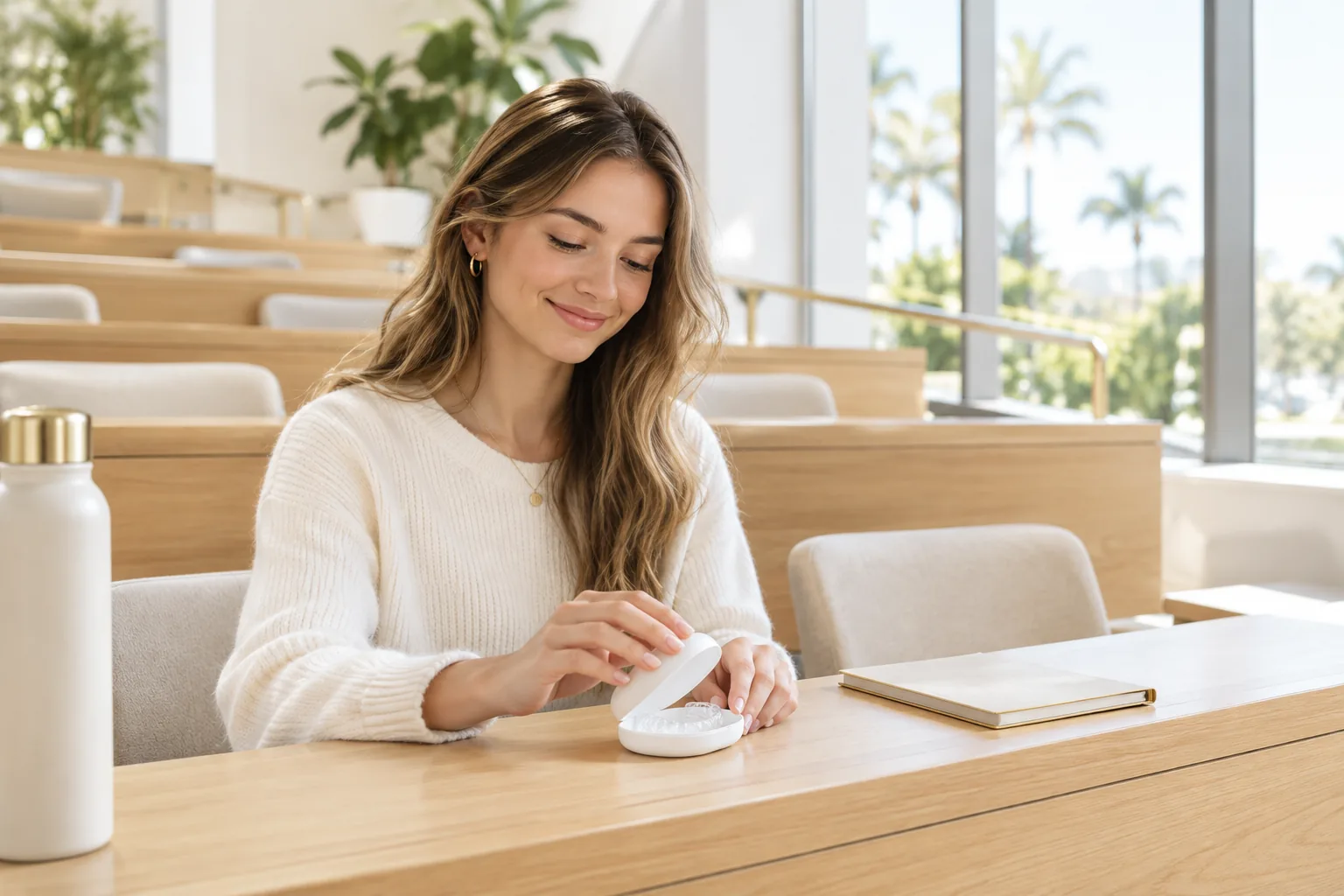
An Essix retainer is a clear plastic retainer: a thin, removable tray that fits over your teeth and holds them in place after braces or aligners. Essix is a brand of retainer plastic, and researchers use the name Essix-type for clear trays of other brands too. In a study of 591 retainers, half of the 34 clear, vacuum-formed ones had been lost or needed repair or replacement within 105 days, much sooner than the Hawley retainers and bonded wires. Vivera retainers are a similar clear tray from the company behind Invisalign, and in a laboratory test their plastic was the stiffest of four retainer materials.
- Essix retainers are see-through plastic trays, shaped with heat over a model of your teeth, that keep your teeth in place after braces or aligners.
- In one study, half of the vacuum-formed retainers were lost or needed repair or replacement within 105 days, and breakage was the most common cause.
- In a laboratory test of four clear retainer materials, Vivera was the stiffest and Essix C+ the most flexible, and all four absorbed water.
- Call or text us about appliance problems; we reply the same day during office hours, and on Saturdays or after 7 PM, the next day we are open.
What is an Essix retainer?
A removable tray of clear plastic that covers the teeth and holds them where braces or aligners moved them. After braces, the FDA notes, your dentist or orthodontist may recommend a retainer to keep your teeth in place and stop them shifting back while the bone around them solidifies in its new place.
The tray is thermoformed, which means heat shapes it: a sheet of retainer plastic is heated and vacuum-formed over a model of your teeth taken from a scan or an impression. Studies call these trays vacuum-formed retainers, after that process.
Our retention plans use clear Essix retainers, Hawley retainers (an acrylic section behind the teeth with a wire across the front teeth), wires bonded behind selected teeth, or a combination. Dr. Haykani checks your bite, the teeth that need support and your cleaning routine before recommending a design, as our retainers page explains. Our guide to Hawley vs. clear retainers compares the two removable designs day to day.
What are Essix retainers made of?
Thermoplastics, which are plastics that soften with heat so they can be shaped, and the exact plastic depends on the brand. A 2024 laboratory study tested four of them: Duran, a PETG (polyethylene terephthalate glycol) plastic; Essix C+, a polypropylene; and Vivera and Zendura, both listed as polyurethane.
An older laboratory wear test, from 2003, found a hard PETG sheet more resistant to wear than two softer polypropylene-based plastics, Essix C+ among them.
The fit can vary with the material as well. In a 2015 laboratory study, retainers made from four thermoform materials, including two from the Essix line (ACE and C+), differed in how closely they fit the same model of the teeth.
How long do Essix retainers last?
In one records study, clear trays needed repair or replacement much sooner than Hawley retainers or bonded wires. A 2018 study of 591 retainers, drawn from patient records between 2003 and 2014, counted a retainer as failed when it was lost or needed repair or replacement. Half of the 34 vacuum-formed retainers had failed by 105 days, compared with 1,529 days for Hawley retainers and 1,604 days for wires bonded behind the teeth. Breakage was the most common cause, at 43.5% of the vacuum-formed failures.
Single trials in a 2023 Cochrane review give a mixed picture. Hawley retainers had a lower risk of failure than clear plastic ones but were less comfortable at six months. Clear plastic retainers worn full time failed more often than bonded wires while showing less gum bleeding, but in another trial, clear retainers worn part time in the lower arch failed less often than bonded wires, though they were less comfortable. The review rated the evidence low to very low certainty.
There is no replacement date that fits everyone. Our retainers page explains what we check before recommending a change, and a retainer that still fits and is in good condition may not need replacing. Retention is often lifelong, so over the years you may need more than one tray. Your first retainers are included in your treatment fee, and the same page explains how a replacement is quoted.
How do Vivera retainers compare with Essix retainers?
They are the same kind of clear tray in a different plastic. Vivera retainers are made by the company behind Invisalign and come with their own care instructions, and the 2024 laboratory study tested them side by side with three other Essix-type retainers.
| Material | What the 2024 laboratory test found |
|---|---|
| Vivera (polyurethane) | The stiffest material tested |
| Essix C+ (polypropylene) | The most flexible material; one of the two with the most surface wear; the only one to show signs of breaking down after absorbing water |
| Duran (PETG) | Similar to Vivera in stiffness and wear |
| Zendura (polyurethane) | Chemically similar to Vivera but different in wear resistance and water absorption; one of the two with the most surface wear; absorbed up to 15% of its weight in artificial saliva |
All four materials absorbed water. The test was done in a laboratory, so it did not measure how long a Vivera or Essix retainer lasts in the mouth, and the authors say clinical research is needed to show what the differences mean. They suggest choosing the material case by case, with habits such as grinding or clenching in mind.
The plastic is one factor among several. When planning retention, Dr. Haykani considers the teeth being held, your bite and the condition of existing appliances.
How do you wear an Essix retainer day to day?
On the schedule your orthodontist sets. Removable retainers can be worn full time or part time, so a clear tray does not automatically mean nights only, and the hours can change as retention goes on.
Take it out to eat. Unless your instructions differ, remove it for meals, chewing gum and any drink other than plain water, and put it straight into its case. Food and drink can also stain clear plastic: a 2026 review of 43 studies on clear plastic retainers found curry and coffee frequently linked with staining.
Keep it away from heat, because hot or boiling water can distort the plastic, and clean it with a soft brush and cool or lukewarm water. Our guide to cleaning retainers covers toothpaste, cleaning tablets and the separate Vivera instructions.
What should you do if an Essix retainer cracks or stops fitting?
Stop wearing it if it will not seat normally, hurts or looks distorted, and arrange a fit check instead of forcing it in. Keep a cracked tray and any broken pieces in the case, and do not glue it, heat it or try to reshape it. Our guide to a retainer that doesn’t fit explains why the fit changes and what the check involves.
Call or text us about appliance problems at (661) 425-0559. During office hours, Sunday to Friday from 8 AM to 7 PM, you hear back the same day; on Saturdays and after 7 PM, call or text anyway, and we reply the next day the office is open. Use the comfort steps in the meantime, and do not wait for our reply when a warning sign applies.
If the retainer is lost, tell us which one is missing and when you last wore it, and ask what to wear until a replacement is ready. Do not use an old aligner, another person’s retainer or a poorly fitting spare.
If a piece of an appliance is swallowed or may have been inhaled, call 911 for choking, coughing or breathing trouble; otherwise call your doctor, and let us know.
Frequently asked questions
Is an Essix retainer the same as Invisalign?
No, although they look alike. Invisalign is a brand of clear, removable aligners, and the FDA describes aligner treatment as a series of custom-made trays, each worn for one to two weeks, that move the teeth into position gradually. An Essix retainer is made to hold the teeth where treatment left them. Because an aligner is designed for a stage of treatment, do not use an old one in place of a lost or damaged retainer without your orthodontist’s advice.
How long do Vivera retainers last?
There is no set lifespan, for Vivera or any other retainer. In a 2024 laboratory test, Vivera was the stiffest of four clear retainer materials, and Duran performed similarly in stiffness and wear, but the authors say clinical research is needed to show what those results mean in the mouth. A Vivera retainer that still fits and is in good condition may not need replacing, and we check the fit, wear, cracks and distortion before recommending a change.
Can you order a replacement retainer online?
Ask your orthodontist first. A replacement usually holds the tooth positions it is made for: one made from a new scan or impression holds your teeth where they are now, including any shifting since treatment, and one made to older positions may not fit teeth that have moved. We check the appliance, your teeth and your bite before recommending repair or replacement, and a new retainer is not automatically a way to recover an earlier result.
Is a plastic retainer the same as an Essix retainer?
Usually. Clear plastic retainer, vacuum-formed retainer and Essix-type retainer are names studies use for the same kind of see-through tray, whatever the brand. A Hawley retainer has plastic in it too: an acrylic section rests behind the teeth or against the palate, with a wire across the front teeth. If you are not sure which kind you have, ask the orthodontist who supplied it to identify it.
More notes